This guide examines how freelancers use virtual cards for work-related purchases, software subscriptions and everyday business expenses. It explains practical methods to separate work spending from personal transactions, covering spending controls, fee structures and provider terms that require close attention.
Freelancers frequently pay for software licences, cloud hosting, domain registrations, online advertising and client supplies from accounts that also handle everyday household bills. A dedicated virtual card provides a separate payment method for business outgoings. This setup gives independent professionals a separate transaction trail that can help organise business expense records and greater control over how, where and when the card can be used.
What is a virtual card for freelancers?
A virtual card is a digital payment card with card details such as a card number, expiry date and security code. It can be used for online purchases and added to a mobile wallet for contactless payments.
A virtual card is a payment instrument, not a bank account. Its funding arrangement depends on the provider and may be linked to a bank account, credit facility or prepaid balance. Understanding how these payment options differ clarifies where a virtual card fits into daily freelance operations:
- A virtual card for business expenses: Exists digitally for online checkouts and software subscriptions, allowing separate credentials for distinct expense categories without relying on physical plastic.
- A physical business card: Operates as traditional plastic for in-person transactions, travel and cash withdrawals, but provides only a single card number across all suppliers.
- A personal card used for work purchases: Blends domestic living costs with client expenses on one statement, creating complicated record-keeping at tax time.
The virtual card serves as a flexible payment mechanism. It does not prove that an independent contractor operates as an incorporated legal entity, nor does it replace any business, accounting or tax documentation required in the relevant jurisdiction.
How can freelancers use virtual cards for business expenses?
Freelancer expense management improves when individual payment channels match specific operational costs. Independent contractors regularly handle recurring overheads alongside client-specific outlays. A business expense card deployed in digital format can allow individuals to assign specific cards to designated spending categories, where the provider supports this functionality.
Freelancers apply virtual cards for business expenses across multiple commercial areas, covering software licences, SaaS platforms, cloud storage, web hosting and domain renewals. They also fund digital advertising campaigns with defined allocations, purchase professional equipment, plugins or design assets, enrol in technical courses, secure project-specific client materials and book travel outlays where electronic payments are accepted.
Issuing platforms differ regarding the volume of active cards permitted, funding mechanics and programmable settings. In its product documentation, Visa Virtual Card for Business highlights that entrepreneurs employ virtual credentials for one-time and recurring purchases, using customisable controls to govern business spending. A spending limit on a dedicated card can limit how much a subscription or other merchant can charge, where the provider supports such controls.
Q&A: Can I use one virtual card for several business subscriptions?
You can apply a single virtual card across multiple subscription platforms if the card and merchant support recurring payments, though separate cards provide cleaner bookkeeping.
How do virtual cards help separate business and personal spending?
Keeping personal and professional outlays distinct represents a primary operational hurdle for sole traders. Mixing everyday personal expenses and client hosting charges on one statement creates bookkeeping confusion. The operational framework remains straightforward:
Personal card → personal purchases
Dedicated virtual card → freelance business purchases
This division creates a separate transaction trail for business spending. Software renewal charges stay on the work card. Personal household shopping remains on the domestic card. Recurring work payments become easier to identify in transaction statements. Keeping work purchases on a dedicated card can make business transactions easier to identify when reviewing records and matching payments with receipts or invoices.
Operating a dedicated virtual card acts as a practical expense-management method. It does not mean that a virtual card automatically creates a legally separate business account or alters the tax status of an expense. Statutory tax treatment depends on the contractor’s jurisdiction and specific circumstances.
Spending controls
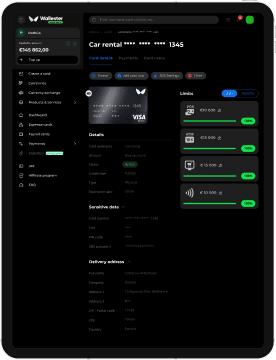
Customisable card settings can limit where, when and how much a card can be used, depending on the issuer. Visa Virtual Card for Business documentation describes controls based on transaction value, merchant category, time and geographic location, although available controls depend on the issuer and card programme.
Freelancers apply these parameters systematically:
A designer can assign a distinct virtual card for online purchases with a defined spending limit for digital advertising. A developer can establish a dedicated virtual card for recurring payments tied to hosting platforms, while generating a single-use virtual card for a one-off software plugin from an unfamiliar vendor.
Expense records
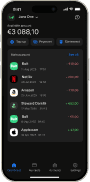
A dedicated virtual card creates a separate digital transaction record for work purchases. This clear trail simplifies matching card transactions with receipts, invoices and bookkeeping records. The card record confirms that a financial settlement occurred, but tax and accounting rules may require supporting documents such as invoices or receipts, depending on the jurisdiction and expense.
Q&A: Do virtual cards replace receipts for business expenses?
A virtual card transaction records the payment details, while tax and accounting rules may require invoices, receipts or other supporting documentation to substantiate business expenses.
How should freelancers choose a virtual card?
Independent professionals must examine availability in their country of tax residence and confirm formal eligibility for sole traders or self-employed individuals. Important evaluation points include monthly account maintenance, card generation fees, core transaction fees, foreign currency exchange markups and supported currencies. Contractors should also verify recurring subscription billing capabilities, total active card allowances, spending limits, single-use credentials, freeze features, and accounting software export options.
Virtual card or physical card?
Virtual cards suit digital-first expenditure and recurring subscriptions, as well as situations where separate card details are useful for controlling or tracking specific business spending. Physical cards remain practical for point-of-sale payments, travel, fuel and other situations where a physical card is required. Some virtual cards can also be added to mobile wallets. Maintaining both card formats offers comprehensive operational coverage.
What to check before signing up
- Check the total fee structure, including foreign exchange charges.
- Confirm which virtual-card features are actually included.
- Check recurring-payment compatibility for the subscriptions you use.
- Check transaction limits and supported currencies.
- Confirm how transactions and statements can be exported for bookkeeping.
Manage freelance spending with Wallester
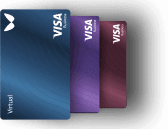
Wallester offers independent professionals an account with no opening fee or monthly maintenance fee. The programme includes up to three active virtual cards for online purchases and recurring subscriptions, plus a physical card for in-person payments. Freelancers can hold balances in EUR, GBP, SEK and DKK and make card payments in 10 supported currencies: EUR, USD, GBP, SEK, NOK, CZK, HUF, RON, PLN and DKK. The default monthly spending limit is €3,000, excluding incoming funds.
The account is available to eligible freelancers and self-employed professionals in the EEA, subject to identity verification and onboarding checks. Wallester is licensed as a payment institution by the Estonian Financial Supervision and Resolution Authority (Finantsinspektsioon) and is a Visa Principal Member.