An editorial evaluation of corporate virtual payment card platforms for media buyers, digital agencies, and marketing teams managing campaigns across Google Ads and Meta Ads in 2026.
Managing digital marketing expenditure requires firm cash flow management, isolated spending balances for clients, and dependable settlement across advertising platforms. As European digital advertising spend reached €131 billion according to the IAB Europe AdEx Benchmark Report, commercial media teams rely on dedicated corporate payment mechanisms to manage advertising spend across multiple campaigns and clients.
Can you use virtual cards for Google Ads and Meta Ads?
Google Ads and Meta Ads accept virtual debit and credit cards issued on Visa and Mastercard networks, provided the card billing records correspond with your commercial advertising profile.
Commercial advertising platforms handle virtual credentials identically to plastic cards during automated clearing. The card processor verifies the sixteen-digit Primary Account Number, expiration date, Card Verification Value, and Address Verification System records against the issuer database. If the card permits continuous automated clearing and recurring settlement, the billing system registers the credential without error.
Settlement problems arise when media buyers select consumer disposable cards intended for single retail transactions. Both Google and Meta apply periodic micro-charges and automated threshold billing. If an account uses single-use numbers that regenerate immediately after creation, recurring bills bounce, triggering administrative payment holds. Commercial marketing teams must deploy multi-use virtual business cards with defined expenditure limits.
Q&A: Can a virtual card stop an ad account suspension?
No. Advertising platforms suspend profiles due to policy infringements, identity verification problems, or mismatched business locations, regardless of whether a card exists physically or digitally.
Which virtual card features matter most for media buying?
Media buyers require high card issuance capacity, custom merchant category restrictions, live spend reporting, and multi-currency balances that prevent foreign transaction markups.
When scaling campaigns across several channels, shared credit lines create accounting complications. A media buyer managing multiple client retainers cannot risk having one team overspend the overall monthly limit, which would halt live traffic on other accounts. Allocating a single virtual card to each individual campaign or ad account isolates financial exposure. If a payment credential encounters unauthorised charges, you can discard that specific card within seconds while all other client campaigns run uninterrupted.
Multi-currency support forms another operational pillar. UK digital advertising expenditure reached £32.5 billion according to the AA/WARC Expenditure Report, with cross-border media placement expanding across international regions. Google Ads settles billing in the primary currency chosen during account creation. If your bank account operates in British Pounds while your Google account settles in US Dollars or Euros, standard retail banks levy cross-border handling fees ranging between 2% and 3.5%. Selecting a card linked to multi-currency balances bypasses multiple foreign exchange conversions.
Q&A: Do virtual cards let you avoid advertiser identity verification on Google Ads?
No. Google Ads advertiser verification demands verified corporate registry filings and matching legal company identity documents, regardless of the card brand or format used for billing.
What are the key differences between Google Ads and Meta Ads billing?
Google Ads charges through progressive post-pay expenditure thresholds or regular monthly dates, whereas Meta Ads bills upon reaching dynamic expenditure thresholds or via pre-funded account deposits.
| Billing parameter | Google Ads | Meta Ads |
| Payment models | Automatic threshold billing, monthly invoicing, manual prepay | Automatic threshold billing, prepaid manual ad credits |
| Common billing thresholds | Starts low, rises to £500 or regional equivalent | Starts low, rises to £750 or $900 based on history |
| Card verification check | Micro-charge or 3D Secure verification hold | Temporary authorisation hold on billing account |
| Multi-card allocation | Primary and backup card per payments profile | Distinct payment method per ad account in Business Manager |
| Failed charge reaction | Grace window followed by immediate campaign suspension | Immediate delivery pause across active ad sets |
What are the best virtual cards for advertising in 2026?
The most effective commercial providers for 2026 are Wallester Business, Revolut Business, Wise Business, Spendesk, Pleo, Soldo, Brex, and Ramp.
1. Wallester Business
Wallester Business provides a dedicated corporate expense framework powered by official Visa Europe principal membership. Operating under Estonian Financial Supervision Authority authorisation, the platform serves registered companies, partnerships, sole traders, and freelancers across the United Kingdom and the European Economic Area.
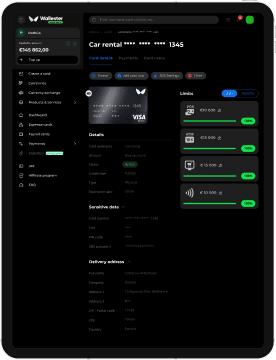
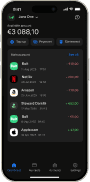
The system permits instant creation of commercial Visa debit cards linked directly to corporate euro and multi-currency accounts. Media buyers can issue up to 300 free virtual cards on the standard Free package, making it accessible for lean marketing operations. Each card allows distinct daily, weekly, or monthly expenditure thresholds, as well as specific merchant category controls. Cardholders access full REST API capabilities for automated card generation, 3D Secure mobile app confirmations, and seamless accounting exports.
Best for: European agencies, affiliate buyers, and media teams requiring high card volumes with zero base platform fees.
2. Revolut Business
Revolut Business delivers multi-currency treasury accounts with corporate debit cards issued over the Visa and Mastercard payment rails. The fintech operates with European banking licences alongside regulatory authorisations from the UK Financial Conduct Authority.
Companies can hold and exchange over 25 currencies at interbank rates within agreed plan allowances. Marketing directors can generate reusable virtual cards alongside disposable virtual cards for software tests. Reusable virtual cards function cleanly with Google Ads and Meta Ads recurring billing routines.
Best for: Cross-border agencies seeking multi-currency settlement balances alongside company card management.
3. Wise Business
Wise Business prioritises transparent international cross-currency settlement over extensive team budgeting workflows. The service provides multi-currency local account details across Britain, Europe, the United States, Australia, and parts of Asia.
Marketing buyers can establish digital Visa or Mastercard corporate debit cards linked directly to distinct currency pots. When paying Google Ads accounts established in foreign currencies, Wise draws funds directly from the matching currency holding balance without intermediary bank markups. If conversion is necessary, Wise calculates fees based on the live mid-market exchange rate published on financial markets.
Best for: Small commercial teams running ad accounts in non-domestic currencies seeking minimal foreign exchange waste.
4. Spendesk
Spendesk focuses on spend management for mid-market commercial enterprises. It pairs virtual Mastercards with a multi-step purchase approval workflow, confirming that budget allocations receive management sign-off before expenditure occurs.
The platform lets financial controllers generate single-use cards for ad project setup or recurring virtual subscription cards designed explicitly for advertising platforms. Marketing teams can fix exact spending caps on each card, preventing automated platform overspends. Receipts and platform invoices pair automatically through automated reconciliation matching.
Best for: Structured marketing departments requiring strict internal approval workflows before ad budgets activate.
5. Pleo
Pleo provides commercial Mastercard spending cards paired with automated receipt extraction and budget oversight. Headquartered in Denmark and serving companies across the UK and the EEA, Pleo issues on-demand digital cards for marketing specialists.
While Pleo positions its core product around general team expenses, its virtual cards integrate smoothly with Google Ads and Meta Ads billing profiles. Financial administrators assign individual card limits and monitor live drawdowns from unified dashboard views. Pleo automatically reminds media buyers to upload matching platform receipts following threshold billing runs.
Best for: Growing mid-sized European companies seeking simplified receipt matching for advertising platform expenses.
6. Soldo
Soldo operates an expense management account structure regulated in both the UK by the FCA and in Europe by the Central Bank of Ireland. Soldo allows finance managers to create separate shared company cards or dedicated virtual cards for individual marketing projects.
Soldo stands out for precise limit controls. Finance heads can restrict cards to digital marketing vendor codes, set non-cumulative spending balances, and lock cards after defined expenditure periods. The platform enables multi-currency account top-ups in GBP, EUR, and USD, avoiding multiple cross-border charges on overseas ad campaigns.
Best for: Marketing agencies requiring granular budget silos across diverse client campaigns.
7. Brex
Brex serves incorporated commercial operations and high-growth ventures in the United States, with expanding support for international subsidiaries. It combines corporate credit limits with integrated treasury accounts and automated expense controls.
Brex virtual cards issue through the Mastercard commercial credit network, providing broad acceptance across global advertising vendors. Corporate accounts offer high credit ceilings, real-time fraud monitoring, and automated budget enforcement. Marketing administrators can assign designated virtual cards to individual ad networks, enabling autonomous spend tracking without card-sharing risks.
Best for: US-based startups, scaleups, and venture-backed media buying brands.
8. Ramp
Ramp delivers corporate cards and automated financial oversight for companies registered in the United States. Operating on the Visa commercial network, Ramp provides automated accounting, spend tracking, and vendor price intelligence.
Marketing departments utilise Ramp virtual cards to isolate ad spend per platform, project, or client account. Financial managers establish non-negotiable monthly spending limits, auto-expiring limits, or merchant restrictions that prohibit transactions outside of authorised digital ad networks. Ramp detects duplicate subscription fees and notifies managers when spend anomalies arise.
Best for: United States companies seeking zero-cost corporate cards with proactive spend restrictions.
How do virtual card providers compare on core features?
Provider capabilities vary significantly across regional availability, direct API access, complimentary card quotas, and foreign exchange mechanics.
| Provider | Card network | Base jurisdiction | Free virtual cards | API support | Core focus |
| Wallester Business | Visa | EEA / UK | 300 cards | Full REST API | High-volume card generation and affiliate media buying |
| Revolut Business | Visa / Mastercard | EEA / UK / US | Plan-dependent | Available on paid tiers | Multi-currency treasury and global international spend |
| Wise Business | Visa / Mastercard | Global | Up to 3 per user | Open developer API | Low-margin currency exchange across mid-market rates |
| Spendesk | Mastercard | EEA / UK / US | Custom | Custom integrations | Structured procurement and pre-spend management approvals |
| Pleo | Mastercard | EEA / UK | Plan-dependent | Accounting API | European team expense oversight and receipt reconciliation |
| Soldo | Mastercard | EEA / UK | Plan-dependent | Enterprise API | Granular card rule configuration and isolated agency wallets |
| Brex | Mastercard | US | Unlimited | Enterprise API | High-limit credit settlement for venture-backed commercial teams |
| Ramp | Visa | US | Unlimited | Comprehensive API | Zero-fee corporate cards and intelligent expense monitoring |
What steps should you take when choosing a virtual card platform?
Media organisations must match corporate registration jurisdiction, card generation volume, and native currency balances against their monthly ad spend:
- Corporate registration location: Select a provider legally authorised to onboard entities within your specific operating country, whether Britain, the European Economic Area, or the United States.
- Monthly advertising volume: Calculate overall platform subscription fees against transaction fees; a free plan offering high card numbers often outperforms an expensive SaaS tool if you only need ad payment stability.
- Card creation flexibility: Verify whether your selected tier allows hundreds of unique virtual cards, which is necessary if you manage separate campaigns across multiple client ad accounts.
- Currency requirements: Confirm that the provider supports your ad account billing currency directly to avoid recurring 2% to 3% foreign currency exchange markups.
- Spend restrictions: Check for customisable daily limits, total budget locks, and merchant classification restrictions to prevent unauthorised overspending.
- Reconciliation efficiency: Determine whether transaction data flows automatically into your accounting software to simplify month-end client invoicing.
How to set up a virtual card on Google Ads and Meta Ads
Linking a card requires generating a dedicated virtual credential, fixing an initial spend buffer, and completing 3D Secure verification inside the ad network console:
- Generate a multi-use virtual business card inside your provider dashboard and assign a distinct label matching the client or project name.
- Configure a specific spending limit slightly higher than your expected billing threshold to prevent transaction declines during initial micro-charge verification.
- Access your advertising platform billing settings: navigate to Billing and Payments in Google Ads, or Payment Methods inside Meta Ads Manager.
- Input the sixteen-digit virtual card number, expiration date, CVV security code, and the exact business billing address registered with your card issuer.
- Complete any 3D Secure verification prompt via your card provider mobile app or verification portal to approve initial security holds.
- Designate the card as your primary payment method while keeping a verified secondary card on file as a contingency backup.
Wallester Business for ad spend management
Wallester Business provides a specialised corporate payment platform designed for digital marketing companies, affiliate teams, and growing agencies. Built on a direct Visa Europe Principal Partnership, Wallester operates as an officially regulated payment institution under the Estonian Financial Supervision Authority, offering compliance security for European businesses.
The free tier includes up to 300 free virtual cards immediately upon company onboarding, alongside unlimited physical corporate cards. Agencies running multi-account campaigns can assign individual cards to separate clients, apply strict transaction limits, and pause underperforming cards instantly. For technical agencies running automated campaign setups, Wallester provides an open REST API to generate and configure payment credentials programmatically.
To establish dedicated payment lines for client campaigns with zero account maintenance charges, you can open a free Wallester Business account today to launch your ad campaigns with dedicated cards.