This guide explains the difference between the everyday term “freelancer” and formal self-employed status under national rules. It covers business registration, tax, VAT, social security and employment classification, with particular attention to people who provide services across EU borders.
Key Takeaways
- “Freelancer” describes a way of working, while self-employed status is determined by the applicable national rules.
- There is no single EU-wide registration, tax or VAT regime for freelancers; requirements depend on the country, business structure and activity.
- EU VAT rules provide a framework for eligible small businesses, but the €100,000 EU SME scheme threshold is not a universal VAT exemption or registration threshold.
- Self-employed workers do not automatically receive the same employment rights as employees, while social-security coverage remains governed by national systems coordinated through EU rules.
- Cross-border freelancers need to establish which country’s tax and social-security rules apply and check requirements for registration, VAT and temporary work abroad.
- Authorities may reclassify a freelance arrangement where the actual working relationship shows substantial control or other characteristics of employment.
Many people describe themselves as freelancers, but that label does not determine their legal or tax status. There is no single EU-wide freelance registration category. The applicable rules depend on the country, the person’s working arrangements, business structure and, in cross-border cases, the countries connected to the activity.
What is the difference between freelance and self-employed in Europe?
In Europe, “freelancer” generally describes a way of working independently for clients. “Self-employed” refers to a status recognised under the applicable national rules. A freelancer may be registered as a sole trader or under another permitted structure, but the word “freelancer” itself does not create a legal status.
The EU does not have one harmonised legal form called “freelancer”. Member States decide how independent activities are classified and which business structures are available. An individual may operate as a sole trader, use another form of self-employment or establish a separate company, depending on the country’s rules.
The distinction also matters when authorities assess whether someone is genuinely independent. The name used in a contract is not necessarily decisive. National authorities and courts can examine the actual relationship, including the degree of control and independence involved.
Platform work provides a current EU example. Directive (EU) 2024/2831 requires Member States to establish a rebuttable legal presumption of employment where facts indicating direction and control are found in qualifying platform-work relationships. The rules must be transposed by 2 December 2026 and do not create a general employment presumption for every freelancer.
| Term | What it describes | EU-wide legal status? | Practical meaning |
| Freelancer | A person who provides services independently | No | Describes the way a person works |
| Self-employed | A person recognised as self-employed under applicable national rules | No single EU-wide regime | Determines relevant national tax and social-security treatment |
| Sole trader / sole proprietor | A business form available under national law | No single EU-wide form | The individual operates the business personally |
Q&A:Can a freelancer work without being self-employed?
Sometimes. A person who describes their work as freelance may provide services through a company, intermediary or another legally recognised arrangement. The relevant national rules determine the person’s formal tax, employment and social-security status. The commercial label “freelancer” does not decide that status.
How do taxes and registration work for freelancers and sole traders in the EU?
Each EU country sets its own business-registration and tax rules. A person starting independent work may need to register the activity, notify the tax authority and meet social-security requirements, depending on the country and the chosen structure. Tax residence and the location of the activity also matter when more than one country is involved.
EU citizens have the right to set up a business, including as a sole trader, in another EU country. The registration process and requirements still follow the rules of the country where the business is established.
VAT has its own EU framework. Since 1 January 2025, the EU SME VAT scheme has allowed eligible small businesses to use VAT exemptions in participating Member States. A business can qualify where its total annual turnover across the EU does not exceed €100,000, subject to the scheme’s other conditions and the national rules of the Member State concerned. The scheme is optional and does not mean that every freelancer below €100,000 is automatically exempt from VAT.
National domestic VAT exemptions have their own thresholds. The EU framework permits a Member State’s domestic threshold to be up to €85,000, but the applicable threshold depends on that country. Writers must not present €85,000 as a universal EU VAT-registration threshold.
Cross-border social security follows separate rules. A person who normally works as self-employed in two or more Member States may be covered by the legislation of their country of residence if a substantial part of the activity is carried out there. For this assessment, at least 25% of relevant activity is an indicator of a substantial part, with turnover, working time, number of services and income among the factors considered. If the substantial part is not carried out in the country of residence, the centre of interest of the self-employed activity becomes relevant.
Basic checks before starting freelance work
- Check which self-employed or business structure is available in the relevant country.
- Confirm registration and tax requirements with the competent national authorities.
- Check social-security registration and contribution rules.
- Establish whether VAT registration or an applicable exemption is relevant.
- Check cross-border rules if the work or business activity spans several countries.
Q&A: Do all EU freelancers have to register for VAT?
No. VAT registration and exemption depend on the applicable national rules, the type of transaction, turnover and the relevant VAT scheme. The €100,000 figure belongs to the EU SME scheme and is not a universal EU VAT-registration threshold. Cross-border B2B transactions can also have separate VAT treatment.
What rights do self-employed workers have in Europe?
Self-employed people do not automatically receive the same employment rights as employees. Paid annual leave, statutory sick pay and dismissal protection generally arise from an employment relationship and cannot be assumed simply because someone provides services for a client.
Social-security protection is different. EU coordination rules cover areas such as sickness, maternity and paternity benefits, pensions, unemployment, family benefits and occupational accidents, but Member States decide who is insured, what benefits they provide and the conditions for receiving them. The EU system coordinates national schemes; it does not replace them with one European social-security system.
Cross-border workers need to identify which country’s social-security legislation applies. EU rules generally assign a person to the legislation of one country at a time. For self-employed people working in several Member States, the assessment can depend on the country of residence and the centre of interest of the activity.
A temporary move to another Member State can also fall under the posting rules. A self-employed person who temporarily carries out a similar activity in another EU country may remain covered by the social-security legislation of the home country for up to 24 months, provided the applicable conditions are met. A PD A1 certificate confirms the social-security legislation that applies during the posting.
| Area | Employee | Self-employed person |
| Paid annual leave | Employment-law rights may apply | No employee leave entitlement arises solely from self-employed status |
| Minimum wage | May apply under national employment law | Does not generally apply to genuine independent business income |
| Social security | Follows applicable employee rules | Follows applicable self-employed or general national rules |
| Pension | Subject to the applicable national system | Subject to the applicable national system |
| Work autonomy | Limited by the employment relationship | Normally greater independence over the business activity |
| Business risk | Generally borne by the employer | Generally borne by the person running the business |
Q&A:Can authorities treat a freelancer as an employee?
Yes, in some circumstances. The relevant authority or court may assess the actual working relationship under national law. Factors can include the degree of control, independence and how the work is organised. A contract that calls someone an independent contractor does not necessarily settle their legal classification.
Signs you should check your employment status
- A client exercises substantial control over how and when the work is performed.
- The person has little genuine independence over the commercial relationship.
- The arrangement closely resembles an employment relationship.
- The contractual description does not match the actual working conditions.
How can a Wallester account support freelancers in Europe?
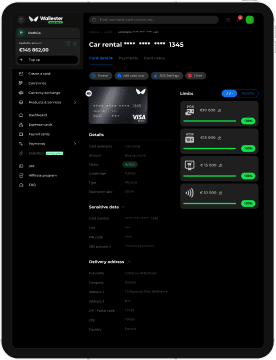
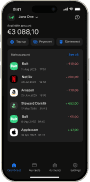
Whatever legal form a freelancer uses, the practical needs are the same: receiving client payments, keeping freelance income organised and paying for business expenses. Wallester offers a free-to-start account for freelancers and self-employed professionals that covers these needs. There is no setup fee and no monthly fee for the account, the app or the cards.
The account supports the day-to-day financial side of freelancing. It does not determine a person’s legal status, tax position or VAT treatment, which remain subject to the national rules described above.
Wallester is a payment institution licensed by Finantsinspektsioon (the Estonian Financial Supervision and Resolution Authority), a Visa Principal Member and PCI DSS Level 1 certified. Here is what the freelancer account includes:
| Feature | Details |
| Dedicated account | A separate account for client payments, kept apart from day-to-day personal banking |
| Incoming payments | Bank transfer (SEPA and SWIFT) and invoices; QR code payments are coming soon |
| Cards | Physical and virtual cards, with Apple Pay, Google Pay and other supported wallets |
| Currencies | 10 supported currencies: EUR, USD, GBP, SEK, NOK, CZK, HUF, RON, PLN and DKK |
| Currency exchange | Exchange between supported currencies within the account |
| Fees | No setup fee and no monthly fee |