This practical guide explains how to establish a clear freelancer financial setup. It covers invoicing methods, client payment options, banking arrangements, payment records, and day-to-day financial organisation so self-employed professionals can manage business transactions with confidence.
Key Takeaways
- A freelancer’s financial setup should cover invoicing, client payments, transaction tracking, expense records and tax documentation.
- Keeping freelance and personal transactions separate where appropriate makes cash flow and financial records easier to manage.
- Invoices should contain the information required by the applicable jurisdiction, with additional payment terms and banking details included where useful.
- International clients require clear agreement on payment currency, transfer method and responsibility for fees or currency conversion costs.
- Regularly matching invoices, payments and bank statements helps identify unpaid invoices, discrepancies and transaction fees.
- Record-keeping requirements vary by country and business structure, so freelancers should maintain records in line with applicable local rules.
Establishing clear financial boundaries is very important when running an independent business. Freelance income often arrives from several clients across differing schedules, and invoices carry distinct payment due dates. Certain clients settle accounts in foreign currencies, which complicates tracking. When personal and freelance transactions mix within a single ledger, monitoring cash flow becomes confusing. A structured routine clarifies incoming funds, separates business activity from personal spending, and simplifies statutory reporting duties.
What financial setup does a freelancer need?
A freelancer needs a clear invoicing process, a suitable account for receiving income, a system for tracking payments and records that connect income and expenses with supporting documents.
Building a functional freelancer financial setup requires five core building blocks:
- issuing clear freelancer invoicing documents;
- receiving client payments securely;
- separating freelance and personal transactions where appropriate;
- recording business income and allowable expenses;
- preparing organised financial records for tax purposes.
The appropriate arrangement depends on legal structure, trading location, tax registration, and commercial banking rules. Self-employed individuals often have different options from incorporated business owners. Requirements for bank accounts and business records vary by jurisdiction and provider.
Q&A: Do freelancers need a separate bank account?
Legal requirements depend on your business structure, location, and banking terms. An incorporated company is a separate legal entity from its owners, so its business finances and records must be kept separate from personal finances. Self-employed individuals may have different account options, subject to local rules and provider terms.
What should a freelancer invoice include?
Clear paperwork can support accurate payment processing and help prevent disputes. For VAT invoices in the EU, common EU-wide rules (under the EU VAT Directive) generally require:
- unique sequential invoice number
- supplier’s full name and address
- supplier’s VAT identification number
- customer’s full name and address
- customer’s VAT identification number if the customer is liable for tax on the transaction
- invoice date
- date of supply/transaction where relevant
- description and quantity/nature of goods or services
- unit price exclusive of VAT, discounts or rebates, unless those discounts or rebates are included in the unit price
- VAT rate applied and amount payable
- breakdown of VAT amount payable by VAT rate or exemption
Note on Digital Compliance: Beyond paper or standard PDF invoices, many EEA member states now require B2B electronic invoicing in structured digital formats (such as Peppol or EN 16931 standards) as part of broader EU digital tax updates.
Additional information may be required for specific transactions, such as reverse-charge supplies or exempt transactions. National rules can also apply to invoicing requirements within individual EEA countries. Payment currency, agreed payment terms, payment due date, banking details and payment references can also be included to help the client settle the invoice, but these are not universal statutory invoice requirements.
Q&A: Does every freelancer need to charge VAT?
VAT obligations depend on the freelancer’s country, registration status, turnover and the nature and location of the supplies. There is no single VAT registration threshold for the entire EEA. EU Member States apply the common EU VAT framework through national legislation, while Norway, Iceland and Liechtenstein have their own VAT systems. Freelancers should check the rules of the country where the business is established and the rules applying to the relevant transaction.
How should freelancers manage banking and client payments?
When comparing providers or account options, freelancers should review key operational terms:
| Feature | Why freelancers should check it |
| Account fees | Shows the ongoing cost of maintaining the account |
| Transaction fees | Relevant when clients make frequent payments |
| Supported currencies | Important for international clients |
| Foreign exchange costs | Affects the amount received after conversion |
| Incoming payments | Check which transfer methods and currencies are supported |
| Statements and exports | Useful for bookkeeping and tax records |
| Payment references | Help match transactions with invoices |
| Accounting integrations | May simplify financial record management |
How can freelancers track invoices, payments and expenses?
Freelancers should maintain a record that connects each invoice with its payment status and keeps business expenses supported by appropriate documentation.
A structured freelancer bookkeeping process helps track income and identify unpaid invoices. Operating an orderly routine consists of five logical steps:
- Create and number the invoice.
- Record the issue and due dates.
- Mark the invoice as paid when the transaction arrives.
- Match the payment to the invoice.
- Record eligible business expenses with supporting documents.
Maintaining these stages supports financial clarity throughout the trading year. Relevant records include sales invoices, payments received, supplier invoices, payment confirmations, and bank statements.
How should freelancers handle international client payments?
Freelancers working with overseas clients should agree on the invoice currency, payment method and responsibility for transfer or conversion costs before issuing the invoice.
Cross-border payments require freelancers to agree with clients on the invoice currency, payment method, due date and responsibility for transfer fees. The invoice or contract should state these terms clearly, along with the correct IBAN and SWIFT/BIC details where required by the payment route. International transfers may incur fees from the sending bank, intermediary institutions or receiving provider, and currency conversion can also affect the amount received.
If the freelancer receives funds in a foreign currency, a multi-currency account may allow them to hold the funds before conversion, where the provider supports that currency. These details give both parties a clear basis for checking that the amount received matches the agreed payment terms.
Q&A: Should a freelancer invoice an overseas client in their own currency?
Billing in your domestic currency fixes the invoice amount in that currency. The client bears the currency-conversion risk if they need to convert funds before payment. Invoicing in the client’s local currency may simplify payment for the client, but the freelancer then needs to consider foreign-exchange costs and account capabilities.
What financial and tax records should freelancers keep?
Freelancers should keep records that show income, expenses and the documents that support those figures, with the exact requirements determined by local tax rules.
Record-keeping requirements depend on the jurisdiction and business structure. Relevant records may include sales invoices, expense receipts, credit notes, tax documents, payment records, and bank statements. National tax authorities set their own requirements for business records and retention periods. EU VAT rules require taxable persons to store copies of invoices issued and received, while the retention period is determined by each Member State. Freelancers in Norway, Iceland and Liechtenstein should follow the applicable national rules.
What does Wallester offer?
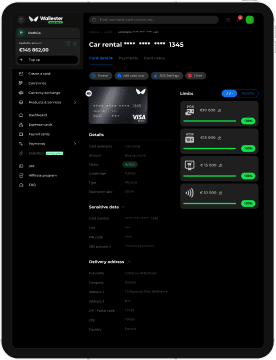
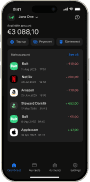
Wallester offers a free-to-start account for freelancers and self-employed professionals that combines receiving client payments and spending from the same balance. There is no setup fee and no monthly fee for the account, the app or the cards. Here is what the freelancer account includes:
| Feature | Details |
| Dedicated account | A separate account for client payments, kept apart from day-to-day personal banking |
| Incoming payments | Bank transfer (SEPA and SWIFT) and invoices; QR code payments are coming soon |
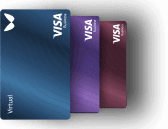
| Cards | Physical and virtual cards, with Apple Pay, Google Pay and other supported wallets |
| Currencies | 10 supported currencies: EUR, USD, GBP, SEK, NOK, CZK, HUF, RON, PLN and DKK |
| Currency exchange | Exchange between supported currencies within the account |
| Fees | No setup fee and no monthly fee |
How can freelancers use the account in practice?
A typical workflow looks like this. A freelancer issues an invoice with a unique number and agreed payment terms, and the client pays by bank transfer using the invoice number as the payment reference. The funds arrive in the dedicated account, where the freelancer can match the payment to the invoice and mark it as paid. The same balance can then cover business expenses such as software subscriptions or travel by card, which keeps freelance income and spending in one place, separate from personal finances.