This guide explains how freelancers can operate as natural persons without incorporating a separate company across selected EU/EEA countries. It compares the main self-employed routes in Germany, France, Spain, the Netherlands, Ireland, Estonia, Poland and Norway, then covers registration, income tax, VAT, social security and cross-border rules. It also provides a practical checklist for setting up freelance activity legally and highlights where national requirements differ.
Key takeaways
- You can work as a freelancer without incorporating a separate company in many EU/EEA countries, but tax, business, social-security or professional registration may still apply.
- There is no single EU freelancer status. Each country has its own legal route and registration requirements.
- VAT, income tax and social security are separate areas with different rules and thresholds.
- A practical registration process starts with confirming your self-employed status, checking professional requirements, completing the required registrations and reviewing VAT and social-security obligations.
- Cross-border freelancers need to check tax residence, applicable tax treaties, place of activity and EU social-security rules separately.
A separate company creates a legal person distinct from its owners. A natural-person business does not. The exact rules depend on national law, the person’s tax residence, where the activity takes place, the nature of the services and cross-border circumstances.
Can you work as a freelancer in the EU without setting up a company?
Yes. Many EU/EEA countries allow individuals to carry on self-employed activity without incorporating a limited company or another separate legal entity. The person remains the legal holder of the business activity and is taxed and registered according to the rules of that country.
The word “freelancer” does not describe one EU-wide legal status. National systems use terms such as sole trader, individual entrepreneur, self-employed person, Freiberufler, autónomo, eenmanszaak and FIE. These statuses differ in their registration, tax and social-security rules.
Personal liability is also an important distinction. An unincorporated structure does not create a separate legal person, but the rules on liability and asset protection vary by country. In some jurisdictions, the owner may be personally liable for business obligations, while others provide statutory separation between professional and personal assets. France, for example, automatically separates an individual entrepreneur’s professional and personal assets, subject to statutory exceptions.
Professional classification can matter too. Germany, for example, distinguishes between Freiberufler and commercial activity. The classification depends on the actual profession and activity, not simply on what the person calls themselves. Freiberuflers register with the Finanzamt, while commercial activities generally require registration with the competent Gewerbeamt. Some activities also require specific professional or trade authorisation.
Q&A: Does working as a natural person mean you can invoice clients without registering?
No. Not forming a company and not registering an economic activity are separate issues. Most countries have some form of tax, business or social-security registration for ordinary self-employed activity, although limited exemptions exist for small-scale activities in some jurisdictions.
Further Reading: Best Business Account for Freelancers Without Registration
What should you check before starting as a freelancer without a company?
Use this practical checklist before sending your first invoice:
- Confirm your legal status: Check whether your activity falls under sole trader, individual entrepreneur, self-employed professional or another national natural-person category.
- Check whether the activity is regulated: Some professions require a licence, professional registration, qualification or chamber membership before you can practise.
- Complete the required registration: Check the relevant tax authority, business register and, where applicable, social-security authority. The required combination differs by country and activity.
- Check VAT: Find out whether your activity requires VAT registration, whether a domestic threshold applies and whether your services have special place-of-supply rules.
- Check social security: Establish which country’s social-security legislation applies, particularly if you live or work across borders.
- Set up invoicing and records: Check the mandatory invoice details, accounting method and record-retention period that apply to your status.
- Check cross-border rules: If your clients, residence or place of work are in different countries, review the applicable tax treaty, VAT rules and EU social-security coordination rules.
- Check liability and insurance: Confirm what personal liability your structure creates and whether professional or other business insurance is appropriate for the activity.
This checklist is a starting point, not a substitute for the registration rules of the country concerned.
How can I work as a natural person in different EEA countries?
The legal route depends on the country where the self-employed activity is established or carried out.
| Country | Natural-person route | Separate legal entity? | Key requirement |
| Germany | Freiberufler or commercial sole trader | No | Freiberuflers register with the Finanzamt; commercial activities generally require Gewerbe registration. Classification depends on the activity. |
| France | Entrepreneur individuel, including micro-entrepreneur | No | Individual businesses are registered through the national business formalities portal. The 2026 micro-enterprise turnover thresholds are €203,100 for sales and €83,600 for services. |
| Spain | Trabajador autónomo | No | Registration with the Spanish tax census must take place before the economic activity starts. The applicable self-employed social-security registration is separate. |
| Netherlands | Eenmanszaak | No | Registration with KVK is required for an eenmanszaak. The owner is personally liable. Businesses meeting the conditions may use the KOR when annual turnover is no more than €20,000. |
| Ireland | Sole trader | No | A sole trader registers for tax with Revenue. The PPSN becomes the Tax Reference Number only after tax registration. |
| Estonia | FIE (füüsilisest isikust ettevõtja) | No | An FIE is a self-employed natural person, not a legal person. The 2026 income-tax rate is 22% on taxable business income. |
| Poland | Działalność gospodarcza or działalność nierejestrowana | No | Normal individual business activity is registered. Qualifying small-scale activity may fall under the unregistered regime. In 2026, its revenue limit is PLN 10,813.50 per quarter. |
| Norway | Enkeltpersonforetak | No | The owner and sole proprietorship are not separate legal persons. VAT registration generally starts when VAT-liable sales exceed NOK 50,000 over 12 months. |
The differences are important. In Germany, the first question can be whether the activity is a liberal profession or a commercial trade. In France, the micro-entrepreneur regime is a simplified regime within individual entrepreneurship, not a separate company. In Spain, tax registration must precede the start of economic activity.
Poland provides a particularly useful example of a limited exemption. Działalność nierejestrowana can be carried out without registration in CEIDG when the statutory conditions are met. From 2026, the relevant revenue limit is assessed quarterly. If the quarterly limit is exceeded, the activity becomes economic activity from the date of exceeding the limit, and an application for CEIDG registration must be filed within seven days.
Q&A: Which EU country lets freelancers work without business registration?
Poland has a specific unregistered-activity regime, but it is limited by statutory conditions and a quarterly revenue ceiling. It should not be treated as a general exemption for freelancers across the EU. Other countries may require tax, business or professional registration even when the person does not establish a separate company.
Further Reading: Freelancer Financial Setup: Invoicing & Banking Guide
What taxes, VAT and social security rules apply to an EU freelancer?
A natural-person freelancer may have several separate obligations. The rules depend on the country and the person’s circumstances.
- Income tax. Business income is generally dealt with at individual level under the relevant national tax regime. Estonia, for example, applies a 22% income-tax rate to taxable FIE business income in 2026.
- Social security. National legislation determines contributions and access to benefits. EU coordination rules apply when a person works across participating European countries.
- VAT. VAT registration depends on national thresholds, exemptions and place-of-supply rules. A VAT threshold is not the same as an income-tax threshold.
- Invoices and records. National rules determine invoice requirements, tax records and retention periods.
- Cross-border activity. Tax and social security must be considered separately.
For tax, residence is only one part of the analysis. Domestic rules and applicable double-tax treaties can affect where income is taxable. The country where services are physically performed, the existence of a fixed base or permanent establishment and the nature of the activity can also matter.
Social security follows a different framework. Under EU coordination rules, a person is generally subject to the legislation of one country at a time. As a basic rule, a self-employed person working in one country is covered by the legislation of the country where they actually work. Special rules apply to people who work in two or more countries. For a self-employed person working in several countries, the country of residence can apply where a substantial part of the activity, defined in the EU rules as at least 25%, is carried out there.
| Issue | Natural-person freelancer |
| Legal personality | The person and the unincorporated business are generally not separate legal persons |
| Liability | Personal liability may apply under the relevant national rules |
| Income tax | Business income is generally assessed at individual level |
| Social security | The applicable national system determines contributions |
| VAT | Registration depends on the relevant VAT rules |
| Records | Tax and business records may still be required |
How Wallester helps manage business finances
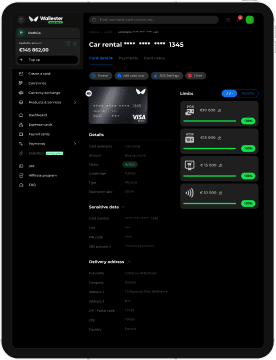
Wallester Freelancers serves individuals who carry out commercial or professional activity in their own name without a registered legal entity or sole proprietorship in their country of operation. It provides dedicated business payment infrastructure for receiving income and managing expenses without going through the standard company onboarding process. The account is intended exclusively for business use, helping freelancers keep business transactions separate from personal spending and gain clearer visibility over their business cash flow.
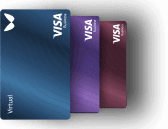
The product supports incoming payments related to the freelancer’s declared activity, outgoing payments, wire transfers and transfers between Wallester clients. Freelancers can fund the account by bank transfer, credit card, debit card or stablecoin, exchange currencies, and create virtual and physical cards for professional spending. The account supports EUR, GBP, SEK and DKK, with main and sub-account management and IBAN assignment. Up to three virtual cards can be active at the same time, and physical cards can be issued at the client’s expense.
Wallester Freelancers is available to natural persons residing in the European Economic Area. The default monthly limit is EUR 3,000 per client and applies to outgoing payments and card spending, while incoming funds are not subject to this product-level limit.