The first year of running a business is a scramble and improvisation by design. Attention goes to the product, the first customers, and the search for something like a routine. It’s no surprise, then, that the finances get handled in the gaps between everything else. That is understandable, and it is also why the same small set of money mistakes recurs across almost every young company, regardless of what it actually does.
What follows is not a list of personal failings. Each of these mistakes is the natural byproduct of moving quickly with limited time, which is why they are so easy to make and so easy to miss. But the good news is that spotting any of them early is usually enough to defuse the problem. None is particularly expensive to fix at the start, but all can become expensive if left too long. So here’s a quick overview of six that show up most often.
1. Mixing personal and business spending
In the earliest days, when the business is effectively one person, paying for a company tool on a personal card feels like a non-issue, and so does the occasional reverse. Across a full year it becomes a genuine tangle, the kind that turns tax season into a laborious task and makes it hard to say what the business actually costs to run. Separating business spending onto its own account from the beginning is one of the cheapest decisions a founder can make, and one of the most quietly valuable.
2. Running everything through one shared card
A single card passed around the team is frictionless right up to the moment a statement arrives and no one can say with confidence who made which charge. The expenses were real and the work got done, but the trail is gone. Reconstructing it eats an afternoon that should have gone elsewhere. Separate cards for separate people or purposes keep spending legible from the first transaction. As a result, statement tells a story rather than posing a riddle.
3. No real visibility into who’s spending what
Many young businesses only see their spending clearly once a month, when the statement lands and the money is already gone. Decisions in the meantime get made on numbers that are weeks out of date, which is a bit like driving by looking in the mirror. A live view of spending, with each charge tied to a person and a purpose, turns the monthly reckoning into something closer to steering, where a problem can be caught while it is still small.
4. Letting subscriptions pile up
Someone signs up for a tool, a project ends, the person who bought it moves on, but the subscription quietly keeps charging. On its own each one is too small to notice. However, stacked across a year they add up to a real sum leaving the account every month for software no one opens. A regular look at what is recurring, and a named owner for each subscription, is usually all it takes to keep the pile from forming in the first place.
5. Ignoring FX costs on foreign tools
A great deal of modern software and many contractors bill in dollars or another foreign currency. Paid from a euro account, each of those charges gets converted, and the small cost of that conversion repeats on every renewal, all year, without ever appearing as a line anyone questions. Holding a balance in the currency those tools bill in, and paying them from it, keeps that quiet, repeating cost from adding up unseen.
6. Leaving expenses and receipts until month-end
A receipt collected three weeks after the purchase is a receipt half-lost, and working out what a given payment was for long after the fact is nobody’s idea of a good afternoon. Capturing the receipt and the reason at the moment of spending turns month-end from a scramble into a formality. The habit costs seconds each time and saves hours in aggregate, which is the best trade in bookkeeping.
One Setup That Heads Off Most of This
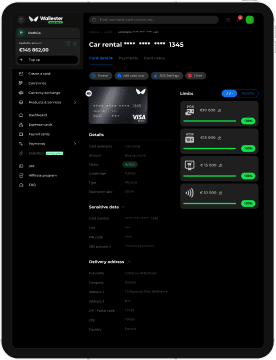
Most of these mistakes share a single root. It’s spending that happens before anyone has a clear way to see or sort it. Wallester Business closes that gap from day one, which is why the fixes above stop being chores and start being the default.
With Wallester Business, a business can:
- Open a free business account with its own IBAN, keeping company spending separate from personal from the start
- Give each person, project, or subscription its own card, so nothing runs through one shared login
- Watch every charge live from one dashboard, with an owner and purpose attached
- Give recurring subscriptions their own cards, so dormant ones are easy to spot and stop
- Hold and pay across 10 currencies, so foreign-billed tools aren’t converted on every charge
- Attach receipts to transactions and sync with Xero or QuickBooks, so month-end is already done
The account and cards are free to open, with premium plans for businesses that need more.
None of these mistakes is dramatic in isolation but they do cost quietly, and by the time they are obvious they have usually taken more than the fix would have. The reassuring part is how much a little early structure prevents at once.
A business account of its own, clear ownership of each card and subscription, and spending kept in view will head off most of this list before it starts, and leave a founder free to worry about the things that genuinely need worrying about.