A marketplace issuing cards to its sellers needs more than a card creation endpoint. Someone must approve the programme, fund purchases and help a cardholder when a payment fails. Your choice of provider determines how those responsibilities are divided between your team and its partners.
For product leaders and programme managers comparing Stripe alternatives, the first decision is the product category. Stripe Issuing creates payment cards. Stripe Payments handles customer payments. A business account with employee cards serves another workflow. Each requires a different comparison.
This guide compares five alternatives to Stripe Issuing: Wallester White-Label, Adyen, Marqeta, Airwallex and Checkout.com. It covers branded card programmes for UK and European businesses, the questions that determine eligibility and the costs to include in a provider quotation.
What Is Stripe Issuing?
Stripe Issuing is infrastructure for creating and managing physical and virtual payment cards. Developers can connect card creation, spending controls and transaction events to their own applications. A platform might use it to give customers cards, while a company could use it to build an employee spending product.
Issuing and acquiring sit on different sides of a payment. The issuer provides the card and participates in authorising its use. The acquirer processes the merchant’s acceptance of that payment. Comparing an acquiring fee with an issuing fee therefore compares different services.
Availability also has several layers. A provider may support a country for cardholders while applying different requirements to the company operating the programme. The card’s currency, funding arrangements and permitted use cases need their own checks. Stripe publishes country-specific Issuing requirements; the ability to take payments through Stripe does not establish eligibility for Issuing.
Why Compare Stripe Issuing Alternatives?
A different operating model. One platform may need APIs for an existing app. Another may need a branded mobile app and an operational portal alongside the cards. Establish which components your team will build before comparing the monthly quotation.
A change in programme requirements. Expansion into another country, a physical card launch or a new customer group can change the required legal entity and funding model. Ask each provider to assess the actual programme. A general statement about European coverage leaves these details unresolved.
A clearer cost model. Card creation is one line in the budget. Card manufacturing, shipping, transaction charges and support can change the total. A quote for the same expected activity gives your finance team a basis for comparison.
Changing provider also introduces work. An existing programme can involve new cardholder onboarding, card replacement and the handling of outstanding transactions. Agree the migration responsibilities with both providers before scheduling a change. An API demonstration alone does not establish that existing cards, wallet tokens or transaction history can transfer.
Stripe Issuing Alternatives at a Glance
The table identifies the product to assess and the decision that needs resolving. Market and programme approval requirements apply to every option.
| Provider | Product to Assess | Suitable Starting Point | Commercial Check |
|---|---|---|---|
| Stripe | Stripe Issuing | A team building its card workflow through APIs | UK Issuing rates and any negotiated programme terms |
| Wallester | Wallester White-Label | A branded Visa programme needing issuing infrastructure, an app and operational tools | Programme quote, approved markets and implementation scope |
| Adyen | Adyen Issuing | A platform evaluating issuing within Adyen’s financial infrastructure | Issuing setup, supported use case and programme quote |
| Marqeta | Card issuing and programme services | A team building transaction-specific funding and authorisation logic | Managed or processing model, issuer arrangements and quote |
| Airwallex | Embedded card issuing | A platform embedding cards alongside account and funding workflows | Embedded-finance quote and cardholder model |
| Checkout.com | Checkout.com Issuing | A platform evaluating an API-based branded card programme | Programme eligibility and issuing-specific quote |
Five Card Issuing Providers to Assess
1. Wallester White-Label
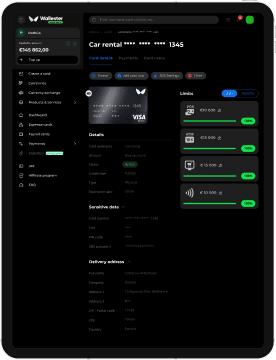
Wallester White-Label brings branded Visa cards together with card programme infrastructure. Its offering includes physical and virtual cards, a back-office portal, mobile apps and a REST API. A programme can use these components under the client’s brand, with the implementation scope agreed during onboarding.
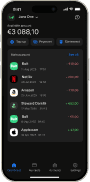
This combination matters when a product team wants a working cardholder experience alongside the issuing connection. The branded mobile app provides cardholder functionality, while the portal gives operations staff tools for card lifecycle management and reporting. The API supports integration with the client’s existing product.
Wallester AS is an Estonian licensed payment institution and Visa Principal Member. Programme responsibilities, the contracting entity and market eligibility should be recorded for the proposed launch. White-Label supports programmes across the EEA and UK, subject to the applicable programme arrangements. Describe the countries and customer types you need when requesting a proposal.
What the programme can include:
- Branded physical, virtual and disposable Visa cards, with card products and designs subject to the relevant approvals.
- A choice of shared or dedicated BIN arrangements through BIN sponsorship.
- A portal for managing cards, users and limits, with transaction reporting for the operations team.
- A branded mobile app with supported digital wallets and card authentication functionality.
- A card issuing API for connecting the programme to an existing application.
Useful starting audiences include a fintech introducing its own branded cards, a platform issuing cards to business customers and a financial institution adding a card product. The implementation discussion should cover what each audience will see in the app and what the programme team must operate behind it.
For a dedicated BIN, ask which programme features and operational responsibilities differ from the shared-BIN option. For a branded app, confirm the launch languages, wallet configuration and support process. These decisions belong in the agreed scope, alongside card production and testing.
White-Label pricing requires a programme proposal. Wallester Business is a separate product for a company’s own spending; its 300-card Free plan is not a White-Label price list. The launch schedule also depends on the programme and approvals, including physical card design and production where required.
Why choose: Wallester White-Label is a relevant option when you want branded Visa issuing with a cardholder app and operational tooling in the same proposed implementation. Discuss your White-Label card programme using your markets, card volumes and operating requirements.
2. Adyen Issuing
Adyen Issuing lets platforms create payment cards within Adyen’s financial infrastructure. Its documentation connects cardholders and payment instruments with the balance-platform model. That makes the account structure and movement of funds part of the issuing design.
For a platform already evaluating Adyen, this is a reason to assess the whole payment flow. Map where funds arrive, which balance holds them and how a card purchase is authorised. Payment acceptance and card issuing may belong in one commercial discussion, but their prices and responsibilities still need separate entries.
Capabilities to assess include:
- Physical and virtual payment instruments for supported programmes.
- API-based card creation and lifecycle management.
- Transaction rules governing permitted card activity.
- Balance accounts and transaction information used by the platform’s own application.
Adyen documents Issuing support in the EEA, UK and US, subject to its programme requirements. Its embedded model can link card funding to acquiring, or operate as a standalone setup funded from verified bank accounts. Ask Adyen to confirm the model for your legal entities and cardholders.
Request an issuing quotation for your use case. The acquiring prices on a general payments page do not establish what your card programme will cost. Include implementation responsibilities and the operational tools your staff will use when a cardholder needs help.
Why choose: Adyen deserves a place on the shortlist when a platform wants to assess card issuing together with its balance and payment infrastructure. The evaluation should demonstrate the complete funding and spending workflow for that platform.
3. Marqeta
Marqeta provides card issuing infrastructure and programme services. For prepaid programmes, its Just-in-Time funding model can fund a purchase when an authorisation request arrives. A developer can connect the decision to information held in the platform’s own system.
Consider a purchasing platform that knows which order a buyer is fulfilling. The programme can assess the requested purchase against that order before funding it, within the capabilities and rules of the agreed setup. The practical work includes deciding what happens when an order changes, an authorisation times out or a merchant submits a different final amount.
Capabilities to assess include:
- Just-in-Time funding for transaction-specific decision logic.
- APIs and events for card management and authorisation workflows.
- Physical and virtual card programme options.
- Programme services and issuer arrangements appropriate to the selected market.
Marqeta’s service model needs attention during selection. Its acquisition of TransactPay expanded its European programme capabilities. An older comparison describing Marqeta solely as a processor can miss part of the offering. Establish whether the proposal covers programme management and issuing services or leaves specific responsibilities with your own partners.
The choice also carries an engineering commitment. Your team must design and test the decisions it controls, then monitor the production integration. Ask about fallback behaviour, operational support and the evidence available when an authorisation is declined. Obtain a quote for that exact service model and geography.
Why choose: Marqeta is relevant for teams whose product depends on transaction-specific funding or authorisation logic and which have the engineering resources to operate that logic.
4. Airwallex Embedded Card Issuing
Airwallex offers embedded card issuing for platforms, alongside the corporate cards available through its own business-account product. For a Stripe Issuing comparison, the embedded offering is the relevant starting point. The business-account subscription alone does not price a platform’s customer card programme.
Airwallex’s issuing documentation distinguishes personalised cards associated with an individual from non-personalised cards for company use. That choice affects the cardholder data and product functionality required. Physical cards and digital-wallet support require personalised cards, so specify the cardholder model when designing the programme.
Capabilities to assess include:
- APIs for creating and managing cards within an embedded product.
- Personalised and non-personalised card models for supported use cases.
- Card controls and transaction information connected to the platform workflow.
- Funding and account capabilities that can be assessed alongside issuing.
Airwallex’s issuing documentation includes the UK and EEA. Confirm eligibility for the operating entity, cardholders and chosen card programme. A platform handling international business payments can ask Airwallex to demonstrate how balances fund card transactions. A currency supported for an account or transfer does not automatically establish the same availability for a card programme.
Its UK pricing information directs embedded-finance customers to custom pricing. Branded physical cards can also involve design approval, manufacturing arrangements and minimum quantities. Obtain these terms in the programme proposal before using a business-account card allowance in a cost estimate.
Why choose: Airwallex is relevant when embedded cards form part of a broader account and funding workflow, and the team wants to evaluate those components together for its supported customers and markets.
5. Checkout.com Issuing
Checkout.com Issuing provides APIs for branded physical and virtual cards. Its product information describes Visa and Mastercard options and includes single-use and multi-use virtual cards. The appropriate network and card format form part of the programme configuration.
The selection exercise should start with the user journey. A marketplace might need a virtual card for a defined purchase, while a business customer programme may require a physical card with a longer lifecycle. Each has different activation, replacement and operational support requirements.
Capabilities to assess include:
- Physical cards and single-use or multi-use virtual cards.
- API-based issuing and card management.
- Spending controls for the agreed programme.
- Transaction information for monitoring and reconciliation.
Checkout.com introduced its issuing proposition for UK and EEA programmes. Confirm current availability for the programme’s legal entities, cardholders and use case, including the selected network. Its wider payment-acceptance currency coverage should not be copied into an issuing specification.
Request an issuing-specific quotation. A general acquiring pricing model does not identify card manufacturing charges, the programme’s transaction fees or the division of support responsibilities. If your business already uses Checkout.com for customer payments, ask the team to explain which existing services can be reused and which require separate onboarding.
Why choose: Checkout.com is relevant for a platform comparing API-based card programmes, particularly where the team also wants to discuss its existing payment-acceptance relationship.
How to Compare Card Programme Costs
Give each provider the same activity assumptions. State how many cards you expect to create, how many cardholders will be active and how much they will spend. Split physical cards from virtual cards, and identify the countries and transaction currencies involved.
Then separate the quotation into the costs your team can check:
- Implementation and programme management. Identify setup work, recurring fees, minimum commitments and any services your own team must provide.
- Card creation and delivery. Include card creation, design, manufacturing, packaging, shipping and replacement where applicable.
- Card usage. Specify the charge per transaction, percentage-based charges, currency conversion and cross-border treatment.
- Exceptions and support. Ask about disputes, failed delivery, operational investigations and the support included in the contract.
Stripe’s published UK Issuing rates provide a useful baseline: £3.50 per standard physical card, excluding shipping and additional charges for custom cards. Stripe advertises waived card transaction fees on the first £500,000 of card volume, followed by 0.2% plus 15p per transaction. Its schedule also lists cross-border, currency-conversion and dispute charges. Confirm the applicable offer and any negotiated programme terms before using these rates in a forecast. Keep checkout and acquiring charges in a separate payment-acceptance budget.
Internal development belongs in the comparison too. An API quote may require your team to build cardholder screens, operational reporting and exception handling. A proposal including an app or portal should identify the functions supplied and the work still assigned to your team. Include that work in the budget before selecting a provider on card fees alone.
How to Choose the Right Issuing Provider
For a fintech introducing a branded Visa product, start by assessing the issuing responsibilities and the cardholder experience. Wallester White-Label combines those discussions with an app, portal and API offering. Confirm how its proposed configuration supports the customers and markets in your launch plan.
For a platform with its own app and an established engineering team, compare the API behaviour you need to control. Marqeta’s Just-in-Time funding is relevant where a purchase depends on information held in your system. Include failure handling in the evaluation, alongside the expected successful transaction.
For a platform evaluating a wider financial stack, examine the account and balance model as closely as the card. Adyen and Airwallex both warrant a detailed discussion of how funds reach the card programme. Checkout.com is another issuing candidate where payment acceptance is already part of the commercial relationship.
An employer buying cards for its own staff has a different decision to make. Start with the expense workflow and a company-spending product such as Wallester Business. A branded customer card programme requires the infrastructure and operational assessment described here.
Test the Programme Before Committing
- Write the eligibility brief. List the operating companies, cardholder countries, intended purchases, funding source and card types. Obtain confirmation that the proposed programme fits the provider’s requirements.
- Map responsibilities. Name the parties handling onboarding, cardholder support, disputes, funding and compliance processes. Record the responsibilities retained by your own team.
- Demonstrate a complete card journey. Create and activate a card, apply a spending rule, run permitted and declined purchases, and inspect the resulting records. Include the app or portal that staff and cardholders will actually use.
- Test operational exceptions. Include a refund, a reversed authorisation, a lost physical card and a delayed integration response. Ask for the agreed procedure and ownership for each case.
- Agree rollout and migration. Confirm approval dependencies, physical-card production and support coverage. For an existing programme, document how pending transactions and recurring merchant payments will be handled.
Run the demonstration with the people who will support the programme after launch. Their questions about a failed payment or an unrecognised merchant can expose work that a card creation demo leaves unanswered.
Build Around the Programme You Will Operate
Choose the provider whose proposal explains both the cardholder experience and the operational responsibilities. Bring your target markets, expected card activity and support model to a Wallester White-Label discussion. Ask the team to map the proposed programme against those requirements before agreeing the implementation.
Frequently Asked Questions
Wallester White-Label, Adyen Issuing, Marqeta, Airwallex embedded card issuing and Checkout.com Issuing are providers to assess. The appropriate choice depends on the programme's markets, funding model and operating responsibilities. Confirm eligibility for your company and cardholders with each shortlisted provider.
Stripe Issuing supports the UK and selected European countries, with requirements tied to the programme and account. Its documentation sets out supported countries and cross-border conditions. Confirm the legal entity, cardholder locations and currencies required for your own programme before implementation.
Issuing providers can support physical and virtual cards, subject to the chosen product and programme. Physical cards also require manufacturing, delivery and replacement arrangements. Confirm whether digital-wallet support and card activation are included in your proposed setup.
White-label card programmes allow approved cards and customer experiences to carry your brand. Wallester White-Label offers branded Visa cards, a mobile app, a back-office portal and an API. Card design, programme approval and the agreed implementation determine what is delivered.
Stripe's published UK Issuing price is £3.50 per standard physical card, with shipping excluded and custom cards priced additionally. Transaction, cross-border, currency-conversion and dispute charges can also apply. Check the current Issuing schedule and your programme's negotiated terms when comparing quotations.
Just-in-Time funding allows a prepaid card transaction to be funded at authorisation, based on the agreed programme logic. Marqeta supports this model so programmes can connect funding decisions to transaction context. The funding source, decision logic and fallback behaviour need to be defined for the programme.
Whether you need to build an app depends on the provider's product and your integration scope. An API implementation can connect issuing to your existing application. Wallester White-Label also offers a branded mobile app, which should be assessed against the cardholder functions required for your programme.
Stripe's application process distinguishes access to test functionality from approval to launch a live programme. Eligible businesses can use test access to assess the integration and then complete the required application steps. Confirm the information needed for your company, intended cardholders and use case before planning a launch date.