A paused campaign and a cryptic error message: media buyers know this is what a declined ad payment looks like, and they run into it more often than they’d like. But fewer know what’s really happening underneath. There’s a piece of card data called a BIN, quietly deciding whether the platform trusts the payment or not.
What Is a BIN?
BIN stands for Bank Identification Number, the first six to eight digits on any payment card. The number identifies the bank or programme that issued the card, and it’s one of the first things a payment network checks before a transaction goes through. This happens well before a payment network looks at the purchase itself.
Crucially, every BIN carries a reputation. Card networks and risk systems track how often transactions from a given BIN get disputed, reversed, or flagged as fraud. A card can be entirely legitimate and still inherit a bad reputation when other cards sharing that same BIN cause problems.
Why Ad Platforms Are Especially Sensitive to It
Meta, Google, and TikTok run some of the strictest payment risk systems anywhere, because ad accounts are a frequent fraud target. Stolen cards get used to buy ad space, then disappear before the chargeback lands. To catch that early, these platforms lean harder on signals like BIN reputation than most merchants do, and that creates a specific problem for legitimate advertisers.
Imagine an agency managing eight client accounts, spending anywhere from $2,000 to $20,000 a day across Meta and Google. To keep budgets separate, it issues a new virtual card for each client. From the platform’s side, that looks like a burst of new cards on the same BIN, spending quickly, across multiple accounts, which is also exactly what a fraud ring testing stolen card numbers looks like. The risk engine can’t easily tell the two apart. A mismatch between card region and billing currency raises the same flag, and cards that don’t support 3D Secure authentication are treated as higher-risk by default, regardless of who’s holding them.
According to Josefina Luduena, a Business Development Manager who works with advertising clients at Wallester, some agencies show up already knowing exactly what a BIN is, and that’s usually why they’re calling in the first place. They’ve already traced a string of declines back to their card infrastructure rather than their creative or targeting. So they reach out looking for a dedicated BIN or a whitelisting arrangement, not another virtual card.
Dedicated BINs and Merchant Whitelisting
Two tools address this, but they solve different problems.
A dedicated BIN takes a business’s cards out of the shared pool entirely, whether that means a fully exclusive BIN used by one company, or one split across a handful of businesses to spread the cost.
Because the BIN’s history belongs only to that business, or a small group of them, its reputation reflects their own transaction patterns, not the patterns of thousands of unrelated cardholders. An agency spending $150,000 a month across client accounts on a shared BIN might see a handful of declines a week that have nothing to do with any one campaign, just noise from other cardholders on the same range. But moving those cards to a dedicated BIN usually clears that up within a billing cycle or two, because the BIN’s track record is now entirely the agency’s own.
Merchant whitelisting solves a narrower problem: 3D Secure authentication. Large card payments usually trigger an extra verification step, and a platform processing thousands of transactions a minute doesn’t always handle that cleanly.
For an agency pushing a big daily budget through Meta, a single unresolved 3DS prompt can fail the payment outright and pause the campaign until someone notices. A business can request that specific merchants, an ad platform, for instance, be whitelisted so verified, high-volume relationships skip that step entirely, provided the card and BIN already support 3D Secure to begin with.
Fixing the Problem at the Card Level
Wallester Business gives media buyers and agencies the infrastructure to stop payment declines at the source. Businesses can:
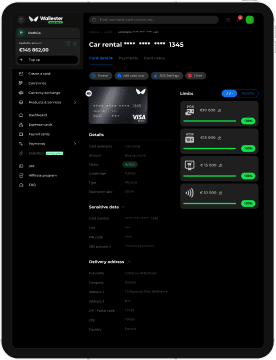
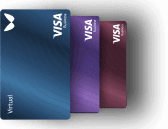
- Issue up to 300 free virtual Visa cards instantly, one per platform, client, or campaign
- Access multiple BIN options, including dedicated and exclusive ranges, to stay out of high-risk shared pools
- Request 3D Secure whitelisting for specific ad platforms to cut authentication-related declines
- Set spending limits and merchant restrictions per card
- Monitor every transaction in real time from one dashboard
- Replace a blocked card instantly, without pausing other campaigns
- Label and organise cards by client, platform, or campaign for faster reconciliation
- Exchange funds across 10 currencies with no service fees, useful for agencies running international campaigns
- Create and manage cards programmatically through the API for teams issuing at scale
- Integrate directly with Xero and QuickBooks for billing and reporting
- Complete remote onboarding, typically within hours
Stop guessing why a payment failed. Open a Wallester Business account and move ad spend onto cards and BINs built to hold up under real advertising volume.