A company with 15 employees might need 15 cards for travel and office purchases. An agency with the same headcount might need separate cards for dozens of advertising accounts and software subscriptions. Those businesses can reach different decisions about Wallester Business and Pleo, even when their monthly spending is similar.
This comparison looks at UK subscription costs, card allowances and the work finance teams do after a purchase. It is written for business owners and finance managers choosing between the two platforms, with particular attention to agencies and growing teams.
Quick Verdict
Wallester Business is worth considering when you need a business account alongside a large virtual-card allowance and individual spending controls. Its Free plan includes 300 virtual cards and has no monthly subscription or employee seat charge. Delivery, additional cards and certain operations can still incur fees.
Pleo Build and Optimise deserve a closer look when your requirements include employee reimbursements and approval workflows. Compare the relevant plan with the number of users who will actually need access. A lower subscription price does not settle the decision if the finance team still needs another tool to run its expense process.
What Do Wallester Business and Pleo Offer?
1. Wallester Business
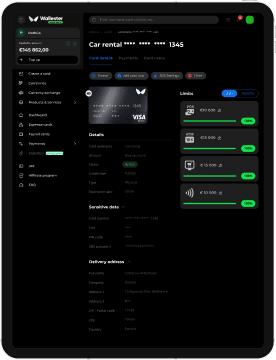
Wallester Business brings a business account and IBAN together with Visa cards and expense management. Businesses can hold multiple currencies, set card limits and attach receipts to transactions. Account availability and dedicated account details depend on eligibility, including the business’s country and industry.
An employee can use a Wallester company card for an approved purchase, then attach the receipt to that transaction. Finance can review the spending and prepare the records for accounting without treating a bank statement as the entire expense record.
The features to assess in an initial test include:
- Individual card and account limits, with the option to freeze or close a card.
- User roles and permissions for access to the business account and spending records.
- Receipt and document attachment to transactions.
- Connections to Xero and QuickBooks Online.
An agency could allocate cards to separate advertising accounts; an operations team could separate recurring software purchases. Merchant acceptance and the rules of each advertising platform still apply.
Why choose Wallester Business: consider it when card volume and control over company-funded spending are central to your requirements. Explore Wallester Business and test the transaction-to-accounting process with your own records.

2. Pleo
Pleo combines company cards with expense software. Its product range includes reimbursement and invoice workflows, with availability and charges depending on the plan and market. This can matter when employees regularly pay for business purchases themselves and finance needs to review those claims.
In the UK, the current Pleo card agreement identifies Pleo Financial Services UK Ltd as the issuer under a Mastercard licence. Check the agreement applicable to your company when assessing the service. Card-network membership alone does not guarantee better merchant acceptance or lower fees.
When assessing Pleo, check:
- The steps for submitting and reviewing an out-of-pocket expense.
- The approval rules available on the selected plan.
- How receipts, categories and accounting exports work with your accounting system.
- Which employee cards and vendor cards your subscription includes.
Why choose Pleo: consider it when the selected plan’s reimbursement and approval processes match work your finance team currently performs by hand.

Why Card Numbers and Expense Workflows Affect the Decision
User numbers affect subscriptions. Count everyone who needs a paid user role, then check the treatment of administrators and reimbursement-only users. A calculation based only on employees holding cards can miss other charges.
Card types serve different purposes. An employee card and a vendor card assigned to a recurring supplier are different units. Do not compare Pleo’s vendor-card allowance with Wallester’s total virtual-card allowance as though the two figures describe identical packages.
The accounting process affects staff time. Test one card purchase, a missing receipt and a refund. Follow each record through to accounting. This shows where a person still has to review, correct or export data, which a feature tick in a comparison table cannot show.
Wallester Business and Pleo at a Glance
| Area | Wallester Business | Pleo |
|---|---|---|
| Product focus | Business account, cards, currencies and expense management | Company cards and expense software |
| Subscription model | Free plan and paid plans; no employee seat charge | Paid per-user plans; minimum users and terms vary |
| Virtual-card planning | Free includes 300 virtual cards | Employee cards plus separate vendor-card allowances: 1 on Start, 15 on Build, 50 on Optimise |
| Expense records | Card transactions with receipts and documents | Card expenses and plan-dependent employee expense workflows |
| Accounting | Xero and QuickBooks Online connections | Accounting integrations; check the connector and plan |
| Buying question | How many cards and which account controls do we need? | Which expense processes and paid user roles do we need? |
Pricing for UK Businesses
Wallester Subscription and Card Allowances
Wallester’s Free plan includes 300 virtual cards without a monthly subscription. Premium is EUR 199 per month with 3,000 virtual cards, and Platinum is EUR 999 per month with 18,000. Enterprise terms are agreed separately. Wallester quotes these paid plans in euros; a sterling comparison would need a stated exchange rate and date.
There is no employee seat charge. Extra virtual cards beyond the included allowance have a monthly fee, while physical-card delivery and some transactions carry separate charges. Check the Wallester Business pricing against the number of active cards you expect to maintain.
Pleo UK Small-Business Plans
The current UK plan names are Start, Build and Optimise. Monthly billing and annual billing use different rates:
| Plan | Monthly Billing: Per User/Month | Annual Billing: Per User/Month | Minimum Users |
|---|---|---|---|
| Start | GBP 8 | Monthly billing only | 1 |
| Build | GBP 14 | GBP 12, billed yearly | 3 |
| Optimise | GBP 18 | GBP 16, billed yearly | 3 |
Pleo also has offers for larger organisations. Treat the table as the UK small-business comparison, and confirm applicable taxes, additional charges and contract terms with the provider. Check whether a contract on monthly billing can be cancelled immediately and whether committed seats can be reduced during its term.
A Subscription Example for 15 Users
For 15 paid Build users on annual billing, the calculation is GBP 12 x 15 x 12 = GBP 2,160 a year. Optimise on the same basis is GBP 16 x 15 x 12 = GBP 2,880. Paying the monthly rates for twelve months would total GBP 2,520 for Build or GBP 3,240 for Optimise.
Wallester Free has a zero monthly subscription if its included card allowance and available features meet the team’s requirements. That does not make every transaction free. These figures compare subscription charges only, before any applicable tax; they exclude delivery, currency conversion and other paid operations. They say nothing about total annual savings or feature coverage.
Before choosing a plan, write down your expected card count and the expense processes you need. A team that needs reimbursements should include that requirement in the comparison, even if most purchases already go through company cards.
Currency Exchange and Card Conversion
Currency exchange between account balances and conversion during a card purchase are different operations. Wallester supports exchange between your own accounts, with the rate and applicable fee shown before confirmation. Card purchases in a different currency follow the relevant card tariff.
Pleo also charges for currency conversion according to its applicable plan and terms. Neither platform should be assessed using a blanket assumption of free foreign-currency spending.
For a useful test, take a recent foreign-currency purchase and record the merchant currency, the card’s account currency and the amount charged. Check the conversion route and any fee against the provider’s tariff. Wallester publishes a separate price list for these charges. Compare that transaction separately from an exchange between account balances.
Expense Controls and Accounting
Wallester provides individual card controls and receipt attachment. Avoid assuming that every policy or approval process in your organisation can be reproduced with a card limit.
Its Xero and QuickBooks Online integration uses a reviewed workflow: connect the accounting system, map the relevant records, review transactions and trigger synchronisation. That gives finance a step at which to check categories and tax treatment before sending the records through.
Pleo’s reimbursement product lets employees submit expenses paid from their own money. Its accounting connectors and expense controls deserve a separate test using your actual bookkeeping requirements. A connector’s name does not tell you whether your dimensions, tax codes and attachments will arrive in the form your accountant expects.
For both platforms, ask the finance team to test a refund and an expense with an incomplete receipt. Include the person who closes the books in that test. A successful card payment only proves the first part of the process.
Which Platform Fits Your Business?
Agencies and Teams Managing Advertising Spend
Wallester’s card allowance is relevant to an agency that wants separate cards for advertising accounts or software services. Individual limits can help contain the amount available on each card. Confirm merchant acceptance during a controlled test before moving recurring spending.
Compare Pleo using the type and number of cards included in the proposed plan. If the agency also processes frequent employee claims, test that workflow alongside the advertising-card requirement. Headcount alone is an incomplete basis for the decision.
Teams with Frequent Employee Reimbursements
Pleo is worth testing when employees regularly pay for travel or other business costs themselves. A reimbursement process can be a buying requirement in its own right. Check the selected plan’s fees and review steps, including how a rejected or incomplete claim is handled.
For a team moving towards company-funded purchases, test Wallester’s cards and receipt workflow against the transactions that currently generate claims. Record the expenses that would still need a separate reimbursement process.
Businesses Reviewing Their Account Setup
Wallester Business includes an account and IBAN alongside its cards. Confirm the account details available to your company and the specific payment routes you require before deciding to replace an existing account arrangement. This comparison does not assume that every transfer or invoice workflow is included.
If account and cross-border payment needs are central to the decision, the separate Wallester Business vs Revolut Business comparison covers another option. Keep the account requirements and the employee expense requirements visible as separate items in your evaluation.
How to Evaluate a Move from Pleo to Wallester
- List active cards and recurring merchants, including software renewals and advertising accounts. Record the cardholder or person responsible for each payment.
- Apply for the new account and complete the required business checks. Approval and timing depend on verification; do not plan around a guaranteed opening date.
- Test a small group of purchases, receipts and accounting records before moving the rest of the team. Include a refund in the test.
- Update saved payment details with each merchant, then verify the next charge. Keep the records needed for reconciliation and outstanding claims.
Check cancellation terms and export requirements before closing an existing arrangement. Keep access to the old records until finance has reconciled the outstanding transactions and retained the documents it needs.
Choose Around the Work Your Team Does
Give each provider the same requirements: paid user roles, active card count, currencies and the expense processes finance needs to run. Then test those requirements with real transactions. A plan that fits the card count can still leave work outside the system.
Explore Wallester Business if your next step is to test a business account with company cards and receipt controls. Use those initial transactions to establish which purchases and accounting tasks your team can handle in it before moving recurring spending.
Frequently Asked Questions
Wallester Business is an alternative to Pleo for businesses comparing company cards and expense management. It combines a business account and IBAN with card controls and receipt attachment. Compare the expense processes you require, including reimbursements and approvals, before choosing a plan.
Wallester Free has no monthly subscription, while Pleo charges for its UK small-business plans. Pleo Build for 15 users on annual billing has a subscription cost of GBP 2,160 a year. Compare transaction charges and required features separately, because the subscription is only part of the total cost.
Pleo's current UK small-business plans are paid plans. A trial lets a business evaluate the service before committing, but it is different from an ongoing free subscription. Wallester Business has a Free plan with an included virtual-card allowance and separate charges for some services and operations.
Wallester Business can be considered for advertising spend that merchants accept by card. Its Free plan includes 300 virtual cards, with individual card controls. Test the relevant advertising accounts before transferring recurring spend.
Currency-conversion charges depend on the platform, plan and transaction. With Wallester, exchange between your own account balances and conversion during a card purchase are different operations. Compare each provider's applicable tariff using the merchant currency and the account currency, without assuming that a free subscription makes conversion free.
Wallester Business and Pleo offer connections to Xero and QuickBooks Online. Wallester's documented process includes mapping records, reviewing transactions and triggering synchronisation. Check the connector for your accounting product and test categories, tax codes and attachments before relying on it for month-end work.
Pleo's current UK card agreement identifies Pleo Financial Services UK Ltd as the issuer under a Mastercard licence. The entity is authorised by the Financial Conduct Authority as an electronic money institution. Read the agreement that applies to your account when checking the issuer and service terms.
You can evaluate a move to Wallester Business by applying for an account and testing the spending and accounting processes you need. Account approval depends on the required checks, so a fixed migration time cannot be promised. Update each recurring merchant and retain the old transaction records before closing an existing arrangement.