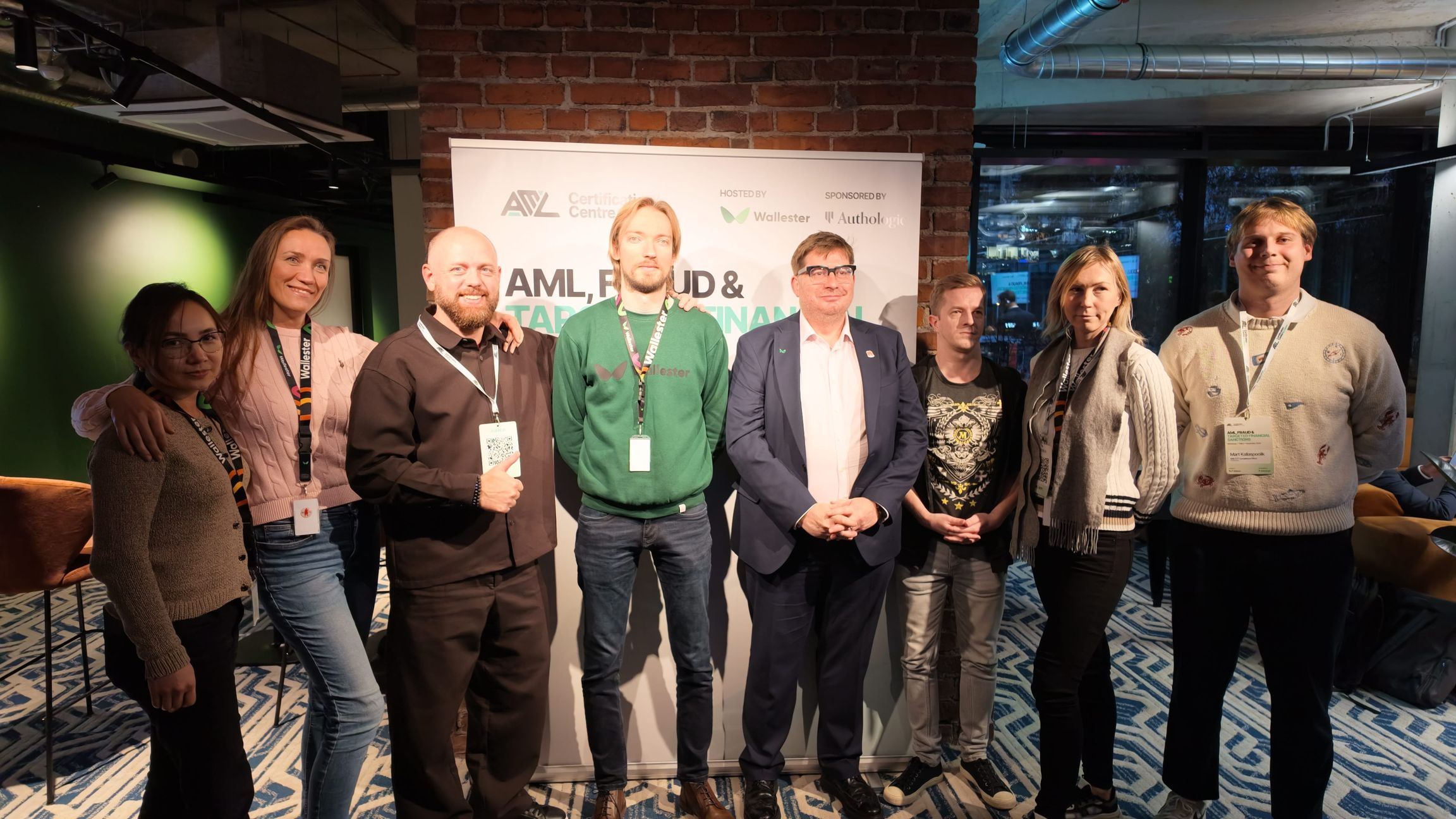
On 4–5 November, we were glad to host a two-day workshop on money laundering, fraud and targeted financial sanctions at our Golden Gate office in Tallinn. The AML Certification Centre designed and ran the programme, bringing together compliance and fraud specialists from banks, payment firms and law enforcement.
The format was built around practice. Mornings were for talks and panels, and afternoons for hands-on work. Participants took real cases through to decisions in the room, under the EU AML rules that apply from 2027. Most of the time went on the calls compliance teams make every day: whether an alert is genuine, what to document, and when to escalate.
Day one: laundering and sanctions
The first day opened with current laundering methods, including money mules, trade-based laundering and crypto funds arriving at a bank. Then, a session on targeted financial sanctions followed. It looked at how sanctions evasion has changed since 2022, what reaches Baltic institutions today, and how to screen in a way that holds up to review: EU against OFAC lists, ownership and control, and the 50% question.
Before lunch, a panel worked through three borderline cases from payments, crypto and banking, where the rulebook can’t always give a clear answer.The afternoon was hands-on, as small groups took a single alert through information requests, an asset freeze and a suspicious activity report written to stand up to scrutiny. A sanctions decision clinic followed, separating true hits from false positives and resolving questions of ownership. The day closed with an evening networking reception.
Day two: fraud and the road to AMLR
The second day turned to fraud, seen from both the bank’s side and the police’s. The sessions covered how a fraud prevention environment is built layer by layer, and what a single scam case reveals about the value of shared intelligence. A joint session then followed one case from an institution’s first alert through to police action, showing what information each side needs and how the cooperation works in practice.
A panel on AMLR readiness looked at what is new under the regulation, where firms tend to over- or under-invest, and what supervisors will expect to see evidenced.
The afternoon brought both days together in a cross-border case lab that combined laundering, fraud and sanctions evasion in a single case. A final exercise then had participants map their controls and their use of AI against the AML Regulation, and leave with a prioritised roadmap. Certificates were handed out in the room before the workshop closed.
A few Wallester colleagues took part across both days. They included Paul Munson, UK Chief Compliance Officer and MLRO, and Boris Ojasoo, AML Crypto Specialist, who joined the speaker lineup.
Thank you
We’d like to thank AML Certification Centre for organising the workshop and for building a programme so focused on real work. Thanks also to the speakers from Iute Group, LHV Bank, Lex Law Office, Citadele, Bybit and the wider industry, and to everyone who joined us at Golden Gate for two full days.