This guide examines payment terms negotiation strategies and net settlement schedules in commercial transactions. It outlines standard credit timeframes, key negotiation factors, practical steps for financial controllers, and how digital payment tools assist modern finance teams in maintaining operational cash flow visibility across daily business operations.
Every business relies on steady cash flow, yet mismatched credit schedules frequently create sudden liquidity squeezes. When customer payments arrive weeks after vendor invoices fall due, working capital drains quickly. Negotiating realistic net terms aligns outgoing settlements with incoming revenue, giving finance teams full operational control. This balance protects daily operations, strengthens supplier relationships, and keeps growing companies financially stable without resorting to expensive short-term loans.
What are net payment terms and why do they matter?
Net payment terms define how long a buyer has to pay an invoice after it is issued. Clear payment terms assist predictable cash flow and help businesses plan incoming and outgoing payments.
In commercial trading, settlement rules establish the contractual timeframe for settling accounts. These rules govern credit agreements between buyers and sellers, marking out precise payment due dates for fulfilled orders. Customer payment terms determine when incoming revenue enters accounts receivable, whereas supplier payment terms dictate outgoing settlements managed by accounts payable. Aligning these two sides remains central to working capital management. When customer collections lag behind supplier deadlines, businesses experience liquidity squeezes that hinder daily operations.
Standard credit timeframes define everyday business transactions. Options range from immediate settlement on receipt to extended arrangements such as Net 7, Net 15, Net 30, Net 60, and Net 90. Shorter arrangements require swift administrative processing but protect vendor liquidity. Extended windows provide buyers with flexibility to monetise inventory before capital leaves the business. According to research published by the Small Business Commissioner, late settlements cost the UK economy nearly £11 billion per year, causing 14,000 business closures annually. Establishing realistic timeframes prevents defaults and stabilises cash reserves.
| Payment term | Meaning |
| Due on receipt | Payment expected immediately |
| Net 15 | Payment due within 15 days |
| Net 30 | Payment due within 30 days |
| Net 60 | Payment due within 60 days |
| Net 90 | Payment due within 90 days |
Q&A: Is Net 30 the standard credit schedule across B2B trading?
Net 30 remains the most widely used baseline across UK commercial trading. However, standard practice varies by sector, purchase volume, and specific market conditions.
Further Reading: Invoice Financing: Using Factoring and Discounting to Improve Liquidity
How can businesses negotiate better payment terms?
Businesses rarely achieve better payment terms through negotiation alone. Strong payment records, predictable purchasing patterns and long-term supplier relationships often carry more weight than the negotiation itself. Before requesting new terms, finance teams should review current agreements, analyse payment performance and define a realistic objective. Some suppliers may value larger order commitments, while others place greater importance on prompt payment or contract length. A proposal built around those priorities stands a better chance of success than a simple request for extra payment days.
Structuring a clear dialogue improves outcomes for both parties. Finance teams should follow a systematic framework when seeking revised credit terms:
- Analyse historical payment performance and transaction volume to establish strong creditworthiness.
- Identify target outcomes, including extended payment due dates, early payment discount structures, or instalment arrangements.
- Schedule a formal discussion with the commercial contact to present trade data and mutual benefits.
- Draft adjusted contract terms that incorporate agreed milestone schedules and clear review periods.
- Implement updated schedules within central accounts payable and receivable systems.
Offering incentive mechanisms, such as a 2% early payment discount for settlement within 10 days, encourages prompt payment from cash-focused buyers. For larger contracts, dividing lump sums into structured instalment arrangements lowers default risk and maintains consistent transaction flow. Regular review of existing agreements keeps credit limits aligned with changing trading conditions.
Q&A: Should every supplier receive identical credit schedules?
No. Payment arrangements should reflect transaction size, strategic importance, supplier scale, and historical payment reliability over a single uniform rule across all vendors.
Which factors affect payment terms negotiation?
Payment terms depend on commercial risk, industry practice, company size, purchasing volume and the strength of the business relationship.
Commercial negotiations do not occur in isolation. External economic conditions, including inflation and interest rates, directly alter credit costs and liquidity requirements. In international trade, cross-border shipping delays and currency fluctuations lead suppliers to demand shorter settlement windows or advance payment security. Business credit history and overall payment performance determine how much flexibility vendors offer.
| Factor | Possible effect on payment terms |
| Strong payment history | Greater flexibility |
| Large purchase volume | Opportunity for longer terms |
| New supplier relationship | More cautious terms |
| High commercial risk | Shorter payment periods |
| Long-term partnership | Greater willingness to negotiate |
Supplier bargaining power and contract value exert substantial influence during credit discussions. Dominant suppliers selling scarce goods command strict conditions, whereas buyers committing to high purchasing volumes secure longer settlement windows. Assessing customer reliability protects businesses from mounting bad debt.
Finance controllers must monitor operational indicators to identify when credit agreements require adjustment. Key signs that credit arrangements require review include:
- Frequent late payments or routine requests for invoice deadline extensions from core clients.
- Persistent working capital shortages when settling essential operational expenses.
- Significant increases in purchasing volume or contract duration that warrant improved terms.
- Macroeconomic adjustments, such as rising interest rates, that increase the cost of carrying short-term receivables.
Q&A: Can longer settlement periods always improve cash flow?
Extended credit periods preserve buyer cash temporarily, but overextending payment timelines can damage key supplier relationships, limit vendor bargaining power, or trigger late payment penalties.
How does Wallester Business assist payment management?
Wallester Business gives finance teams real-time visibility into company spending and corporate card payments, helping businesses manage supplier payments within agreed payment terms.
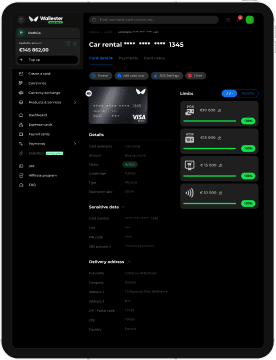
Maintaining agreed credit schedules requires precise control over outgoing business payments. Negotiated payment terms work best when payment activity is visible across all corporate accounts. Wallester Business provides a comprehensive financial infrastructure that gives organisations central authority over outgoing spending and operational expenses. Through instant card issuing, finance managers can deploy unlimited virtual Visa corporate cards alongside physical business cards for distributed teams, establishing immediate oversight over procurement activity.
The platform combines real-time expense visibility with spending controls and approval workflows. Finance teams benefit from accurate records of outgoing payments, preventing unauthorised disbursements and keeping vendor payments strictly within contractual due dates. Automated transaction monitoring feeds data directly into central accounting integrations, eliminating manual reconciliation delays and simplifying finance reporting.
Centralised expense management guarantees that corporate card usage aligns with working capital targets. By establishing clear expense limits and approval rules, payment controls assist stronger financial planning and supplier relationships. Finance departments gain total control over business expenditures and maintain reliable payment habits with vendors.