Launching a modern card programme takes more than good intentions, good design, or a well-built app. What it takes, in short, is a direct relationship with a card network. Networks, for their part, rarely hand that out based on need, because what they’re looking for is scale.
For example, let’s imagine a regional bank with thirty thousand customers that wants to launch a modern debit card programme, supported by a redesigned app. The first call it needs to make isn’t to a design agency. It’s to a card network directly, and that call will most likely go nowhere unless there’s enough transaction volume to make the negotiation worth the network’s time.
It Comes Down to Negotiating Power
Card networks set rates and terms through negotiation, and negotiation tends to run on volume. A bank processing a few million dollars a year in card transactions has little to offer a network that a bank processing a few billion doesn’t already bring at better terms.
Those terms cover more than a headline rate. They set the interchange a bank earns on every transaction, the fees a network charges for each authorisation, and often a minimum volume the bank has to commit to just to keep the deal.
A large bank usually negotiates all of that once, then reuses it across millions of cards. On the other hand, a small bank negotiating the same terms would spread that same effort across a fraction of the volume, which is precisely why the network has no reason to offer it the same deal.
Obviously, this has nothing to do with a small bank’s reputation or its risk profile. A network doesn’t hold back from smaller banks out of caution. It simply has no commercial reason to offer a small player the same terms as a large one. In other words, the real problem is the size of the bank’s transaction volume, and that isn’t something a bank can build on its own in the time it would take to matter.
What Gets Stuck Because of It
The result shows up in the product a small bank’s customers hold. Card designs stay outdated, for example, because redesigning and reissuing a card programme means renegotiating terms that took years to lock in the first time.
But it shows up in many other ways as well. A customer wants to freeze a lost card instantly, or see a transaction the moment it happens. Often they can’t, not because the bank doesn’t want to offer it, but because those features sit inside whatever platform came bundled with the original network deal.
Also, mobile apps stay basic, and that’s not the network’s fault either. Building and maintaining a modern app takes an engineering team most small banks don’t have. Customers notice all of this, and increasingly look elsewhere for the card and app experience their own bank isn’t offering, toward challenger banks and fintechs built on infrastructure that already had those terms in place.
Holm Bank Added Cards Without Adding a Negotiation
Holm Bank is known as one of the more technologically advanced banks in the Baltics, with a track record of closing the gap between traditional banking and fintech, the kind of partnership the industry has started calling a “BankTech.” Rather than build a new card platform from scratch or negotiate a network relationship of its own, Holm partnered with Wallester.
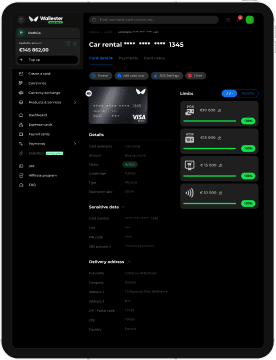
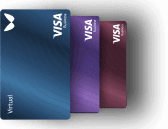
Through that partnership, Holm issued virtual and virtual disposable Visa cards. Cardholders can view their PIN inside the app and freeze or unfreeze a card in real time, capabilities that weren’t previously available to customers of traditional banks. Holm now operates as a fuller-service bank, letting customers borrow and spend inside the same relationship, without ever needing a card network relationship of its own.
Holm isn’t a special, one-off case. The same infrastructure that made this possible for Holm is available to any bank facing the same scale problem, whether it has thirty thousand customers or three hundred thousand.
Skipping the Negotiation Altogether
Building financial features into a product used to take a lot of work upfront: securing licences, standing up a compliance function, connecting to a card network directly, all before a single card went live. None of that disappeared. Wallester already did it, as a Visa Principal Member running infrastructure that has issued more than 9.2 million cards and processed over 83 million authorisations. A small bank builds on top of that instead of starting its own negotiation from zero. With Wallester White-Label, banks can:
- Issue Visa Classic, Gold, or Platinum cards, virtual, physical, or disposable, under their own brand, without negotiating a single tier themselves
- Start on a shared BIN to launch fast and cheap, or move to a dedicated BIN range later for full control over segmentation, without renegotiating either way
- Provision cards into Apple Pay, Google Pay, and Samsung Pay the same day they’re issued
- Give customers instant card freezes and biometric approval on payments in place of SMS codes, the modern controls a legacy card programme usually can’t offer
- Add vIBANs so incoming payments reconcile automatically instead of by hand
- Rely on Wallester for PCI DSS Level 1 security and PSD2, GDPR, and DORA compliance, plus KYC, KYB, and AML, handled underneath the bank’s own brand
- Go live in weeks, not years, with physical card production typically taking around 40 days once Visa approves the design
For a small bank, the real obstacle has always been a negotiation it could never win on its own. Now there’s a way around it that doesn’t require winning that negotiation at all. If that’s worth exploring, talk to our team about what a programme could look like on top of what you already run.