Any platform that moves money between two different groups of people takes on a list of jobs that distract from their core product: getting funds from one side to the other, checking who everyone is, and keeping records that regulators will accept.
Peer-to-peer lending platforms built themselves on a simple model. Essentially, they match investors with capital to founders and businesses needing loans. In theory, P2P platforms exist to evaluate credit risk, set interest rates, and connect supply with demand. But in practice, every loan sets off a chain reaction of the financial admin.
So what started as a simple matching tool turns into a web of payment routing and compliance checks.
Moving Funds Across a Network Is an Operational Trap
Here’s a typical transaction scenario for investors: an investor deposits 10,000 euros so they can lend it to 10 different companies. That single deposit will get split into 10 smaller transactions, and each will sit in an account before it reaches a borrower.
On the payout side, imagine you have 100 borrowers. They make repayments on different days of the month, and every payment has to be matched against its repayment schedule. Based on the terms, it then gets split between principal and interest, and shared out across however many investors funded that loan.
None of this happens magically. Someone has to build the ledgers and bank integrations, as well as handle any edge cases that pop up. Every developer hour spent fixing payment problems is an hour lost from building the product itself.
Regulatory Scrutiny Turns Payment Routing Into a Legal Duty
Handling other people’s money comes with real oversight. Every investor has to pass Know Your Customer (KYC) checks and Anti-Money Laundering (AML) screening. Corporate investors need even deeper checks: Know Your Business (KYB), owner verifications, and corporate structure reviews.
Someone also has to constantly watch transactions for fraud and sanctions violations. Getting an EU payment licence alone can take a dedicated legal team over 18 months. Then there’s setting up safeguarding accounts with partner banks. Of course, reporting doesn’t end once a licence has been granted.
None of this touches the lending model itself. Yet all of it has to be in place before the platform moves a single euro. For a platform entering new markets, the compliance workload can eat up a large share of the time and budget meant for growing the loan book.
From Bank Transfers to Instant Spending and Branded Accounts
Traditional loan payments cut the platform out of its own product. A loan gets approved, the platform wires the money to an external bank account, and the borrower leaves the app to go spend it elsewhere. They only reappear when the next repayment’s due.
In between all this, the platform has no idea how the money gets used. But embedding a virtual card changes this. Approve a loan, and the funds land on a borrower’s card, ready for them to spend. The platform makes itself central to the borrower’s daily business, well beyond loan approvals and repayments.
The same idea works in reverse on the investor side. Investors get paid back to their card, and they can choose to reinvest it or spend as they wish.
Building This In-House Rarely Pays Off
Every piece of this puzzle is a project on its own: ledgers, KYC/AML checks, card issuing, licensing.
Connecting to card networks and meeting bank-grade security standards takes years of engineering work. And it’s not something to “set and forget.” Card scheme rules change and security standards get stricter each year. At the same time, local regulations shift across every country a platform operates in. Someone has to keep up with it at all times.
Unless a platform is moving very large amounts of money, building this from scratch rarely pays off. Every engineer working on payment infrastructure is an engineer not working on credit scoring or the borrower experience, which are the real differentiators that set platforms apart.
How Wallester White-Label Fits
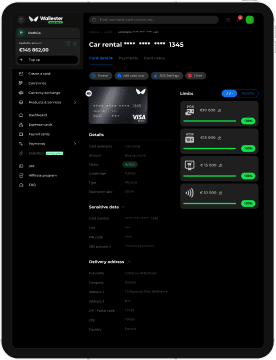
Wallester White-Label handles the payment layer instead. Wallester manages the regulatory licences, card network connections, and mandatory compliance checks. And lending platforms can add accounts, cards, and payments without having to take on any of the infrastructure underneath.
With Wallester White-Label, you can:
- Launch fully branded physical and virtual Visa card programmes under your own company name
- Integrate card issuing and payment capabilities directly into your lending app via API
- Issue cards instantly with native Apple Pay and Google Pay support
- Apply real-time spending controls and transaction limits tailored to your business logic
- Offer multi-currency accounts and payment features alongside card issuing
- Rely on Wallester for issuing, payment processing, KYC, KYB, AML, and other ongoing compliance requirements
- Expand across the EEA, UK, and international markets through a single integration
If manual payment processing and fund routing are slowing your platform down, building the fix in-house is rarely the answer. Moving that operational layer onto white-label infrastructure frees your team to focus on the core product. Investors get paid, borrowers get funded, and compliance runs continuously.