Lending decisions get judged on one question above all others: will the borrower pay the loan back? Both underwriting models and covenants are in place to answer those questions positively. But there’s a second question that gets far less attention, even though it carries as much influence: do the funds go where they’re supposed to once the money’s in the account?
For a general-purpose facility, this might not matter that much. But for working capital, equipment, fleet, and supplier finance, it decides whether the loan performs at all.
Loans Approved for One Thing, but Spent on Another
Picture a wholesaler borrowing a certain amount of capital to pay a supplier ahead of a seasonal order. The lender transfers the funds, so the money lands in the company’s account. There it sits alongside the VAT bill, payroll, and, for example, office rent due on Friday.
The finance team pays the most urgent thing in front of them, which is how most small businesses get through a tight month. In other words, nobody intended to misuse anything. Yet by the time the supplier invoice is due, a quarter of the borrowed amount has gone to payroll and a late tax bill. The order gets cut, and the revenue that was meant to service the loan never arrives.
Transfers Hand Over Control With the Cash
The standard controls are documentation and contracts. Lenders ask for the invoice before releasing funds, require receipts, and write a use-of-proceeds clause into the agreement, with a right to call the loan if it’s breached.
All of that helps, of course, but none of it intervenes directly the money moves. Contracts get enforced after a breach and invoices show what a supplier billed. Neither says where the borrower’s money really went. Then receipts turn up weeks later, and the ones that would be most useful are the least likely to turn up at all.
Paying the supplier directly is a partial solution. It might work when there is one invoice and one vendor. But it falls apart when there are 36 purchases from 12 vendors over three months. Real controls travel with the money and are applied when it is spent.
Cards Put the Rules Where the Money Is
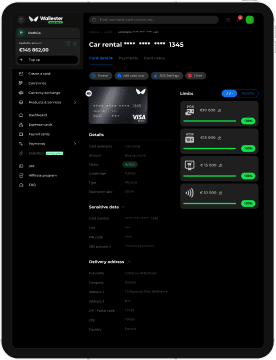
A lender-issued card carries its restrictions with it. The facility is made available on the card, and the rules about what it can buy are enforced by the authorisation itself, meaning before the transaction completes.
An equipment card can be limited to approved vendors that supply the key tools of the trade. A fleet card can be restricted to fuel and vehicle-related merchant categories, with a per-transaction cap that makes an unusual purchase visible the moment it happens. A software expense card can be opened to B2B supplier categories and closed to everything else.
ICrucially, the borrower keeps flexibility inside those boundaries. A fleet operator fills up wherever is convenient or a wholesaler pays whichever supplier has stock. What stops, though, is parts of the loan disappearing into payroll without anybody noticing.
Control Also Buys Cleaner Data
The second effect is quieter, but, at the same time, it may be worth more. Every card transaction arrives as structured data: merchant, category, amount, timestamp. With a transfer, visibility stops at the receiving IBAN.
On the other hand, with a card programme, a lender can see a facility drawn to the limit in the first week, spend drifting into categories nobody expected, or utilisation flattening out months before a repayment is missed. All of that happens while there is still time to pick up the phone and find out what’s going on.
This feeds renewal decisions and portfolio monitoring. It also narrows one of the more common routes to default, where a creditworthy borrower fails because the money went to the wrong problem. Reporting gets easier too, because the evidence of how a facility was used is generated as it happens, instead of being reconstructed from receipts at the end.
Card Issuing Looks Simpler From the Outside
There’s a lot sitting behind a working card programme: a BIN sponsor or a licence of your own, scheme certification, authorisation logic that approves or declines at merchant-category level in milliseconds, 3D Secure, dispute and chargeback handling, PCI DSS scope, and KYC, KYB, and AML checks on every cardholder.
None of it is finished when it goes live, because scheme rules change and security standards tighten. Requirements evolve and vary across each market a lender operates in. Someone has to own all of that permanently.
Meanwhile, what separates one lender from another is the quality of the credit decision and how quickly a borrower gets funded. Card channels aren’t on that list, and engineering time spent there is engineering time taken from the parts of the product that win business.
The Card Layer, Without the Build
Wallester White-Label supplies the card layer underneath a lending product. Wallester holds the licences, maintains the card network connections, and runs the mandatory compliance checks, so a lender can issue and control cards without building the infrastructure sitting under them.
With Wallester White-Label, you can:
- Issue fully branded physical and virtual Visa cards under your own company name
- Restrict spending by merchant category or approved merchant, so a fuel line buys fuel and an equipment line buys equipment
- Apply real-time limits per card, per transaction, and per period, and adjust them as a facility draws down
- Create, freeze, and manage cards directly from your lending platform via API, with native Apple Pay and Google Pay support
- Receive transaction data as it happens and feed it into your own risk, monitoring, and reporting systems
- Rely on Wallester for issuing, payment processing, KYC, KYB, AML, and other ongoing compliance requirements
- Extend the same programme across the EEA, the UK, and other international markets through a single integration
A transfer ends a lender’s involvement the moment the funds arrive. A card keeps it going: the lender sets what the money can be spent on, sees it being spent, and adjusts as circumstances change. That turns a loan from a lump sum handed over on trust into a governed instrument, with rules attached to it.

On a related note: Wallester is hosting a live White-Label webinar on 8 October at 6pm EEST, “Building for the Complex: How EMIs Scale Corporate Card Programmes With White-Label Infrastructure.” Over 40 minutes, our team and the COO of FCA-authorised EMI Transferra will cover launching compliant, scalable card programmes without building the infrastructure from scratch, followed by a live Q&A. Places are limited. RESERVE YOURS HERE.
Contact our teamto talk through what a card programme could look like on your platform.