Almost every company starts tracking its spending in a spreadsheet. There are good reasons for it. First of all, it doesn’t cost anything. Also, everyone knows, or can swiftly learn, how to use one, and when the business is small, it holds up fine. Because one person makes most of the purchases and the receipts fit in a single folder, the month-end tidy-up is done quickly and accurately.
But as the company grows, the spreadsheet tends to break down. It doesn’t happen all at once. Instead, small frustrations pile up until, one month, the finance work has clearly outgrown the tool doing it. Here’s a checklist of seven signs that can tell you if you’re already there.
1. You’re collecting receipts well after the purchase was made
The purchase happened in the first week of the month, and you’re asking for the receipt in the third week of the next one. Receipts logged long after the fact are receipts half-lost, and the ones that matter most for tax or reporting are the ones most likely to never turn up. In short, when part of every month goes to collecting paperwork that should have arrived and been dealt with automatically, the spreadsheet has become the bottleneck.
2. Your numbers are always out of date
A spreadsheet only shows what someone has actually logged there. That means you you’re able to see the full picture only once the month closes, which is exactly when it’s too late to change anything. Budgets get approved, and decisions get made, buton figures that are weeks stale. Running a growing business on last month’s numbers is a bit like driving while looking in the mirror.
3. No one can say who spent what quickly
Ask who made a particular charge, and the answer involves a few messages and some guessing. As more people start spending, the link between a transaction and the person behind it gets lost. That’s because a spreadsheet records the number but not the context. When “who bought this and why?” is a hard question, it’s clear that you’ve outgrown the setup.
4. There are no real limits
A spreadsheet can record overspending. The problem is that it can’t prevent it. There’s nothing to stop a charge that shouldn’t happen, because it’s the people who are supposed to remember the rules rather than the system enforcing them. Catching an over-budget purchase after the money has gone is bookkeeping, but some companies tend to confuse it with expense policy. If every limit depends on goodwill, the risk grows with every new card and every new hire.
5. Reconciliation takes too long and still has errors
Matching charges to receipts and budget lines by hand is slow even when it’s working. At scale, it becomes a multi-day job, and no matter how careful the person doing it is, small mistakes slip through, like a charge filed to the wrong project or a refund that never gets matched back. When month-end reliably swallows days of someone’s time, the spreadsheet has stopped being a tool that costs you nothing.
6. People are fronting costs and waiting to be paid back
When there aren’t enough company cards to go around, employees pay for things using their personal cards and file for reimbursement. It feels harmless, but it pushes company spending outside company accounts and delays people getting their money back. It also turns every expense into a small admin task for two people instead of none. A reimbursement pile that keeps growing is a sign that spending has outgrown the spreadsheet that is supposed to handle it.
7. Simple questions take hours to answer
“How much did we spend on software last quarter?” To answer that question should take seconds. But if answering it means rebuilding a view by hand from rows that were never structured for the question, the spreadsheet is working against you. The moment basic visibility requires real effort, you’ve passed the point the tool was built for.
What a proper system does instead
You don’t solve these problems by creating a bigger spreadsheet or adding some extra tabs to it. What’s needed is for spending to live in one system, where the record is created the moment money moves rather than reconstructed afterwards. That’s exactly what Wallester Business does.
With Wallester Business, a company can:
- Open a business account with its own IBAN, with no subscription required to get started
- Give each person, team, or project its own virtual or physical card, so every charge has an owner from the start
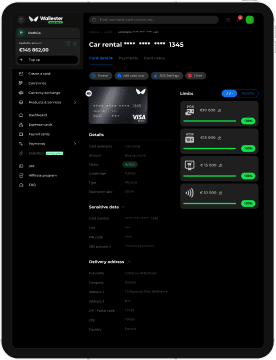
- Set spending limits and controls on every card, so an over-budget charge is declined, not discovered later
- See every transaction live from one dashboard, on web or mobile, rather than at month-end
- Attach receipts to transactions and sync everything with Xero or QuickBooks, so the books are almost done already
- Assign roles and budgets as the team grows, so the right people can spend, approve, or just view
The account, cards, and basics are free to open, with premium plans for businesses that need more.
A spreadsheet was never meant to run a growing company’s spending. The signs above are what it looks like when a business asks the tool to do more than it can. Moving that spending into a system built for it turns month-end from a reconstruction job into something that’s already finished.