Not all SMEs are managing for the same outcome. Some are still building for growth and others are already defending margin. That divide runs clearly through Wallester’s Corporate Spending Outlook 2026, which surveyed SMEs on their priorities and challenges and analysed €325 million in corporate card transactions across the EEA and UK.
The smaller the company, the more likely it is to prioritise product development and sales enablement. As headcount rises, the focus starts to shift: budgets tighten and efficiency matters more. Financial control simply becomes a larger part of day-to-day operations. The result is a spending structure that looks very different depending on the stage of growth.
60% Are Building the Machine
Micro-businesses, defined as companies with 0-10 employees, represent 60% of the companies we surveyed. This segment is the most bullish, with a heavy focus on Product Development and Sales Enablement. They need to move fast, but their biggest roadblocks are practical, mainly too many manual processes and a lack of real-time visibility into spend.
For these companies, every euro spent on product development or sales enablement is seen as an investment in future growth. That’s why they are less concerned with cost-cutting and more focused on building the infrastructure that will allow them to scale. But without the right tools, that ambition gets slowed down by inefficiencies. Manual processes create drag, and the lack of real-time visibility means they often do not know where their money is going until it is too late.
This is more than just an operational inconvenience. For a micro-business, one inefficient process or one missed spending signal can materially affect how fast it grows.
Half Are Playing Defence
Growing SMEs, meaning those with 11-50 employees, present a contrast. In short, as companies scale, their financial outlook matures, and half of the respondents in this tier reported being in defensive mode, cutting spending wherever possible. Their priorities shift away from pure product development and towards go-to-market activities like Business Travel and Events. But a new bottleneck emerges here, and this one has to do with poor tracking of team or department budgets.
Cutting expenses does not reflect a lack of ambition so much as a different stage of growth, where efficiency starts to matter more. As companies grow, what they need is a more structured expense policy. Without one in place, they risk overspending or misallocating resources.
The shift from building to defending is natural, but it does require a different approach to financial management. Clearly, business travel and events become more important as companies enter new markets and build relationships. Yet these investments need to be managed carefully if they are not to turn into waste.
The Card as a Control Mechanism
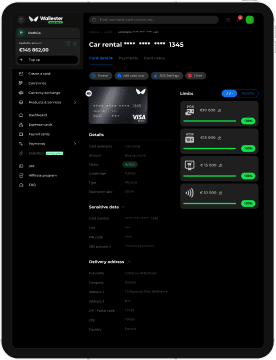
The solution lies in infrastructure that can adapt to both stages of growth. Micro-businesses need speed and visibility. Growing SMEs need more structure and tighter controls. Virtual cards solve both problems, because they let companies assign specific rules, limits, and owners to each card from the start.
This is also where Wallester Business fits naturally. After a quick and free sign-up, a company can:
- Issue 300 free virtual (or physical) Visa cards
- Manage everything from one dashboard on desktop and mobile
- Set hard limits by card, team, or category
- Track spend in real time across all cards
- Instantly lock or close cards when needed
- Exchange funds 24/7 in 10 currencies with transparent rates and no service fees
- Use tokenised cards with Apple Pay, Google Pay, Garmin, and more
- Connect natively with Xero and QuickBooks
- Link internal systems through the REST API
For smaller teams, that means less manual work and better visibility. For growing SMEs, it means clearer ownership, tighter controls, and less money drifting through the business without control.
These figures point to a basic truth: spending priorities evolve as companies grow. The financial setup needs to evolve with them.