Payments are becoming more powerful, but they are also becoming more fragmented.
New payment methods are growing alongside traditional ones, according to recent research from Juniper. The adoption of digital wallets is steadily rising, for example. By 2030, the same research forecasts that more than three quarters of the world’s population will be using them. Account-to-account payments are expanding as well.
In short, businesses now have more choices than ever when it comes to moving money.
For companies, this is mainly good news, because different payment methods solve different problems. But it’s also true that as the number of options grows, payment strategies become more complex.
The question is not which payment method is best, but which payment method works best for a particular use case. Equally important is how all of those payment flows fit together within a single finance operation.
Different Payment Methods Solve Different Problems
A common mistake is looking for a single payment method that can do everything. In practice, cards, digital wallets, and bank payments each have their strengths.
When it comes to supplier payments, invoices, rent, and other regular obligations, account-to-account payments are often the way to go. These relationships tend to be recurring and predictable.
Digital wallets sit somewhere in between. They make payments faster and more convenient – think business trips and purchases on the move – while still relying on cards or bank accounts underneath.
Finally, cards, especially virtual ones, are invaluable when it comes to enforcing expense policies. They make it easier to assign spending, set limits, track transactions, and maintain visibility across teams and projects. This becomes especially clear when compared to using personal cards for company spending.
“In many companies, employees end up using their personal cards to cover business expenses and then have to wait days, sometimes weeks, to get reimbursed,” says Josefina Luduena, Business Development Manager at Wallester.
“That process creates friction everywhere. The employee is chasing the reimbursement, finance has to validate each expense one by one, and the inevitable questions start coming up: why did you buy this? Did you have approval? Which project does this belong to? All that time and energy goes into administration, not actual work.”
Most growing businesses eventually end up using all three payment methods. The challenge is making sure they continue to work as part of one finance operation.
The Main Challenge Is Visibility
Using multiple payment methods is not the problem. In fact, it is often the right approach.
A company should use cards for subscriptions and employee spending, digital wallets for convenience while travelling, and bank transfers for suppliers and recurring payments. Each method serves a different purpose.
The difficulty begins when finance teams lose sight of how those payment flows relate to one another.
Finance teams need to know who made a payment, which budget it belongs to, whether it was approved, and how it should be reconciled. When that information is spread across multiple systems, routine finance work becomes more complicated than it needs to be.
As Luduena points out, problems often appear when businesses lose sight of the bigger picture.
“Too often, there’s no consolidated view. Finance has to log into four different platforms to understand what’s happening, and in that process duplicates, uncategorized spend, and missed approvals fall through the cracks. Visibility breaks exactly where it matters most: at the moment of spending, not a week later.”
The payments themselves usually work. The real challenge is understanding them afterwards.
One Source of Truth Matters More Than Ever
That’s why the answer is not reducing choice. Most businesses do benefit from having access to cards, digital wallets, bank payments, and recurring payment methods.
The goal is making sure all of those payment flows remain visible inside one system. That is one reason businesses are increasingly looking for unified spend management platforms.
“Operational complexity has a real cost. Running multiple tools means more integrations that break, more manual work for the finance team, and more risk of things going unnoticed,” Luduena says.
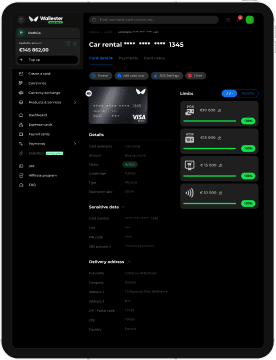
“A unified platform like Wallester Business removes that friction: you can create physical and virtual cards by project, by department, or by vendor, each with its own spending limits and usage rules. All spend is centralized in clear reports that can be easily exported, and the platform integrates with the most widely used accounting software, making month-end close far less painful.”
What This Looks Like in Practice
So, instead of managing cards in one place, expenses in another, and payment records somewhere else entirely, finance teams should be able to monitor company spending from a single platform. They can see who spent the money, which payment method was used, what limits applied, and how the transaction should be categorised and reconciled.
With Wallester Business, companies get:
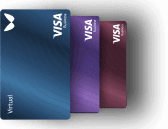
- 300 free virtual Visa cards – issue cards instantly for departments, vendors, employees, campaigns, or subscriptions
- Custom spending limits – set limits by card, employee, category, or use case
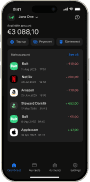
- Live transaction tracking – monitor payments from one central dashboard
- Digital wallet support – use company cards with Apple Pay, Google Pay, Samsung Wallet, Garmin Pay, and other tokenized payment services
- Free expense management tools – organise company spend without adding another system
- Free 24/7 currency exchange – exchange funds across 10 currencies with no service fees
- Xero and QuickBooks integrations – sync transactions directly with accounting tools
- Payroll and team payments – process up to 1,500 transactions in one click
- Fast remote KYC – complete onboarding online, typically within hours
Payment choice will continue to grow. That is useful, provided each payment method fits a specific use case and remains easy to follow. Once cards, wallets, transfers, subscriptions, and team spending sit within one clear system, payment choice can actually reduce complexity in spend management instead of becoming another source of admin.