So far, it has been a strange year for software companies. The main talking point has been, of course, AI – more precisely, AI lowering the cost of software development. Founders can now prototype products faster than ever, and development cycles keep getting shorter. No surprise, then, that investors have started to question how defensible software businesses really are. Earlier this year, many SaaS stocks came under pressure as markets asked what AI could mean for long-term competitive advantage.
While it remains to be seen whether those fears will prove justified, the underlying question isn’t going anywhere. If software becomes easier to build, what makes a particular platform hard to replace? The answer may lie beyond software altogether.
The Competitive Advantage Is Moving Money
The SaaS game has been played for years by competing on features. Is this dashboard cleaner than the other? Which one has stronger automation? Which one has the longer list of integrations? Those questions used to be the difference-makers.
They still matter, of course. But if competing products can reach feature parity faster than before, differentiation simply has to come from somewhere else. That somewhere else might be financial infrastructure. When customers move money inside your platform, your product becomes more than a piece of software. It becomes an essential part of how the business runs.
The More Workflows You Own, The Harder You Are to Replace
A successful software platform, by definition, sits at the centre of an important workflow. HR platforms manage employees. ERP systems manage operations. Then there are countless industry-specific SaaS products, from health appointments to property management. And yet in many cases, one important step still happens somewhere else, which is payments.
Employees are reimbursed through one system, customers pay for external tools through another, and company cards are managed on a separate banking platform. As a result, financial data ends up scattered across multiple providers.
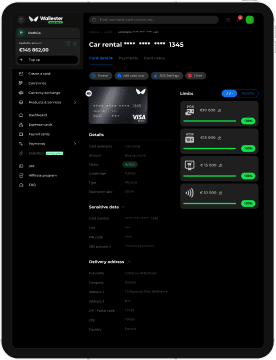
Embedded finance is what brings those workflows inside your platform. The idea is simple: stop sending users elsewhere to complete the financial part of the task, and instead manage payments, issue branded cards, control spending, and automate transfers inside the existing product. This changes the role of the platform itself. It stops being a place where activity gets logged and becomes the place where money actually moves.
Better Retention Is Only Part of the Story
Customer retention is clearly a significant benefit. The more operational processes customers manage inside one platform, the less likely they are to leave it. Financial workflows become part of everyday operations, increasing both usage and switching costs.
But retention isn’t the only benefit. Embedding financial features into your product also creates new revenue through interchange. It also reduces friction for users, and it gives you far richer insight into customer behaviour. Payments stop being a back-office function and become part of the product experience. In practice, embedded finance becomes an entirely new business opportunity.
You Don’t Need to Become a Financial Institution
Probably the most important thing about embedded finance is that it is really that: embedded. In other words, you don’t need to become a financial institution.
Building financial products used to mean years of investment and deep regulatory expertise, and that’s no longer the case. Modern embedded finance infrastructure lets software companies offer regulated financial products without becoming a licensed institution themselves.
That means companies can focus on their customers, their product, and their market, while the underlying financial infrastructure is handled by a specialised provider.
How Wallester White-Label Helps
Wallester White-Label enables companies to launch embedded financial products through a single, API-first platform.
With Wallester White-Label, businesses can:
- Launch fully branded physical and virtual Visa card programmes
- Integrate payments directly into their own platform or application
- Issue cards instantly and provision them into Apple Pay and Google Pay
- Apply real-time spending controls and transaction rules
- Offer IBAN accounts and payment functionality
- Launch without becoming a card issuer or building regulated infrastructure
- Rely on Wallester for issuing, payment processing, compliance, KYC, KYB, AML, and ongoing regulatory requirements
- Scale across the EEA, UK, and beyond through one infrastructure
As software becomes easier to build, companies need to look for the next competitive advantage, and that advantage likely won’t be another feature. It will be the ability to move money – and use those features – within the same platform.