Wallester
FreelancersNew
Business
White‑Label
Company
Log inStart freeTry demo
  1. Home
  2. Blog
  3. Resources
  4. Business tools
  5. Compliance Requirements for Payment Systems

27 November 20266 min read

Compliance Requirements for Payment Systems

Inspired by
Dean Benson
Dean Benson
Compliance Requirements for Payment Systems

The article examines the compliance requirements that shape payment system records, transaction logs and audit trails. It covers the information payment providers need to retain, the role of transaction logging in audits and investigations, and the practical controls that support regulatory reporting and accountability.

Payment systems generate records that help businesses account for transactions, investigate disputes and demonstrate compliance with applicable rules. These records need to capture relevant activity and remain available to authorised teams when questions arise. A payment audit trail provides a record of key events, while transaction logging captures details about system activity and transaction processing. The exact requirements depend on the payment service, jurisdiction, applicable regulations and the role of each organisation.

What information must a payment audit trail contain?

A payment audit trail should preserve the records needed to reconstruct relevant transactions, identify actions and investigate discrepancies or suspicious activity.

Payment environments produce several distinct types of data. Transaction records document payment values, currency, status updates, settlement confirmations and reversals. System logs record technical activity across servers and applications, including user access, configuration changes, authentication attempts and system errors. Connecting these data streams produces an audit trail that attributes events to specific users, services and timestamps. Key fields include transaction references, timestamps, amounts, currencies, event types, user identities and operation outcomes, established by applicable regulatory standards.

What different records help demonstrate

Record typeCompliance purpose
Transaction historyReconstruct payment activity
Access logsIdentify who accessed relevant systems
Authorisation recordsTrace payment decisions
Change logsIdentify changes to settings or permissions
Error and exception logsInvestigate failed or unusual events

Official logging guidance from the PCI Security Standards Council explains in PCI SSC FAQ 1081 that PCI DSS logging requirements support a record of who did what, where, when and how. This guidance applies within cardholder environments and does not set a universal logging rule across all payment systems.

Q&A: Is a transaction log the same as a payment audit trail? 

A transaction log records sequential processing events, while an audit trail connects those records to user identities and system changes to reconstruct activity and establish accountability. The terms overlap, but their compliance scopes differ.

How long must payment systems retain transaction logs?

Retention periods depend on the applicable regulation, the type of record, the organisation’s role and the jurisdiction.

Anti-money laundering rules mandate thorough transaction records. Under Article 77 of Regulation (EU) 2024/1624, obliged entities must retain customer due diligence and transaction records for five years following the end of a customer relationship or occasional transaction. This European regulation applies from 10 July 2027. The five-year period covers specified AML duties and does not apply as a universal logging standard for every system record.

Payment security standards impose separate requirements. Within the cardholder data environment, PCI DSS requires audit trail retention for at least one year, with three months immediately available for analysis. Data protection regulations restrict excessive data storage. The EDPB basic principles explain that GDPR storage limitation and accountability principles prohibit keeping personal data indefinitely without a lawful basis.

Q&A: Should a business keep payment logs indefinitely? 

Retention must follow applicable legal and operational standards. Organisations must keep records available for the required duration with controlled access, avoiding indefinite storage of personal data without a clear statutory basis.

How can payment providers keep transaction logging audit-ready?

Payment providers need documented logging rules, controlled access, reliable timestamps, monitoring and a clear process for investigating exceptions.

Payment providers require disciplined controls across operational infrastructure. Systems must record relevant events consistently, restrict log access to authorised staff, protect records against unauthorised alteration, and synchronise system clocks across servers. Monitoring intervals must align with risk. According to PCI SSC FAQ 1304, updated in July 2025, PCI DSS Requirement 10.4.2 mandates daily log reviews for systems storing cardholder data or performing security functions, while other in-scope systems follow frequencies defined through a targeted risk analysis. Assessors expect documented justifications based on operational risk.

Teams should validate audit readiness through a structured review:

  1. Select a transaction reference.
  2. Trace the transaction through the relevant systems and status changes.
  3. Check timestamps, access records and any related exceptions.
  4. Confirm that the supporting records are available and consistent.

Q&A: What should a business do if a transaction log is incomplete? 

Teams must investigate the missing entry, preserve related secondary evidence, document the incident, and follow internal escalation procedures. Staff must never manufacture retrospective records without verified primary data.

How Wallester handles transaction records and payment oversight

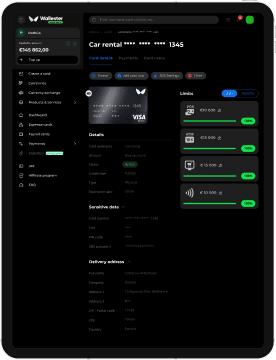
Operating a card programme requires direct access to reliable payment data. Wallester White-Label provides card issuing infrastructure through REST APIs for organisations running branded card programmes. The API architecture delivers structured transaction records and card status changes, while real-time webhooks alert connected systems when authorisation, clearing or cardholder lifecycle events occur.

These continuous data feeds support internal transaction logging and payment monitoring. Businesses can export Wallester transaction activity into internal compliance and reporting systems to reconcile customer accounts. The client organisation remains responsible for maintaining its own recordkeeping policies, setting retention schedules and satisfying statutory reporting duties. Wallester supplies modern infrastructure for card operations, and businesses retain institutional control over compliance governance.


Frequently asked questions
What is the difference between a compliance audit and a payment audit trail?
A compliance audit evaluates whether an organisation adheres to established regulatory requirements and operational policies. A payment audit trail provides the factual records that support this examination. External auditors review transaction histories, access logs and configuration files to test whether security controls function as claimed. Keeping raw logs does not verify full compliance on its own. The organisation must prove that logging controls remain consistent, records resist tampering, and operational policies match actual daily practice across payment systems.
Can payment audit trails help investigate disputed transactions?
Detailed audit records assist teams in reconstructing the sequence of events behind customer chargebacks and payment disputes. Investigators rely on transaction references, network timestamps, authorisation codes and settlement receipts to confirm whether a transfer completed as scheduled. Available telemetry depends on the specific payment rails utilised. While internal logs establish factual technical behaviour, resolving a formal dispute requires submitting external proof dictated by card scheme rules. System logs supply valuable corroboration, yet they cannot guarantee dispute liability outcomes.
Who should have access to payment system logs?
Access permissions should follow defined operational roles and explicit business responsibilities. System administrators, security analysts, compliance officers and external auditors require distinct permission tiers to perform duties without compromising system security. Technical controls must record every instance of privileged administrator activity. Cardholder details and personal information belong exclusively to authorised personnel with verified business needs. Organisations should formally document access policies, enforce multi-factor authentication, and review permissions whenever personnel change job functions or exit the company.
What is an immutable audit log?
An immutable log employs write-once storage configurations or cryptographic hashing to prevent entries from being altered or deleted without detection. Protected storage and controlled access safeguard the evidentiary integrity of system records during regulatory audits. Write protection does not guarantee that the recorded data was accurate at inception or that system components captured every mandatory event. Businesses still require sound logging policies, continuous pipeline monitoring and periodic completeness checks to detect missing records across payment infrastructure.
How can a business prepare payment logs for an external audit?
Audit preparation begins with defined retention schedules, documented transaction logging controls and tested retrieval mechanisms. Compliance teams should verify that transaction references align across databases, system clocks match, and administrative access trails remain accessible for the audit scope. Conducting a test retrieval before formal review helps identify data gaps early. The final evidentiary package must match the precise requests of the auditor, respect statutory privacy constraints, and remain restricted to authorised recipients through encrypted data transmission channels.
Share article
Press contactpress@wallester.com
Follow us
Wallester

Interested in Wallester?

Our sales team can help you get set up with the right solution to meet your business needs.

Contact sales

Find more articles

Batch Processing vs Real-Time Sync: Choosing the Right Integration Pattern
Business tools

Batch Processing vs Real-Time Sync: Choosing the Right Integration Pattern

By Wallester Blog26 November 20267 min read
NetSuite and QuickBooks: Syncing Payment Data with Cloud Accounting Platforms
Business toolsEmbedded finance

NetSuite and QuickBooks: Syncing Payment Data with Cloud Accounting Platforms

By Wallester Blog26 November 20266 min read
Fraud Detection APIs: How They Work and Where Risk Scoring Fits
Business toolsEmbedded finance

Fraud Detection APIs: How They Work and Where Risk Scoring Fits

By Wallester Blog12 November 20268 min read
Guide to sandbox testing
Business toolsEmbedded finance

Sandbox Testing: How API Sandboxes Work for Payment Testing

By Wallester Blog12 November 20268 min read
FreelancersNew

Something new is coming, be the first to know!

Visa card in colors
Explore
Business
Cards
  • Corporate cards
  • Virtual cards
  • Payroll cards
  • Platinum cards
Features
  • Expense management
  • Accounting integration
  • Budget analytics
Industries
  • Media buying
  • Online retail
  • Yacht management
  • Transport and logistics
  • Fleet management
  • Travel and hospitality
Others
  • Pricing
  • API solutions
  • Help Center
White‑Label
Payment cards
  • Virtual card
  • Prepaid card
  • Debit card
  • Credit card
  • White‑Label card
Platform overview
  • White‑Label solutions
  • Card issuing
  • BIN sponsorship
  • Payment processing
Services
  • Tokenization
  • 3D Secure
  • Fraud monitoring
  • KYC/KYB and AML
  • PSD2
  • Mobile app
  • Apple Pay
  • Google Pay
Solutions across industries
  • Banks
  • Business loan providers
  • Consumer loan providers
  • Digital assets & exchange platforms
  • E-commerce marketplaces
  • Employers & gig platforms
  • FinTech companies
  • Gift & rewards cards
  • Insurance companies
  • Membership & loyalty cards
  • Peer-to-peer loan providers
  • Streaming platforms
Developers
  • API documentation
  • Card issuing API
  • Open-source example
Company
  • About us
  • Why Wallester
  • Affiliate Program
  • Visa Principal membership
  • Media Pack
  • Contact us
  • Careers
  • Wallester blog
  • FAQ
  • Legal notice
  • Privacy policy
  • Cookie policy
  • Annual reports
  • Complaints handling procedure
  • Business account & card agreement
  • Your rights when making payments in Europe
  • Visa partner
  • Accessibility statement

© 2026 Wallester AS All rights reserved.Wallester AS is a Payment Institution, authorized by the Finantsinspektsioon (Estonian Financial Supervision and Resolution Authority), and an official Visa Principal Member. Registration code: 11812882.