A comprehensive comparison of the leading credit cards obtainable by residents in Italy, detailing genuine fees, annual percentage rates, cashback rewards, and eligibility rules.
Finding a dependable credit card in Italy requires sorting through domestic banking packages, European cross-border issuers, and distinct repayment mechanisms. Whether you want cashback on supermarket visits, travel protections for trips abroad, or a simple revolving line of credit without switching your current bank account, choosing the right card protects your wallet from surprise fees. Here is our vetted ranking of the ten best credit cards available to Italian residents this year.
Which credit cards are genuinely available in Italy?
Residents in Italy can choose from domestic cards issued by Italian retail banks, revolving lines from specialist consumer lenders, and direct travel cards from international networks.
Unlike the US or UK markets, Italian banks evaluate applicants based on demonstrable personal income, Italian residency, and clean repayment records logged in credit information systems such as CRIF, rather than a universal three-digit credit score.
The table below summarises the leading consumer credit cards offered to individuals living in Italy in 2026.
| Card | Issuer | Annual fee | TAN / TAEG | Rewards or cashback | Travel perks | Non-euro transaction fee | Key eligibility |
| Carta YOU | Advanzia Bank | €0 | TAN 21.90% / TAEG 24.24% (revolving) | None | Comprehensive travel insurance | 0% | Italian residency, regular income |
| Carta Blu American Express | American Express Italia | €0 first year, then €35 | TAN 14.00% / TAEG 23.69% | 1% cashback on eligible spending | Travel accident insurance | 2.5% | €11,000 gross annual income, SEPA IBAN |
| Carta Oro American Express | American Express Italia | €0 first year, then €240 (€20/month) | Charge card / optional TAN 14.00%, TAEG 24.19% | 1 Club point per €1 spent | Priority Pass (2 visits), €50 travel voucher, extensive insurance | 2.5% | €25,000 gross annual income, Italian residency |
| ING Mastercard Gold | ING Italia | €24 (€2/month, waivable) | Charge or Pagoflex (TAN 11.46% / TAEG 13.41%) | Occasional partner discounts | Basic purchase protection | 2% | Conto Corrente Arancio holder, salary credit or €3,000 balance |
| Mediolanum Credit Card | Banca Mediolanum | €12 first year, then €40 | Charge or Easy Shopping (fixed instalment fees) | None | Tailored spending limits, Nexi insurance | 2% max network fee | SelfyConto or Mediolanum account holder |
| Fineco Card Credit | FinecoBank | €19.95 | TAN 9.95% / TAEG 11.23% (revolving option) | None | None | 2% | Fineco account holder, subject to credit approval |
| Cartimpronta ONE | Webank (Banco BPM) | €0 | Charge card (no revolving interest) | None | Chip and PIN, basic travel cover | 1.5% to 2% | Webank current account holder, deposit requirements |
| Findomestic Carta Nova | Findomestic Banca | €0 | TAN 15.36% / TAEG 16.48% | Jcoins loyalty programme | Zero fee ATM cash withdrawals | 1.5% currency margin | Italian residency, verifiable income, SEPA IBAN |
| Carta Classic Nexi | Nexi / Partner Banks | €35 to €50 (varies by bank) | Charge or Easy Purchase (set by partner bank) | Nexi ioSPECIALE partner offers | Basic assistance and medical cover abroad | Varies by distributor (around 2%) | Account with a Nexi partner bank |
| Credem Ego Classic | Credem Banca | €0 first year, then €39 (waivable) | Charge or revolving (TAN 13.50% / TAEG 17.50%) | None | Standard travel assistance | 1.75% to 2% | Credem current account holder |
Q&A: Do you need an Italian bank account to get an Italian credit card?
Most traditional retail cards require a checking account with the issuing bank, but independent options like Carta YOU or American Express can link directly to your existing IBAN via SEPA direct debit.
Best credit cards in Italy for 2026
1. Carta YOU
- Issuer: Advanzia Bank S.A.
- Card type: Mastercard credit card (charge or revolving)
- Annual fee: €0 permanent
- TAN / TAEG: TAN 21.90% / TAEG 24.24% on revolving balances; 0% if cleared in full by the due date
- Main rewards: None
- Key benefits: Free cash withdrawals worldwide, complimentary travel insurance package, no mandatory bank account switch
- Foreign transaction costs: 0% foreign exchange fee
- Main eligibility requirements: 18 years old, Italian fiscal residence, verifiable regular income, Italian or SEPA bank account
- Best suited to: International travel, everyday spending abroad, and individuals who want zero fixed account fees
Carta YOU has become one of the most practical independent credit cards in Italy. Because it connects to your existing current account via SEPA direct debit, you do not need to open a fresh bank account to hold it. When paid in full every month, it incurs no maintenance charges, and the elimination of foreign transaction fees provides noticeable savings on trips outside the eurozone. Cardholders should note that interest on cash withdrawals applies from the date of withdrawal unless balances are promptly settled.
2. Carta Blu American Express
- Issuer: American Express Italia
- Card type: Optional revolving credit card
- Annual fee: €0 for the first 12 months, then €35 annually
- TAN / TAEG: TAN 14.00% / TAEG 23.69% for revolving balances
- Main rewards: 1% annual cashback credited directly to your statement
- Key benefits: Travel accident cover up to €50,000, fraud purchase protection, up to 4 free supplementary cards
- Foreign transaction costs: 2.5% on non-euro purchases
- Main eligibility requirements: €11,000 gross annual income, Italian postal address, Italian SEPA bank account
- Best suited to: Everyday spending within Italy and consistent cashback collectors
Carta Blu is an accessible rewards credit card from American Express Italia. The standout feature is its 1% cashback mechanism, returned as a statement credit every 12 months provided your payments stay up to date. Users can choose between a standard full monthly repayment (a saldo) or flexible monthly instalments (a rate). While American Express acceptance in Italy has expanded substantially across supermarkets, petrol stations, and transport networks, carrying a secondary Mastercard or Visa remains sensible for smaller municipal vendors.
3. Carta Oro American Express
- Issuer: American Express Italia
- Card type: Charge card with flexible payment options
- Annual fee: €0 for the initial year, then €240 (billed at €20 per month)
- TAN / TAEG: TAN 14.00% / TAEG 24.19% when converting transactions into instalments
- Main rewards: 1 Membership Rewards point per euro spent, convertible to partner airline miles and hotel vouchers
- Key benefits: Priority Pass membership with 2 complimentary lounge visits per year, €50 annual Amex Travel voucher, comprehensive travel inconvenience and medical insurance, Hotel Collection perks
- Foreign transaction costs: 2.5%
- Main eligibility requirements: €25,000 gross annual income, permanent residence in Italy
- Best suited to: Frequent travellers who benefit from airport lounge access and comprehensive insurance coverage
Carta Oro targets consumers who travel frequently and spend enough annually to outweigh the ongoing subscription fee. Beyond the two free lounge visits, cardholders receive generous car hire insurance, delayed flight assistance, and ticket pre-sales through American Express Experiences. As with most Amex products, using the card for non-euro transactions carries a 2.5% exchange markup, making it more advantageous for euro travel, high-end retail, and booking holidays in advance.
4. ING Mastercard Gold
- Issuer: ING Italia
- Card type: Mastercard credit card (charge with instalment option)
- Annual fee: €24 (€2 monthly; waived in any month where you spend at least €500 or hold a Conto Arancio Più package)
- TAN / TAEG: TAEG 13.41% on Pagoflex instalment features
- Main rewards: Targeted retail partner discounts via the ING app
- Key benefits: Customisable spending limit (plafond starts at €1,500), Pagoflex option to split specific purchases into instalments, immediate spending push alerts
- Foreign transaction costs: 2% on non-euro transactions
- Main eligibility requirements: Holder of an active Conto Corrente Arancio with salary or pension credit, or a continuous account balance above €3,000 for at least 30 days
- Best suited to: Existing ING current account customers wanting a low-cost, integrated credit card
The ING Mastercard Gold pairs smoothly with ING’s digital current account. The €2 monthly fee is straightforward to eliminate if you use the card as your primary payment method. Through the Pagoflex feature, cardholders can divide single purchases exceeding €200 into fixed monthly tranches without converting the entire monthly statement into expensive revolving credit. Cash withdrawals from ATMs incur a 4% fee (minimum €3), meaning the card works best for point-of-sale and online transactions.
5. Mediolanum Credit Card
- Issuer: Banca Mediolanum (via Nexi infrastructure)
- Card type: Visa or Mastercard credit card
- Annual fee: €12 for the first year, then €40 annually
- TAN / TAEG: Standard instalment rates set via Easy Shopping; charge payment incurs no interest
- Main rewards: None
- Key benefits: Customisable card exterior with personal photo, Easy Shopping instalment service for individual purchases between €250 and €2,400, multi-layer fraud protection
- Foreign transaction costs: Up to 2% network exchange markup
- Main eligibility requirements: Mediolanum or SelfyConto current account, subject to internal credit scoring
- Best suited to: Digital banking clients wanting customisable limits and clear instalment plans
Issued under either the Visa or Mastercard logos, the Mediolanum Credit Card provides broad domestic and international merchant acceptance. Users manage spending thresholds and security rules directly within the Mediolanum banking app. With Easy Shopping, large seasonal expenses can be split across 3 to 24 months for an agreed fixed fee, preventing variable interest rate spikes. The card is accessible to young professionals opening the SelfyConto online account.
6. Fineco Card Credit
- Issuer: FinecoBank
- Card type: Visa or Mastercard credit card
- Annual fee: €19.95 per year
- TAN / TAEG: TAN 9.95% / TAEG 11.23% for revolving repayment
- Main rewards: None
- Key benefits: Competitive revolving interest rates compared to typical market averages, switchable repayment methods (mono-function or multi-function with Bancomat), high initial ceiling options
- Foreign transaction costs: 2% on currency conversions
- Main eligibility requirements: Open Fineco current account, account balance of at least €3,000 or salary credit, formal bank approval
- Best suited to: FinecoBank account holders looking for an affordable, flexible line of credit
FinecoBank provides an efficient financial product for clients maintaining their savings or investments on the platform. The card operates on either Mastercard or Visa rails, giving full compatibility with Apple Pay, Google Pay, and Fitbit Pay. Its revolving interest rate remains among the lowest in the Italian market for standalone credit cards, though paying balances in full remains the smartest financial approach to prevent unnecessary borrowing fees.
7. Cartimpronta ONE
- Issuer: Webank (Banco BPM Group)
- Card type: Mastercard or Visa charge credit card
- Annual fee: €0 permanent
- TAN / TAEG: Not applicable (pure charge card; balances clear in full every month)
- Main rewards: None
- Key benefits: No annual fee for the life of the account, zero fee on fuel purchases, comprehensive 3D Secure verification
- Foreign transaction costs: 1.5% to 2% network exchange margin
- Main eligibility requirements: Webank current account, minimum average balance or regular salary direct deposit, formal credit approval
- Best suited to: Cost-conscious consumers who always pay their balance in full every month
Cartimpronta ONE is Banco BPM’s digital answer for Webank users seeking an economical payment instrument. It operates strictly as a charge card (a saldo), which completely avoids the risks of compounding revolving debt. The monthly spending allowance starts at €500 and can be adjusted upwards to €7,800 based on your assets and credit assessment. Because fuel payments carry no extra merchant surcharges, it functions well as an everyday commuter card.
8. Findomestic Carta Nova
- Issuer: Findomestic Banca (BNP Paribas Group)
- Card type: Mastercard revolving credit card
- Annual fee: €0
- TAN / TAEG: TAN 15.36% / TAEG 16.48% on revolving transactions
- Main rewards: Jcoins rewards platform for retail gift cards
- Key benefits: Free ATM cash withdrawals across Italy and abroad, flexibility to repay at the end of the month or via custom instalments, linked to any existing bank account
- Foreign transaction costs: 1.50% currency conversion margin
- Main eligibility requirements: Proof of stable employment or pension, Italian residency, personal checking account
- Best suited to: Borrowers seeking zero maintenance fees alongside fee-free cash advances
Carta Nova from Findomestic is a prominent choice for consumers wanting revolving flexibility without being forced to switch banking providers. Unlike almost every competitor, Carta Nova does not impose cash withdrawal commissions at ATMs, making emergency cash retrieval much cheaper. Cardholders can switch repayment preferences between end-of-month charge settlement and fixed monthly quotas via the Findomestic mobile app.
9. Carta Classic Nexi
- Issuer: Nexi Payments (distributed via major Italian partner banks)
- Card type: Visa or Mastercard credit card
- Annual fee: Typically €35 to €50, depending on the distributing bank
- TAN / TAEG: Variable depending on individual banking partner terms
- Main rewards: Access to Nexi ioSPECIALE partner promotions and exclusive discounts
- Key benefits: Widest domestic acceptance, dedicated concierge support, smartphone and travel medical coverage, Easy Purchase instalment tool
- Foreign transaction costs: Approximately 2% (network plus bank margin)
- Main eligibility requirements: Active account with an affiliated Italian cooperative or commercial bank
- Best suited to: Customers of regional or cooperative Italian banks who want trusted national card support
Nexi is the backbone of card payments across Italy, partnering with hundreds of domestic credit institutions. The Carta Classic Nexi is standard, dependable, and supported by almost every point-of-sale terminal nationwide. It includes medical assistance while abroad, legal protection, and a spending monitor within the Nexi Pay app. Pricing and interest conditions vary depending on whether you acquire the card through Crédit Agricole, BPER, or a local BCC.
10. Credem Ego Classic
- Issuer: Credito Emiliano (Credem)
- Card type: Visa or Mastercard credit card
- Annual fee: €0 for the first 12 months, then €39 (fee waived if annual spending exceeds €6,000)
- TAN / TAEG: TAN 13.50% / TAEG 17.50% for revolving options
- Main rewards: None
- Key benefits: Waivable annual charge, customisable spending alerts, emergency card replacement service
- Foreign transaction costs: 1.75% to 2%
- Main eligibility requirements: Credem current account holder with verifiable income
- Best suited to: Dedicated Credem clients capable of meeting the annual spending waiver threshold
Credem Ego Classic combines conventional retail bank reliability with modern digital safety features. While the card requires an active account with Credem, spending over €6,000 across a 12-month period eliminates the renewal fee entirely. Users can adjust security profiles via the mobile app, enabling or disabling transactions outside Europe or blocking e-commerce purchases when not in use.
How do credit cards work in Italy?
Credit cards in Italy operate primarily as charge cards (carte a saldo) or revolving cards (carte a rate).
With a charge card, your total monthly spending is deducted in one single lump sum from your bank account on a specific date, usually between the 10th and 15th of the following month, without incurring interest charges. Revolving credit cards, on the other hand, let you spread repayments across multiple months while charging interest.
Italian lending law requires issuers to present two key financial metrics on all credit contracts:
- Tasso Annuo Nominale (TAN): The bare annual interest rate applied to outstanding borrowed balances, excluding additional administrative charges.
- Tasso Annuale Effettivo Globale (TAEG): The total annual borrowing cost expressed as a percentage, incorporating interest, stamp duty, account maintenance costs, and compulsory fees.
Q&A: What is the Italian stamp duty on credit cards?
In Italy, card statements exceeding €77.47 incur a state stamp duty (imposta di bollo) of €2.00 per statement if the card issuer is independent of your primary bank account package.
What fees should you compare before applying for an Italian card?
Evaluating a card solely on its rewards often results in unexpected recurring charges. Always review these key expenses:
- Annual fee (canone annuo): Can range from €0 on digital cards to €240 or more on premium charge products.
- ATM cash advance fee (anticipo contanti): Withdrawing cash via a credit card in Italy typically incurs a commission between 3% and 4% per transaction, starting from a minimum fee of €3.
- Foreign currency transaction margins: Issuers frequently append a markup of 1.5% to 2.5% on purchases outside the eurozone.
- Late payment penalties (penale per ritardo): Missing a scheduled monthly due date triggers administrative fees alongside elevated default interest.
How safe are card payments in Italy?
Card payments across the Italian peninsula are exceptionally secure thanks to European PSD2 regulations, mandatory two-factor authentication, and widespread EMV chip deployment.
According to data presented by the Politecnico di Milano Innovative Payments Observatory, digital payments in Italy reached €518 billion, with contactless transactions representing 93% of all store-based card purchases. The national POS network now stands at approximately 3.6 million payment terminals, making cashless acceptance common from northern shopping centres to southern beach establishments.
Q&A: What should you do if an Italian merchant refuses a card payment?
Italian law imposes administrative penalties on merchants refusing digital payment methods, regardless of transaction size, so retailers must legally provide an operating POS terminal.
Can foreigners get a credit card in Italy?
Foreign nationals residing in Italy can obtain an Italian credit card, provided they satisfy domestic regulatory and credit requirements.
Issuers mandate a valid Italian tax code (codice fiscale), an official Italian identity document, proof of official residency, and demonstrable domestic income via an employment contract, tax declaration (Modello Redditi or Certificazione Unica), or pension statement. Temporary visitors cannot open Italian credit card accounts and should instead rely on their home-country cards or dedicated multi-currency accounts.
Wallester payment cards for business and freelance management
For freelancers, remote contractors, and independent professionals operating across Italy, maintaining a clear separation between personal outlays and commercial operations is essential.
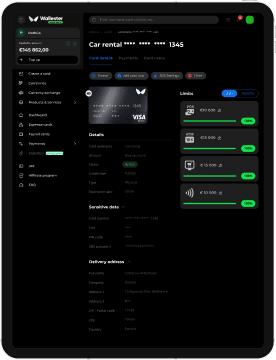
While personal consumer credit cards require local credit history assessments, the Wallester Business platform provides an innovative Visa-backed card issuing and expense management ecosystem. Wallester operates as an official Visa principal member, giving businesses and self-employed individuals direct access to instant virtual cards and physical corporate cards without cumbersome paperwork.
The platform streamlines corporate budgeting by allowing administrators to set precise spending limits, issue employee cards on demand, and integrate directly with accounting workflows through an open REST API. As the cards function on the global Visa network with multi-currency handling and full Apple Pay and Google Pay integration, independent professionals can manage cross-border client disbursements and travel logistics without friction.
Explore how Wallester can transform your company spending by opening an account today.