For a while now, embedded finance has been one of the most discussed topics in the fintech space, and it has been for good reason. New figures from Juniper, published last month, support that view.
According to the UK research house, global embedded finance revenue is forecast to reach $617bn by 2031, up from $162.6bn in 2026. That’s growth of 279% in five years. But the number worth really reflecting on sits underneath that headline: the B2B segment is set to grow by 390%, which is well ahead of the market overall. The gap between the two looks like the main story here.
The growth is lopsided toward B2B for a reason
The difference between 390% and 279% is not random. In fact, it reflects where the work has already been done and where it hasn’t.
Consumer embedded finance is already well established. Paying by phone, splitting a purchase at checkout, getting a card inside an app you already use, paying via payment links – all of that is pretty much normal now. However, that doesn’t mean the consumer market is finished. But it does mean many of the most obvious use cases are already familiar to customers.
B2B is different. The financial side has stayed scattered across separate systems: the software a business runs on in one place, its bank account in another, its cards somewhere else again, and payments, financing, and reconciliation each handled by a different provider. It’s always been slow and mostly manual, and that’s precisely why there’s so much room left to grow. What the forecast is picking up is really just all that unfinished work.
“I don’t think B2B has been slower due to a lack of demand or interest. The reality is that business financial flows are far more complex, with fragmented systems, multiple stakeholders and very different needs across industries,” says Karine Martinez, Head of Strategic Partnerships at Wallester.
“For businesses, convenience alone is not enough. Embedded finance needs to solve a real problem and deliver measurable value. The real opportunity is to integrate financial services directly into the platforms businesses already use, making finance a natural part of their day-to-day operations rather than adding another layer of complexity.”
Who’s best placed to win it
Now that we know where the growth is, the question is who will drive and benefit from it.
The companies with the best shot are probably not the ones trying to build a financial core themselves. They’re the ones already sitting inside a B2B workflow: a vertical SaaS platform that runs an industry’s day-to-day operations, an ERP or procurement platform, a marketplace that pays its sellers, or a lender that funds its borrowers.
These companies already have something valuable: the client relationship and a good view of what that client is doing. What they often don’t control is the money layer – the ability to issue a card, hold a balance, collect a payment or move money without sending the customer somewhere else.
“For companies that already have strong customer relationships, embedded finance is the natural next extension of the value they deliver,” says Karine Martinez. “When done right, it removes unnecessary steps, reduces friction and improves efficiency. Ultimately, it is about making life easier for the end user, while helping a business deliver more value to its customers.”
That, in short, is where embedded finance becomes practical. Take a procurement platform: instead of sending an approved buyer off to sort payment with a bank, it can hand them a card that only works within the rules already set. Or a marketplace that pays a seller straight onto a card it issued, rather than kicking off a separate transfer that lands days later. The point is to bring the financial transaction closer to the activity that creates it.
The catch: it hasn’t always been easy to build
Part of the reason embedded finance is growing now is that adding financial features to a non-financial product has become much easier than it used to be.
Before embedded finance solutions became widely available, the money layer was difficult to build. A company needed a licence or a BIN sponsor, connections to card networks and processors, and a compliance operation covering KYC, KYB and AML. Also, it had to deal with scheme rules, security requirements and the ongoing regulatory work that comes with financial services.
For a company whose actual product was software, building all of that in-house made little sense because it was complex, time-consuming and expensive. It also meant pulling engineers and other resources away from the thing customers were paying for.
“What has really changed is not just the technology, but the operating models and the way roles and responsibilities are shared,” says Karine Martinez. “A few years ago, a SaaS platform looking to embed financial services would often have needed to build its own compliance capabilities, investing significant time and resources in activities outside its core business.”
“Today, providers have raised the bar. With a clear split of roles and responsibilities, specialist regulated partners like Wallester can take on the issuing infrastructure and the associated regulatory and compliance responsibilities. This significantly reduces complexity and time to market, allowing businesses to launch and scale much faster while staying focused on what they do best: developing their core products, improving the customer experience and growing their customer base.”
Renting the hard part
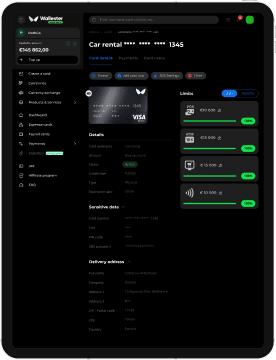
Wallester White Label lets a platform offer its own branded cards, accounts and payments while Wallester as a specialised provider handles the licensing, network connections and compliance underneath. A platform can:
- Launch fully branded physical and virtual Visa cards under its own name
- Add card issuing, accounts and payments to its product through a single API
- Issue virtual cards instantly, with Apple Pay and Google Pay support
- Apply real-time spending controls and limits based on its own business logic
- Hold and pay across 10 currencies for customers working across borders
- Rely on Wallester for issuing, payment processing and ongoing KYC, KYB and AML compliance
- Expand across the EEA through one integration
The aim, in short, is to let a software company offer the financial layer its customers increasingly expect, without building an infrastructure business on the side.
The opportunity is still wide open
The $617bn is coming either way. What’s far less settled is who captures the B2B share behind it. And our money is on the platforms that bring the financial layer inside the product their clients already use, rather than sending them off to a bank the moment they need to pay, get paid or borrow.