This article provides an objective analysis of the leading prepaid business card solutions available to UK companies, comparing ten prominent providers based on their technical features and cost structures. It evaluates platforms such as Wallester, Soldo, Pleo, and Payhawk alongside niche alternatives like Klippa and Anna Money to help finance teams identify the most efficient tool for spending control. The comparison focuses on issuance speed, software integration, and the specific regulatory safeguards that protect corporate funds in the UK market.
UK businesses require efficient ways to manage employee expenses without the risks associated with shared credit lines or manual reimbursements. Prepaid cards provide a solution by allowing managers to allocate specific budgets to team members before a transaction occurs. UK businesses often struggle with fragmented expense systems that lead to missing receipts and unauthorised spending. Moving away from traditional reimbursement models allows finance teams to gain immediate visibility into every transaction. Prepaid cards offer a practical alternative, allowing managers to allocate funds before a purchase occurs. This shift toward pre-funded accounts helps organisations maintain a healthier cash flow while shielding the primary bank balance from the risks associated with shared corporate credit lines.
What is a prepaid business card?
A prepaid business card is a financial tool that requires a company to load a specific balance onto the card or its associated account before any spending happens.
Unlike a credit card, it does not provide a line of credit or incur interest charges. These cards link to a central dashboard where administrators set spending limits and monitor all transactions as they happen. If a card is misplaced or an employee leaves the company, the administrator can freeze the funds immediately through the platform.
Most UK providers issue these cards through the Visa or Mastercard networks, allowing for global acceptance. Since the cards only access pre-funded balances, they effectively block any possibility of overspending or debt accumulation. This makes them a practical choice for businesses that want to provide staff with payment autonomy while maintaining a hard cap on departmental budgets.
Q&A: Can prepaid cards improve a company’s credit score?
Prepaid cards generally do not impact credit scores because they do not involve borrowing. However, they help a business maintain clear financial records and prevent debt-related issues. If an organisation specifically needs to build credit, it may require a traditional credit facility alongside these prepaid management tools.
Further Reading: What Is the Best Expense Management Software in 2026?
What are the top 10 prepaid business card providers in the UK?
The UK market features a wide range of providers, each offering different balances of automation, currency flexibility, and pricing.
1. Wallester
Wallester operates as an official Visa principal member, acting as a direct bridge to the VisaNet network. It provides a dual-purpose infrastructure that supports the Wallester Business turn-key expense platform and the Wallester White-Label solution for custom card issuing.
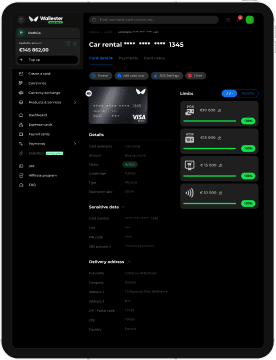
- Primary features: It facilitates the instant issuance of unlimited virtual Visa cards and provides physical cards for global use without monthly maintenance fees. Managers can set limits and monitor transactions in real time with zero commission on top-ups.
- Technical layers: The system provides a REST API for deep integration into internal corporate software. It utilises the Visa Token Service (VTS) to support secure mobile wallet provisioning and includes an in-house fraud monitoring engine that blocks suspicious activity instantly.
2. Soldo
Soldo specialises in complex multi-user spending environments, providing tools for companies with intricate hierarchical structures. It allows finance managers to build departmental sub-accounts where funds are ring-fenced for specific projects.
- Primary features: The platform supports both virtual and physical Mastercard cards and allows for the creation of project-specific wallets with automated top-up rules.
- Technical layers: It provides bidirectional data synchronisation with major accounting software such as Xero and QuickBooks. The infrastructure facilitates real-time limit adjustments and automated push notifications that prompt users to capture receipts at the point of purchase.
3. Pleo
Pleo prioritises the automation of administrative workflows through smart company cards. The platform digitises the tracking of business expenses by automatically linking every purchase to its corresponding digital record.
- Primary features: Every employee receives an individual card with dedicated spending caps, and the system handles mileage tracking and out-of-pocket expenses through a centralised mobile application.
- Technical layers: Proprietary receipt-matching algorithms identify transactions and prompt users for immediate capture. It facilitates automated VAT extraction and integrates with high-level financial software for audit trail transparency.
Further Reading: 10 Best Expense Tracker Apps for Business in 2026 (UK and EEA)
4. Tide
Tide is a mobile-first business banking platform tailored for small businesses and freelancers who require a combined account and card system. It simplifies financial management by linking expense cards directly to a primary digital business account.
- Primary features: It provides automated expense categorisation and the ability to issue up to 50 cards per business account with no monthly fee for the basic tier.
- Technical layers: The mobile management interface facilitates instant card freezing and spending permission resets. It provides direct API links to Sage and other major UK accounting packages for streamlined month-end reporting.
5. Payhawk
Payhawk provides an intelligent corporate card solution that combines payment instruments with advanced approval workflows and fund request systems.
- Primary features: It allows team members to request budget increases via the app, which managers can approve or deny in real time. The platform supports international payments with competitive exchange rates.
- Technical layers: The system utilises Optical Character Recognition (OCR) technology in over 60 languages for automated data extraction from invoices. It provides direct integration with enterprise-level ERP systems such as Oracle NetSuite and Microsoft Dynamics.
Q&A: How many cards can a business issue through these platforms?
Most digital providers allow for the issuance of hundreds or even thousands of cards. Some platforms, such as Wallester, provide an unlimited number of virtual cards. This allows companies to assign a unique card to every employee or even to specific digital advertising campaigns for better tracking.
6. Klippa
Klippa provides an expense management system with a heavy emphasis on data extraction accuracy and the prevention of fraudulent claims.
- Primary features: It facilitates digital workflows for spending approvals and provides cloud storage for all transaction documentation. The platform supports cost units and projects for detailed reporting.
- Technical layers: The platform uses an advanced OCR engine with 99% accuracy for invoice processing. It incorporates the Google Maps API to facilitate precise mileage calculations and automates the matching of credit card statements to submitted receipts.
7. Card One Money
Card One Money is an established UK provider that focuses on providing managed business accounts with a high level of security for core corporate funds.
- Primary features: It provides a ring-fenced billing system where money for essential bills is partitioned from the prepaid spending cards. The application process requires no credit check, making it accessible for new ventures.
- Technical layers: The platform supports tiered authorisation protocols and aggregate monitoring for diverse brand portfolios. It provides structured data exports in CSV format to simplify the integration of transaction records with existing accounting software.
8. Equals Money
Equals Money focuses on the requirements of businesses involved in international trade, providing solid coverage across 190 countries and 38 different currencies.
- Primary features: It allows businesses to load cards at any time without limiting the total balance, supporting large-scale international transactions and travel.
- Technical layers: The infrastructure provides granular control over user permissions and includes 24/7 security monitoring. It utilises tools designed to identify unusual spending patterns and provides dedicated account management for all business clients.
9. Anna Money
Anna Money combines a business account with automated administrative assistance, focusing on the needs of sole traders and micro-businesses.
- Primary features: The platform provides prepaid cards that automatically sync with built-in invoicing and tax reminder tools. It simplifies day-to-day financial tasks through a mobile-first interface.
- Technical layers: It uses an AI-based chat interface to help users categorise spending in real time. The system supports automated receipt reminders and prepares financial data for direct VAT filing with HMRC.
10. Cashplus Business
Cashplus Business (now operating under the name Zempler Bank) serves as an accessible alternative to traditional high-street banking, noted for its rapid account deployment and consistent reporting frameworks.
- Primary features: The service provides functional prepaid instruments for organisations that require a simplified approval process. The platform supports the administration of extensive card fleets through a centralised master dashboard.
- Technical layers: The infrastructure incorporates verified safeguarding protocols to maintain client funds in segregated, ring-fenced accounts at regulated banks. It provides direct connectivity with major UK accounting suites to simplify month-end reconciliation.
Further Reading: Best Budgeting Apps in the UK: Top Picks for Tracking Spending
Comparing the top UK providers at a glance
The following table evaluates the key technical attributes of these leading UK prepaid card solutions.
| Provider | Primary Network | Core Focus | Integration |
| Wallester | Visa | Scalable API & issuance | Xero, QuickBooks |
| Soldo | Mastercard | Granular team controls | Multi-platform |
| Pleo | Mastercard | Receipt automation | Wide range |
| Tide | Mastercard | Small business banking | Xero, Sage |
| Payhawk | Visa | Approval workflows | ERP systems |
| Klippa | Visa/Mastercard | OCR & VAT reclaim | Multi-platform |
| Card One Money | Mastercard | Controlled spending | CSV exports |
| Equals Money | Mastercard | International trade | Various |
| Anna Money | Mastercard | Admin & invoicing | Custom API |
| Cashplus Business | Mastercard | Accessibility | Direct exports |
Q&A: Is it possible to freeze a prepaid card instantly?
Yes, all top UK providers allow administrators to freeze or cancel a card through their mobile app or web dashboard. This action takes effect immediately across the payment network, preventing any further unauthorised transactions. Since these platforms communicate directly with the card networks, the protection is instantaneous, providing a level of control that traditional corporate credit cards often struggle to match.
Further Reading: European Business Cards for Digital Advertising: 2026 Guide
Why prepaid cards define effective spend management
Replacing traditional reimbursements with prepaid card technology fundamentally changes how a business handles its cash flow. This approach allows finance teams to block unauthorised spending before it occurs by setting hard caps on every employee card. Since these platforms integrate with accounting software, they also remove the need for manual data entry and receipt chasing. Organisations that adopt these tools gain a clearer, real-time picture of their expenses, allowing them to scale their operations with greater financial security and administrative efficiency.