Expense management software in 2026 gives companies a complete flow for capturing, approving, and analysing spending, turning receipts, card feeds, and travel costs into clean data that moves straight into accounting. The article explains why manual processes collapse as teams grow, how modern tools improve visibility and speed for finance, managers, and employees, and how AI now checks receipt quality, detects unusual patterns, and predicts spending trends. It compares the top platforms that cover different needs, from card-centric control to travel-heavy operations, and outlines a clear implementation path with real-life examples. The result is a detailed guide to choosing and adopting the right expense system for any organisation.
Most companies reach a point where receipts, spreadsheets, and improvised approval chains stop working. Once spending grows across teams, cards, travel, and different countries, finance needs one reliable system that brings clarity, structure, and clean data. This is why expense management tools have become a standard part of modern operations for both fast-growing firms and established enterprises.
What expense management software actually does
Expense management software replaces scattered receipts and monthly spreadsheets with a single, clean flow that starts when an employee pays for something and ends when finance sees the approved entry in the general ledger. The system reads receipts, applies rules, routes approvals, and links spending to accounting without extra typing from the user.
Typical building blocks include
- Mobile receipt capture with OCR
- Card feeds and virtual cards
- Policy checks and approval rules
- Links to accounting and payroll for reimbursements
- Dashboards and reports by team, card, project, or vendor
The best tools in 2026 add card issuing, AI-based checks for fraud and receipt quality, and strong support for multi-entity groups and cross-border spend.
Q&A: What problem does expense management software solve first?
It creates one consistent path for every purchase. Receipts arrive in the same format, card charges appear automatically, and approvals follow one route instead of scattered messages. Finance no longer rebuilds the story behind each claim because the system already links the receipt, the card charge, the rules, and the final category.
Further Reading: Accounting Software for UK Businesses in 2026
2026 expense management market
The market continues to expand through 2025 and 2026. Cloud services dominate. Demand grows fastest among small and mid-sized companies. Travel remains an important driver for larger organisations.
Global expense-management software market
| Year | Global Market Size |
| 2024 | USD 7.64 billion |
| 2025 | About USD 7.70 billion |
| Forecast for 2032 | About USD 16 to 17 billion |
| CAGR 2024 to 2032 | About 10 to 12% |
Travel and expense software market
| Year | Market Size |
| 2023 | USD 3.75 billion |
| 2024 | USD 4.49 billion |
| Forecast for 2030 | About USD 10.1 billion |
| CAGR 2024 to 2030 | About 17 to 18% |
How expense management software benefits your business
Modern expense tools help companies manage money more calmly and predictably. When receipts arrive on time, and every purchase follows the same flow, teams spend less energy fixing mistakes and more time understanding where money actually goes.
Financial efficiency
Most delays in finance come from missing receipts, unclear categories, and last-minute approvals. When these steps happen inside one system, the noise drops. Month-end closes faster because the information is already sorted. Teams can finally look at the numbers instead of cleaning them.
Live spending data also changes how budgets are handled. Managers do not wait until the end of the month to see a problem. They see it as soon as it forms and can slow down or redirect spending before it grows.
Consistent rules
Expense rules often depend on who approves the claim. A system removes this inconsistency. Every claim passes through the same checks, and unusual items are marked before anyone signs them off.
Audit work also becomes easier. Records sit in one place. Approvals, comments, and corrections stay attached to each claim, so finance does not dig through messages or old sheets during a review.
Clearer spending patterns
When every receipt is captured in the same format, it becomes possible to see real patterns. Finance can spot repeat payments for the same tool, rising travel costs, or small items that add up over time.
Some platforms also estimate likely spending for the coming weeks based on past habits. This helps finance prepare for busy periods and speak with managers earlier, not after the numbers land.
Real-world scenario:A London-based agency used to chase receipts once a month. Designers bought software, ad credits, and train tickets on personal cards. Once a month, they sent photos of receipts into a shared chat. Two people in finance spent three to four days matching screenshots with card statements and guessing categories.
Switching to a modern platform with smart cards and mobile apps changed the routine.
- Every employee received a card with limits by team and merchant type
- Receipts were captured on the spot in the mobile app
- Missing receipts triggered automatic reminders
- Managers saw live spend against client projects
- Finance exported clean entries to Xero without extra typing
Further Reading: E-Invoicing for Companies: How to Stay Compliant and Improve Control
How this Top-15 list was built
The tools below were selected using four filters.
- Clear focus on business expense management
- Active product development and public releases in 2024 and 2025
- Evidence of strong adoption in their core segments
- Card, policy and reporting functions are mature enough for 2026 use cases

Wallester Business
Overview
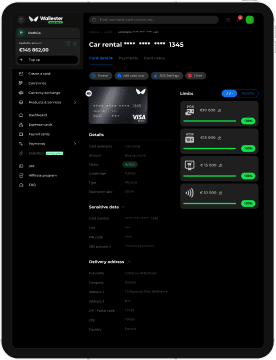
Wallester combines Visa card issuing, expense management, and real-time controls in one platform. Every payment sits on Wallester’s own issuing stack rather than a third-party card, which gives precise control over limits, whitelists, and data.
Key features
- Instant virtual and physical Visa cards for teams and projects
- Card limits by merchant type, time, country, or category
- Real-time feed of every transaction with rule-based alerts
- Receipt upload and matching inside mobile and web apps
- Deep API access for ERP, payroll, and custom portals
Strengths
- Card issuing and expense rules live in one place
- Very strong fit for online advertising, subscriptions, and partner payouts
- Works well for white-label and embedded card use cases
Watch outs
- Best matched to firms that already centralise spend on cards
- Some use cases may need API based integration work at the start
Best for
Companies that want to control every card payment in real time, from media buying to supplier spend, and that care about card-level rules more than classic expense reports.
SAP Concur
Overview
SAP Concur is the classic enterprise travel and expense suite. It ties flights, hotels, card feeds, and expense reports into one system that sits well inside large SAP based environments.
Key features
- Travel booking and expense in one interface
- Mobile receipt capture and auto-population of claims
- AI-supported checks and audit rules
- Deep links with SAP and many other ERPs
Strengths
- Proven at a global scale with complex approval chains
- Strong audit trails and policy controls across many countries
Watch outs
- Implementation and change work are heavier than with lighter tools
- Interface and support quality can vary by region
Best for
Large multinational groups with SAP or other big ERPs that need tight audit trails and travel policy rules.
Expensify
Overview
Expensify is one of the best-known mobile-first expense tools for small and mid-sized teams. Its SmartScan feature reads receipts and builds expenses with minimal input from employees.
Key features
- Receipt scanning with SmartScan
- Email forwarding that converts receipts into expenses
- Expensify Card with integrated controls
- Travel booking for flights and hotels inside the app
Strengths
- Very strong automation around capture and categorisation
- Good fit for teams that move fast and live in email and mobile apps
Watch outs
- Policy and approval setups are simpler than in heavy enterprise suites
- Best for firms that accept card-centric flows
Best for
Growing companies that want to stop chasing receipts without running a complex travel programme.
Ramp
Overview
Ramp combines corporate cards, expense management, accounts payable, and AI-driven savings tools. It has grown very quickly among US-based tech and service firms and now serves tens of thousands of companies.
Key features
- Unlimited physical and virtual cards with merchant rules
- AI suggestions for cheaper vendors and duplicate licences
- Missing receipt reminders and auto-matching
- Accounts payable tools next to card spend
Strengths
- Clear focus on cutting waste in software and vendor spend
- Strong AI agents for checks, fraud signals, and transaction review
Watch outs
- Mostly focused on US-based and US-dollar-heavy companies
- Cards and limits are central to the model
Best for
Fast-growing firms that hold many software licences and online subscriptions want active savings suggestions.
Pleo
Overview
Pleo provides smart company cards and a modern spend hub for European organisations. Employees use their own card, photograph receipts, and Pleo fills the rest.
Key features
- Cards for each employee with flexible limits
- Mobile app for instant receipt capture
- Invoice and reimbursement flows in the same system
- Integrations with European accounting tools
Strengths
- Very user-friendly card and app experience
- Multi-entity features for European groups
Watch outs
- Focused strongly on Europe
- Some functions, such as travel, rely on partners rather than native modules.
Best for
Small and mid-sized European teams that want cards for everyone and simple expense habits that people actually follow.
Spendesk
Overview
Spendesk is a European spend management and procurement platform that covers cards, invoices, approvals, and now corporate travel.
Key features
- Virtual and physical cards linked to budgets
- Request and approval flows before spend
- Invoice capture and payment
- Procurement and travel modules in the same hub
Strengths
- Good fit for mid-market European finance teams
- Single view of card, invoice, and travel spend
Watch outs
- Strongest fit for Europe, though reach is widening
- Feature richness may feel heavy for very small teams
Best for
European mid-sized companies that want procurement and expense in one system.
Airwallex
Overview
Airwallex started as a global payments platform and now offers corporate cards and expense management tightly linked to multi-currency accounts.
Key features
- Corporate cards that draw from local currency balances
- Built-in expense tracking with AI-based categorisation
- Global accounts and local payouts in many markets
- Strong FX rates and zero foreign transaction fees on many cards
Strengths
- Very strong choice for cross-border spend in many currencies
- Good for firms with suppliers and teams in several regions
Watch outs
- Suitable companies with meaningful international activity
- Some smaller domestic firms may not need the FX features
Best for
Multi-country firms that hold balances in several currencies and care about FX savings as much as card controls.
Payhawk
Overview
Payhawk is an AI-supported spend platform with cards, expense tools, and procurement, aimed mainly at mid-sized and larger companies in Europe and beyond.
Key features
- Company cards and expense flows
- AI agents that guide purchasing, travel, and payments
- Multi-entity management and group-level controls
- Links to many ERPs and HR systems
Strengths
- Strong focus on central control for multi-country groups
- Regular feature releases around AI and cards
Watch outs
- Geared towards finance teams willing to invest time into a rich rule set
- May feel heavy for very small businesses
Best for
Groups that want one hub for cards, expenses, and procurement and that place a lot of trust in finance as a central function.
Brex
Overview
Brex offers a global spend platform that combines corporate cards, expenses, bill pay, travel, and cash accounts. It is widely used among fast-growing tech and life science companies.
Key features
- Corporate cards with a rich policy engine and rewards
- Expense tracking, reimbursements, and bill pay
- Travel booking tied to limits and policies
- AI-based accounting automation and custom fields
Strengths
- Wide reach across countries and currencies
- Very strong for venture-backed firms that need flexible credit and travel
Watch outs
- Credit decisions are linked to funding and cash levels
- Some features are still US-focused
Best for
Global startups and scale-ups that want cards, travel, and cash accounts under one login.
BILL Spend & Expense (formerly Divvy)
Overview
BILL Spend & Expense brings together a corporate card and expense suite under the wider BILL brand, which is strong in bill payments for US companies.
Key features
- Free corporate cards linked to budgets
- Real-time tracking of spend against those budgets
- Receipt capture and categorisation
- Links to BILL accounts payable tools
Strengths
- Simple entry path for small and mid-sized US firms
- Clear visual budgets for teams and projects
Watch outs
- Focused on North America
- Best results when combined with other BILL products
Best for
US-based firms that already use BILL for payables and want card spend in the same view.
Zoho Expense
Overview
Zoho Expense sits inside the wider Zoho suite and plugs into Zoho Books, Zoho CRM, and other apps. It is a cloud expense product with a strong value-for-money story.
Key features
- Receipt auto scan and mobile app
- Corporate card reconciliation
- Per diem and mileage support
- Multi-level approvals and audit trail
Strengths
- Attractive for companies already on Zoho
- Pricing is clear and fairly low per active user
Watch outs
- Interface and setup reflect the wider Zoho style, which some teams love, and others find busy.
- Standalone use is weaker than use inside a Zoho stack
Best for
Small and mid-sized businesses using Zoho for CRM or accounting and wanting expense reporting that speaks the same language.
QuickBooks Online
Overview
QuickBooks Online is an accounting platform with built-in expense tracking and receipt capture. It is still the default choice for many small firms that want everything in one system.
Key features
- Expense categories tied to the chart of accounts
- Bank feeds and card feeds
- Mobile receipt scanning
- Basic project and client tagging
Strengths
- No separate tool for expense management is needed
- Many accountants already know the product well
Watch outs
- Expense functions are simpler than in specialist tools
- Travel and card controls are limited
Best for
Small firms and freelancers who already run their books in QuickBooks and want receipt capture without extra platforms.
Xero Expenses
Overview
Xero Expenses is a claim and receipt module within Xero, aimed at small and mid-sized firms that use Xero as their main accounting system.
Key features
- Mobile app for expense claims and mileage
- GPS-based trip tracking
- Photo receipts linked to bank feed items
- Simple approvals and reimbursements
Strengths
- Very tight fit with Xero-led accounting
- Clear pricing as an add-on or included at higher tiers
Watch outs
- Not a full spend platform with cards and procurement
- Less suited to very large teams
Best for
Companies in the Xero world that want a neat way to handle employee claims without leaving that system.
Rydoo
Overview
Rydoo is a modern expense tool focused on international groups, with particular strength in Europe. It leans heavily on AI for receipt reading and compliance checks.
Key features
- AI-based receipt scanning in many languages
- Cards, real-time expense tracking, and mileage
- VAT reclaim support in multiple countries
- Policy rules and smart auditing
Strengths
- Very strong choice for cross-border teams with many travellers
- Good depth in VAT and compliance support
Watch outs
- Strongest in Europe and for firms with frequent travel
- Some configuration work is needed for more complex policies
Best for
International organisations that want one tool for multi-country expenses, VAT, and travel-related claims.
Navan
Overview
Navan, previously TripActions, merges corporate travel booking with expense management and cards. It focuses on companies that see a large share of spend in travel.
Key features
- Flights, hotels, trains, and cars booked in the app
- Automatic creation of travel expenses
- Corporate cards with limits tied to travel rules
- Travel insights and carbon footprint tracking
Strengths
- Travel data and expense data in one feed
- Good fit for sales-heavy or consulting-style teams
Watch outs
- Less useful for firms with low travel share
- Some finance teams prefer to keep travel and cards separate
Best for
Companies where travel is a major spend category and where policy control at booking time matters.
Summary
There is no single “best expense management software” for 2026. Instead, there is a set of strong choices that cover different shapes of companies.
- Wallester, Ramp, Airwallex, Payhawk, Brex, Pleo, Spendesk, BILL Spend & Expense, and Rydoo focus on cards and modern spend control.
- SAP Concur and Navan shine where travel and audits matter
- Zoho Expense, QuickBooks Online, and Xero Expenses give simple flows where accounting is already in place
The right platform is the one that matches your size, countries, systems, and card strategy, and that your people are willing to use every time they pay for something.