


Invoice factoring and invoice discounting are two distinct forms of receivables finance that differ in structure, visibility, and control. This article explains how each method works, how responsibilities shift between the business and the finance provider, and how funding advances, fees, risks, and eligibility requirements compare. It also covers key variations such as recourse, non-recourse, selective arrangements, and supply chain finance, along with practical examples that show how these facilities operate in real situations. The text outlines the operational consequences of handing credit control to a factor versus keeping it in-house through discounting, highlights contractual points such as guarantees and turnover thresholds, and reviews alternative funding options and modern payment solutions that can sit alongside these arrangements.
Many businesses often struggle with cash flow issues due to unpaid bills and delayed client payments. Finance options like factoring and discounting provide solutions to this common problem, allowing firms to access funds tied up in their accounts receivable. These financing methods help bridge the gap between completing work and receiving payment, supporting healthy cash reserves and operational growth. Understanding the key differences between these two approaches can help you choose the right option for your company’s specific needs and circumstances.
What is invoice discounting?
Invoice discounting is a facility that releases funds against unpaid invoices while leaving credit control and customer communication entirely in the hands of the business. The finance provider advances a portion of the invoice value and settles the remainder once the customer pays, and the arrangement remains confidential to clients.
This financing arrangement allows firms to borrow money against their outstanding invoices. Under this method, organizations maintain control over their sales ledger and continue managing their own credit control processes. The lending partner advances a percentage of the total value (80-90%) when the bill is issued, with the remaining money paid once customers settle their accounts.
This solution operates more discreetly than other forms of finance, as your clients won’t know you’re using a discounting company’s service. The relationship between you and your customers remains unchanged, which many owners view as a significant advantage. You continue to chase payments and handle all communication, while the financing provider operates invisibly in the background.
The loan secured through this arrangement is repaid once your clients settle their accounts. Most providers charge a service fee plus interest on the advanced amount for the period until payment is received. This approach works well for established operations with effective internal credit control systems that need to boost their cash flow without giving up client relationship management.
Q&A: Why do providers require a minimum turnover for invoice discounting?
Minimum turnover thresholds exist because discounting relies on a steady volume of invoices and predictable payment behaviour. Providers assess the stability of a company’s sales ledger, the mix of customers, and the likely flow of repayments before offering an advance facility. Smaller or irregular ledgers create higher administrative and credit risk, so many providers limit discounting to firms with established revenue patterns.
What are the types of invoice financing?
Financing includes several variations to suit different requirements. The two main categories are factoring and discounting, but each has its own subtypes and specializations:
- Selective finance. Businesses choose specific invoices to finance instead of committing their full sales ledger, allowing flexibility for occasional cash flow needs.
- Recourse factoring. The company remains responsible for unpaid invoices if the client fails to pay.
- Non-recourse factoring. The factoring company assumes the risk of non-payment, though this may come with higher fees.
- Spot factoring. Organizations factor individual invoices when needed, rather than through long-term agreements – useful for seasonal or unpredictable cash flow.
- Confidential discounting. Clients are unaware that a financing provider is involved, preserving business relationships.
- Disclosed discounting. Customers are informed that a third party is handling invoice payments.
Further Reading: What is Selective Invoice Financing?
How does supply chain finance work?
Supply chain finance represents another variation that benefits both buyers and suppliers. This arrangement involves a finance provider who pays suppliers earlier than the standard payment terms would allow, while giving buyers extended time to settle their bills. The provider collects a small fee for facilitating this arrangement, creating a win-win situation for all parties involved.
For suppliers, this means immediate access to cash without waiting 30, 60, or even 90 days for payment. The advantage over traditional funding is that the rates are often lower because they’re based on the buyer’s credit rating rather than the supplier’s. This makes supply chain finance particularly valuable for smaller suppliers doing business with large organizations with strong credit profiles.
The buyers benefit from extended payment terms without damaging supplier relationships through delays. This approach helps maintain a healthy supply chain while optimizing working capital for everyone involved. The system works best when there’s an established relationship between the buyer and seller, with regular, predictable billing patterns.
Real-world scenario
A commercial printing company with a steady client base issues large monthly bills to retailers and event agencies. Although most clients pay within forty to sixty days, the firm’s material costs and payroll must be covered every month without delay. Seasonal peaks, such as the months before major trade fairs, increase the volume of work but also enlarge the gap between issuing invoices and receiving payment.
The company decides to set up a discounting facility to keep production stable during these periods. Once the facility is active, the firm uploads new invoices to the provider as they are issued. The advance arrives within a day and is used to buy paper stock and outsource additional finishing work when demand rises. Clients continue sending payments directly to the printing company under normal terms, and the provider releases the retained balance after each customer settles. The arrangement gives the business a predictable flow of funds during busy and quiet months without altering client communication or credit control routines.
What are the cons of invoice discounting?
- Most providers set minimum turnover requirements, often around one hundred thousand pounds per year, and expect a stable trading history, which excludes startups and very small operations.
- Many agreements require personal guarantees from owners, creating personal liability if the facility does not perform as expected.
- Contract terms often run for twelve to twenty four months and may include early termination fees.
- Some facilities require the entire sales ledger to be discounted rather than selected accounts.
- Cost structures involve multiple elements such as service charges, interest on advances, and possible setup or audit fees.
- The business retains responsibility for credit control and payment collection, which demands time, staff, and established internal processes.
Further Reading: Accounts Receivable Process: Steps, KPIs, and Practical Examples
What are the pros of invoice discounting
- The arrangement remains confidential, so client relationships and communication stay entirely under the company’s control.
- Available funding increases in line with sales volume, creating a financing facility that scales with business activity.
- Internal procedures for managing the sales ledger and credit control stay in place, which keeps administrative processes consistent.
- Costs are often lower than factoring when the business already has effective collection systems, since external collection services are not part of the agreement.
- Discounting can provide higher funding availability than traditional overdraft facilities, depending on ledger size and invoice volume.

What is invoice factoring?
Invoice factoring is a facility in which a business sells its unpaid invoices to a finance company that advances most of the value upfront and takes over responsibility for credit control and customer payment collection.
Factoring involves selling your unpaid bills to a specialized finance firm (the factor). Unlike discounting, factoring includes a comprehensive service where the factor takes over your entire sales ledger management and credit control functions. When you issue a bill, the factor usually advances 80-90% of the invoice amount immediately, with the remaining balance paid when your client settles the account.
A key feature of this arrangement is that the factor communicates directly with your clients regarding payments. This means your customers will be aware you are using factoring services, as they will receive payment instructions directing them to pay the factoring company rather than you. The factor handles all aspects of debt collection, from sending reminders to making collection calls and processing payments.
This complete service approach makes factoring particularly suitable for smaller operations without established credit control resources or those looking to outsource this function. Many factors also offer additional services such as credit checks on potential clients and bad debt protection through non-recourse agreements. While more expensive than discounting due to the added services, factoring frees up significant internal resources that would otherwise be dedicated to collections.
Further Reading: Invoice Processing: What It Is, Basic Steps, Definition
Invoice factoring types
Businesses can use several forms of factoring depending on their risk tolerance and operational needs.
- Recourse factoring
The most common structure. Your firm ultimately carries the risk if a customer does not pay. The factor advances money against the invoice but can reclaim the funds if the bill remains unpaid after an agreed period, usually ninety to one hundred and twenty days. Fees are lower, but there is no protection from bad debt.
- Non-recourse factoring
The factor assumes the risk of non-payment. If the customer fails to pay, the factor cannot reclaim the advance, subject to terms. This gives protection against bad debt and suits firms working with new or less predictable clients. Fees are higher because the risk shifts away from the business.
- Selective factoring
You choose which invoices or which customers to factor. This works well for firms with occasional cash needs or uneven payment histories across their client base. It provides flexibility without committing the entire ledger.
- Confidential factoring
Often called CHOCS (Client Handles Own Collections Service). The factor provides funding, but your firm continues to manage credit control, keeping the arrangement private from customers. The aim is to secure cash flow support without signalling the involvement of a finance provider.
Invoice factoring example
Consider a small IT services firm generating monthly bills of £50,000 but struggling with late payments affecting their ability to take on new projects. After evaluating options, they choose a recourse arrangement. The factor conducts initial credit checks on the IT firm’s clients to assess risk levels and establishes appropriate credit limits.
When the IT firm issues new bills totaling £50,000, the factor verifies the work was completed satisfactorily and advances £40,000 (80%) within 24 hours. The factor then sends payment notifications to clients, informing them to pay directly to the factor’s account. As customers pay over the following weeks, the factor releases the remaining £10,000 to the IT firm, minus their service fee of around 1-3% of the total invoice value.
If a client hasn’t paid after 60 days, the factor pursues more intensive collection efforts. Should the bill remain unpaid after 90 days, under the recourse agreement, the IT firm would need to repay the advance. However, the consistent cash flow from factoring allows them to hire additional staff, purchase new equipment, and take on larger contracts without waiting for client payments, significantly accelerating their business growth trajectory.
What are the pros of invoice factoring?
Factoring comes with several advantages, especially for firms that need steady cash flow or lack internal credit control resources. Its strengths usually align with younger companies, fast-growing operations, or teams that prefer outsourcing collections rather than managing them in-house.
Key advantages include:
- Immediate working capital. You receive a large share of the invoice value (often 80-90%) within 24 hours, giving you access to funds long before customers pay.
- Outsourced collections. The factor handles reminders, statements, and payment follow-ups. This removes administrative pressure from your team and frees time for sales and operations.
- Useful for firms without strong credit control systems. Smaller or newer businesses benefit from professional credit management that they may not have in-house.
- Credit checks on new customers. Many factors run credit assessments on your clients, helping you avoid high-risk accounts before taking on work.
- Bad-debt protection (non-recourse). When using non-recourse arrangements, the factor absorbs the loss if the customer does not pay, shielding your cash flow from unexpected write-offs.
- Scales with revenue. As sales grow, available funding grows with them, making factoring adaptable for expanding companies.
- Faster onboarding than discounting. Many providers set up factoring facilities more quickly because they take over collections and therefore run fewer eligibility checks on your internal processes.
What are the cons of invoice factoring?
Despite its benefits, factoring presents several challenges that businesses should carefully evaluate:
- Client perception. Since customers receive payment instructions from the factoring company, some may view it as a sign of financial instability.
- Higher costs. Factoring is typically more expensive than discounting, with service charges ranging from 0.5% to 3% of turnover, plus interest on advances.
- Minimum monthly fees. Many agreements require businesses to pay fixed fees, even during slow periods.
- Concentration limits. Some providers restrict how much funding you can receive from a single client, which can be problematic for firms with a few large customers.
- Administrative burden. Factoring agreements often require detailed reporting and due diligence, adding complexity to financial operations.
What are the differences between invoice factoring and invoice discounting?
The main difference between these two finance methods centers around who controls the sales ledger and communicates with clients. With discounting, your firm maintains complete control over credit management and customer relationships. Factoring transfers these responsibilities to the finance provider, who deals directly with your clients regarding payments.
Control levels represent another important difference. Discounting offers greater autonomy, as you continue managing your accounts receivable according to your established procedures. Factoring involves surrendering some control to the factor, who follows their own collection protocols when dealing with your clients. These distinct features make discounting generally more suitable for larger firms with effective internal systems, while factoring often benefits smaller operations lacking dedicated credit control resources.
Cost structures differ significantly between these approaches. Factoring generally costs more due to the additional collection services provided but might deliver better value for organizations without established credit management systems. Discounting offers lower overall fees but requires you to maintain your own collection procedures. Eligibility criteria also vary, with discounting usually requiring higher business turnover and longer trading history than factoring arrangements.
Q&A: What is the single biggest operational difference between factoring and discounting?
Factoring moves credit control to the finance provider, while discounting keeps it with your team. This shift determines how visible the arrangement is to clients, how much control you retain, and how much the service costs.
Which is right for you: invoice discounting vs factoring?
Choosing between these options depends on several key factors specific to your situation. Consider your internal resources first – if you lack dedicated credit control staff or systems, factoring’s comprehensive service might justify the higher costs. Conversely, if you have effective collection processes and prefer maintaining direct client contact, discounting likely represents the better option.
Your company’s size and maturity matter in this decision. Established operations with substantial turnover qualify more easily for discounting and benefit from its lower costs and confidentiality. Newer or smaller ventures often find factoring more accessible and appreciate the outsourced credit management despite client visibility. Your cash flow urgency also influences the choice – factoring usually provides slightly faster initial setup than discounting arrangements.
Consider your client relationships carefully when deciding. If you believe customers might react negatively to factoring, the confidentiality of discounting could preserve important relationships. Evaluate growth plans too. Both options support expansion, but discounting scales more seamlessly with increasing sales without changing client interactions. Finally, assess your tolerance for contractual commitments, as factoring sometimes offers more flexible terms than discounting arrangements.
Comparison at a glance
| Factor | Invoice Discounting | Invoice Factoring |
| Control of sales ledger | You manage collections and client communication | Factor handles all credit control and payment chasing |
| Client visibility | Usually invisible to customers | Customers interact with the factor directly |
| Eligibility | Suits larger or established firms with strong credit control | More accessible to smaller or newer firms |
| Cost | Lower fees because you manage collections | Higher fees due to included collection services |
| Setup speed | Can take longer due to internal process checks | Usually faster onboarding |
| Scalability | Grows smoothly as sales increase | Also scales, but depends on factor’s limits and rules |
What are the alternatives?
Organizations seeking funding options beyond these finance methods have several alternatives worth noting. Traditional bank loans provide lump-sum funding with fixed repayment schedules, though they require collateral and may involve lengthy application processes. Credit cards offer flexibility for smaller expenses but generally come with higher interest rates than other financing methods.
Merchant cash advances provide funding based on future card sales, with repayments taken as a percentage of daily transactions. This creates breathing room during slower periods but usually costs more than conventional financing. Peer-to-peer lending platforms connect firms directly with investors, potentially offering competitive rates for operations with strong profiles but might not provide the ongoing relationship of traditional lenders.
Asset-based lending allows firms to borrow against equipment, inventory, or property, which might suit organizations with valuable physical assets but limited bill values. Trade credit insurance protects against client non-payment, addressing one risk factoring mitigates without changing payment processes. For operations primarily seeking protection against late payments rather than immediate cash, credit insurance might provide a more targeted solution.
Further Reading: What is a business cash flow loan?
Improve your invoicing with Wallester
Wallester offers innovative payment solutions that complement finance strategies for optimal cash flow management. Our payment cards integrate seamlessly with accounting software, simplifying expense tracking and reconciliation. This integration creates a more efficient financial ecosystem where financing works alongside streamlined payment processes.
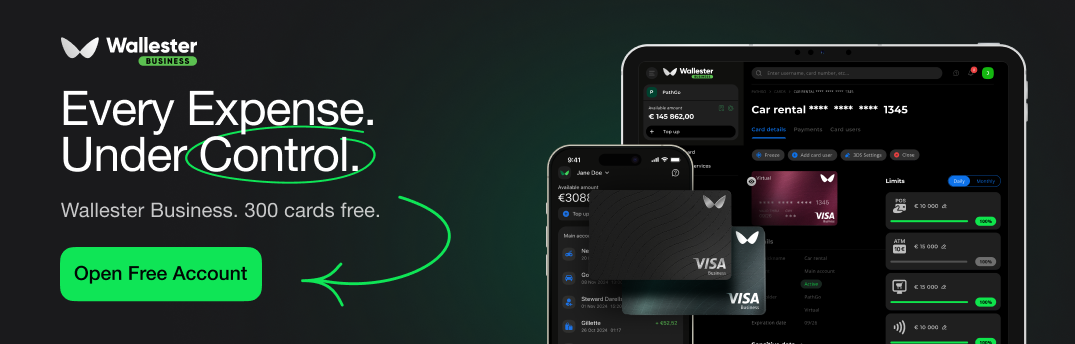
Wallester’s virtual and physical cards provide precise spending controls, allowing you to manage cash from finance more effectively. You’ll gain real-time visibility into all transactions, helping prevent unauthorized spending and ensuring advanced funds are allocated appropriately. The platform also generates detailed reports that help identify spending patterns and opportunities for improved cash management.
If you want to improve how your business handles payments and cash flow, Wallester can support you with flexible card tools and real-time control. Explore the platform and see how it fits your current finance setup.

