For most people, buying a ticket is as simple as it gets. You find the event, enter your card details, and check out. For professional resellers, however, it doesn’t work that way anymore.
Success used to depend on finding the right event and moving faster than everyone else. But increasingly it depends on something less visible: the payment infrastructure behind every purchase. When you’re running hundreds of transactions across several ticketing platforms, payments stop being a checkout step and become an operation in their own right.
Growth Creates Operational Friction
Ticket resellers start small. One or two people buy on a few cards, and reconciling the numbers is quick at the end of the day.
As more buyers join and more platforms get added, that setup tends to run out of road pretty fast. Often, many events go on sale at once, minutes apart from each other. Spending climbs, and so do the questions around it: who made this purchase, how much has already gone toward this event, which cards are close to their limit, how do you stop one buyer’s activity from affecting another’s. It’s at that point that checkout really becomes a payments operation.
One Card Is Never Enough
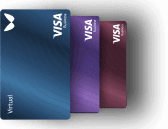
The first change most growing resellers make is dropping the shared card and replacing it with dedicated virtual cards. These are issued to individual buyers, teams, or specific purchasing strategies. It isn’t about the number of cards so much as the infrastructure behind them. Separate cards make it easier to track who spent what, apply different limits by buyer or project, and see where money is going.
As Josefina Luduena, business development manager at Wallester, puts it, most conversations with ticket resellers now are about organisation rather than payments themselves: “Once businesses reach a certain transaction volume, they’re no longer asking how to pay. They’re asking how to stay organised while continuing to grow.”
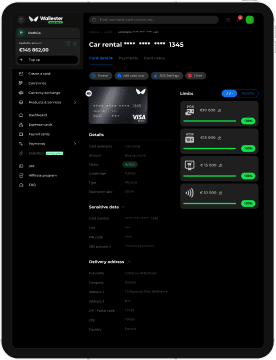
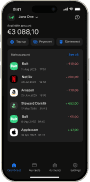
Of course, speed still counts in ticket reselling, but once purchases are happening continuously, across multiple people and platforms, visibility becomes just as valuable. Businesses need to know what’s happening while it’s happening. Real-time transaction monitoring, spending limits, instant card issuance, and centralised reporting let teams work from the same numbers, instead of reconciling hundreds of purchases by hand afterwards.
What Is a BIN, and Why Does It Matter?
As resellers scale further, another term starts coming up in conversations: the BIN, or bank identification number, the first six to eight digits on a payment card. It identifies the bank or programme behind the card and is one of many data points merchants and payment providers check when processing a transaction.
At real scale, some businesses move away from sharing a BIN with thousands of unrelated cardholders. The options usually sit on a spectrum: a fully exclusive BIN used by one company only, a BIN split across a small group of businesses to spread the cost, or a wider dedicated or shared range for companies running several card programmes at once. The more exclusive the BIN, the more consistency a business gets across its card portfolio, and the less its transactions get judged by other cardholders’ fraud history.
Luduena says this comes up most often with professional ticket resellers and sneaker buyers, where transaction volumes run exceptionally high. In other words, for businesses operating at that level, a dedicated BIN becomes part of the payment strategy itself.
Where Whitelisting Comes In
Also, some card programmes let businesses request 3D Secure whitelisting for specific merchants. Card payments above certain thresholds usually trigger a 3DS check: an extra prompt or one-time code confirming it’s really the cardholder buying. For a business making dozens of purchases a minute during an on-sale, that extra step can be the difference between a completed purchase and a failed one.
Whitelisting a merchant removes that step for an approved, high-volume relationship, so transactions clear without the additional check. For occasional buyers, this never comes up. For a company making thousands of purchases a month from the same handful of platforms, it can meaningfully cut failed transactions.
How Wallester Business Helps
Wallester Business gives high-volume purchasing teams the tools to organise payments at scale. Businesses can:
- Issue 300 free virtual Visa cards instantly
- Assign dedicated cards to buyers, teams, marketplaces, or projects
- Set custom spending limits and usage rules
- Monitor transactions in real time from one dashboard
- Generate detailed spending reports
- Integrate directly with Xero and QuickBooks
- Exchange funds across 10 currencies with no service fees
- Complete remote onboarding, typically within hours
For businesses operating at even greater scale, Wallester also offers dedicated BIN programmes and whitelisting options, so purchasing teams can build payment infrastructure that grows with the business.
Buying tickets might once have been about finding the right event at the right time and moving fast. That’s hardly the case anymore. For a growing number of businesses, how they pay is becoming just as important as what they buy.