


This guide covers the operational principles of the three-way invoice matching process, exploring how it protects accounts payable accuracy. It examines common invoice discrepancies, explains the advantages of finance automation, and demonstrates how tools like corporate cards support spend control and transactional records.
Operating an accounts payable process demands precise verification to prevent supplier disputes and payment errors. Processing invoice after invoice without clear controls exposes a business to financial loss and manual mistakes. Strong invoice verification safeguards cash flow and helps maintain healthy vendor relationships. Reviewing every business transaction against real activities remains a critical requirement for British companies seeking consistent financial health, secure internal systems, and stable cash management of funds.
What is the three-way invoice matching process?
The three-way invoice matching process is a finance control that compares three separate documents before a supplier invoice receives payment approval. These documents include the purchase order, the goods receipt note, and the supplier invoice.
This standard accounts payable procedure confirms that the business only pays for goods actually ordered and delivered. It prevents overpayments and duplicate payments by identifying discrepancies before funds leave the company bank account. The process connects three distinct documents from the procurement cycle:
| Document | Purpose | Key information |
| Purchase order | Initiates procurement and locks in terms | Quantities, unit prices, PO number |
| Goods receipt note | Verifies physical delivery of items | Delivered quantities, date received |
| Supplier invoice | Requests payment for goods or services | Final price, payment terms, tax data |
Q&A: Is three-way matching necessary for every purchase?
Low-value or recurring monthly expenses, such as software subscriptions, commonly use two-way matching. High-value goods, raw materials, and physical inventory require three-way matching to verify delivery before payment.
What causes three-way matching discrepancies, and how can businesses handle them?
Discrepancies occur when details on the purchase order, delivery record, and supplier invoice do not align. Accounts payable teams must resolve these exceptions using defined tolerance limits or direct supplier communication before completing the payment process.
Discrepancies disrupt the invoice approval workflow and require dedicated exception management. Identifying the root causes of these mismatches helps finance teams streamline their billing procedures. We can group these common issues into a clear list to help teams focus their troubleshooting efforts.
Common reasons why invoices fail matching checks:
- Quantity mismatches: The supplier bills the business for more items than the warehouse recorded on the goods receipt note.
- Pricing differences: The unit cost on the invoice exceeds the amount agreed in the purchase order.
- Missing documentation: The team receives an invoice without a corresponding purchase order or delivery receipt.
- Partial deliveries: A vendor delivers part of an order but bills the company for the complete purchase.
- Duplicate invoices: The supplier accidentally submits the same invoice twice, risking double payment.
Failing to catch mismatched documents increases fraud risks. The ONS Home Office Economic Crime Survey reveals that fake invoice fraud is experienced by11% of businesses with employees, while mandate fraud affects 7% of them. Rigorous matching stops these unauthorised payment requests before approval.
Q&A: What are payment tolerance limits in invoice reconciliation?
Tolerance limits allow minor pricing or quantity differences to pass approval automatically. Minor variations, such as a pound or two in shipping fees, do not require manual exception reviews.
How does invoice matching automation improve accounts payable control?
Accounts payable automation handles the verification of purchase orders, delivery records, and invoices using digital systems. This technology flags discrepancies instantly, speeds up routing for approvals, and creates complete audit trails.
Manual matching is slow and error-prone. Automation changes this process by reading invoice data with optical character recognition and matching it directly to digital purchase orders and goods receipts. This finance automation method increases spend control, giving procurement managers real-time visibility into supplier deliveries and payment statuses while lowering processing costs.
According to theAccountingWEB AP Automation Trends report, automated workflows cut invoice processing costs by up to67% and achieve99% accuracy in data capture.
| Process stage | Manual approach | Automated approach |
| Data capture | Staff enter details manually | OCR software extracts data |
| Document matching | Employees compare documents physically | Algorithms match files instantly |
| Exception handling | Staff search paper files | System routes mismatches to managers |
| Approval routing | Invoices sit on desks for signatures | Electronic workflows route payments |
Q&A: What is a digital audit trail in accounts payable?
A digital audit trail records every step of an invoice’s journey, from data capture to payment. This electronic record confirms who approved the payment and when, helping companies maintain compliance with tax authorities.
How can Wallester Business support invoice verification and expense control?
Wallester Business offers an expense-management platform and corporate Visa cards that give companies complete control over business spending. The platform provides real-time transaction tracking and receipt collection to verify purchases against invoices.
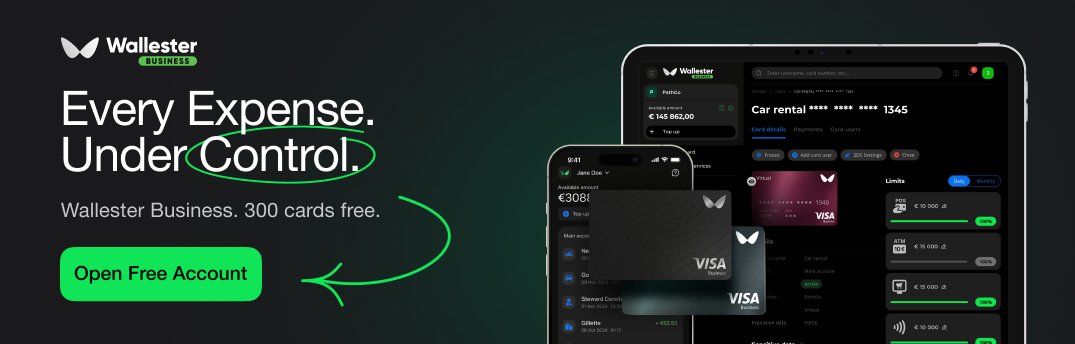
Managing business expenses requires clear visibility over card spending and purchases. Wallester Business helps finance teams build strong accounts payable controls by tracking spending as it happens, letting departments pay suppliers directly while collecting digital records immediately. Key advantages of this expense-management solution include:
- Real-time spending records: Finance managers view every card transaction instantly.
- Receipt collection: Employees upload purchase receipts directly through a mobile app.
- Employee spending controls: Businesses set precise limits on individual cards to control spend.
- Merchant-level transaction data: Detailed merchant records clarify where company funds are used.
- Exportable transaction records: The platform exports transaction data easily for invoice verification.
Companies in search of transparent transaction records and direct control over business purchases can explore how Wallester Business fits within their operational workflows.

