
Karine Martinez has spent twenty years in financial services across two countries and two very different disciplines. She started in wealth management, building investment cases, managing client portfolios, running cross-asset allocation strategies at LCL and UBS. Then she moved to London, pivoted into fintech, and spent the better part of a decade at Railsr and Edenred Payment Solutions, working her way from sales executive to head of sales across the UK and Europe.
In March 2026, she joined Wallester as head of strategic partnerships. It’s a role that sits at the intersection of everything she has done before. We sat down with her to talk about the career that brought her here, what she has learned about how partnerships actually work, and what she thinks the embedded finance landscape looks like from where she is standing now.
Interviewer:You’re actually from Cannes, which is a funny detail given that Wallester has an office there now. Tell me how your career started.
Karine: So yes, I’m from Cannes. I studied in Paris, loved it, but when it came to my master’s degree I was accepted to two programmes. One in Paris, one at what was then the École Supérieure de Commerce in Sophia Antipolis, now SKEMA. My heart was pulling me back to the south, so I chose Sophia.
Before I’d even finished my last exam, I was offered a place at what was then called Crédit Commercial de France, acquired by HSBC in the early 2000s. We always called ourselves the smallest of the private banks in France: five thousand employees, absolutely no retail banking, all about investments and caring for clients. I was a relationship manager. The work was really about wrapping your arms around your clients, understanding their background, where they were going, what was in their heads, and seeing how that matched what you could offer them. Three completely amazing years. And it’s funny. I see the exact same parallel in B2B account management today. The questions are different, but the instinct is the same.
Interviewer: You moved into portfolio management after that. How did that come about?
Karine: This was just after the dot-com crisis in 2001, when client trust in discretionary management had been badly shaken. I had an extraordinary opportunity to sit with a group of people and build a new product offering for these clients to get them back on track. What came out of it was something we called active advisory: a hybrid role, part technical, part commercial.
We had to literally take clients on calls or meet them in person and persuade them that portfolios that hadn’t been touched for months, sometimes a year, needed to change. And then the client had the final decision. I had the equivalent of €135 million under management at one point. I could call a fund manager directly and say, “I’m about to invest €15 million in your fund. Can you absorb the liquidity?” Sometimes I could move a stock price. It was absolutely stunning.
Interviewer: 2008 found you at UBS in the middle of the financial crisis. And then you left.
Karine: The markets were completely crazy. And in the middle of all that, I got pregnant. Not the best timing. I was working very long hours. My husband was already in London. So over the summer of 2009 I had to make a decision: stay in Paris or move. London won. I resigned, took my newborn daughter, and left.
Interviewer: When you came back to the workforce, you tried to return to finance. What happened?
Karine: I tried. There was a moment where I nearly landed a role at Citibank. Very close. I was quite disappointed when it didn’t happen, I’m not going to lie. But a good friend of mine, a trader, looked at me and said: “Are you really sure you want to do this, Karine?” I said yes, of course. That’s what I know, I know how to pitch. And she said: “I’m not asking about the pitching. On the technical, operational side, your job doesn’t exist anymore. It’s a pale copy of what you used to do.”
And she was right. After 2008, regulation fundamentally changed what active advisory could be. Banks had to maintain much stricter balance sheets. The ratios changed, the risk appetite changed, and on the investor side, a wave of new regulation came in requiring explicit client sign-off on every single transaction. You had to confirm, every time, that the client understood the risk, that they qualified as a professional investor, that they accepted the possibility of loss. Which sounds reasonable, until you realise that most people never truly understand loss until they experience it. The spontaneity, the direct relationships with asset managers, the ability to fine-tune an idea to the best available option regardless of size. All of that was gone. What remained was a heavily constrained version of the same job. The title was the same. The substance was not.
That made me pause for the first time. Instead of rushing back to something that was already gone, I started researching fintech and what was happening in the market. And it made me think back to 2002, when I’d made that jump from discretionary to active advisory. Standing on a cliff and jumping. I like that feeling. I see problems and I want to find solutions. If you come to me with your issues, I won’t pat you on the back and say “poor you.” I’ll say: “Okay, why don’t you try this?” That’s how I’m wired. And I started thinking: where is the growth, and where can you genuinely find solutions to what’s broken in banking? Because banks were broken. And in some ways they still are.
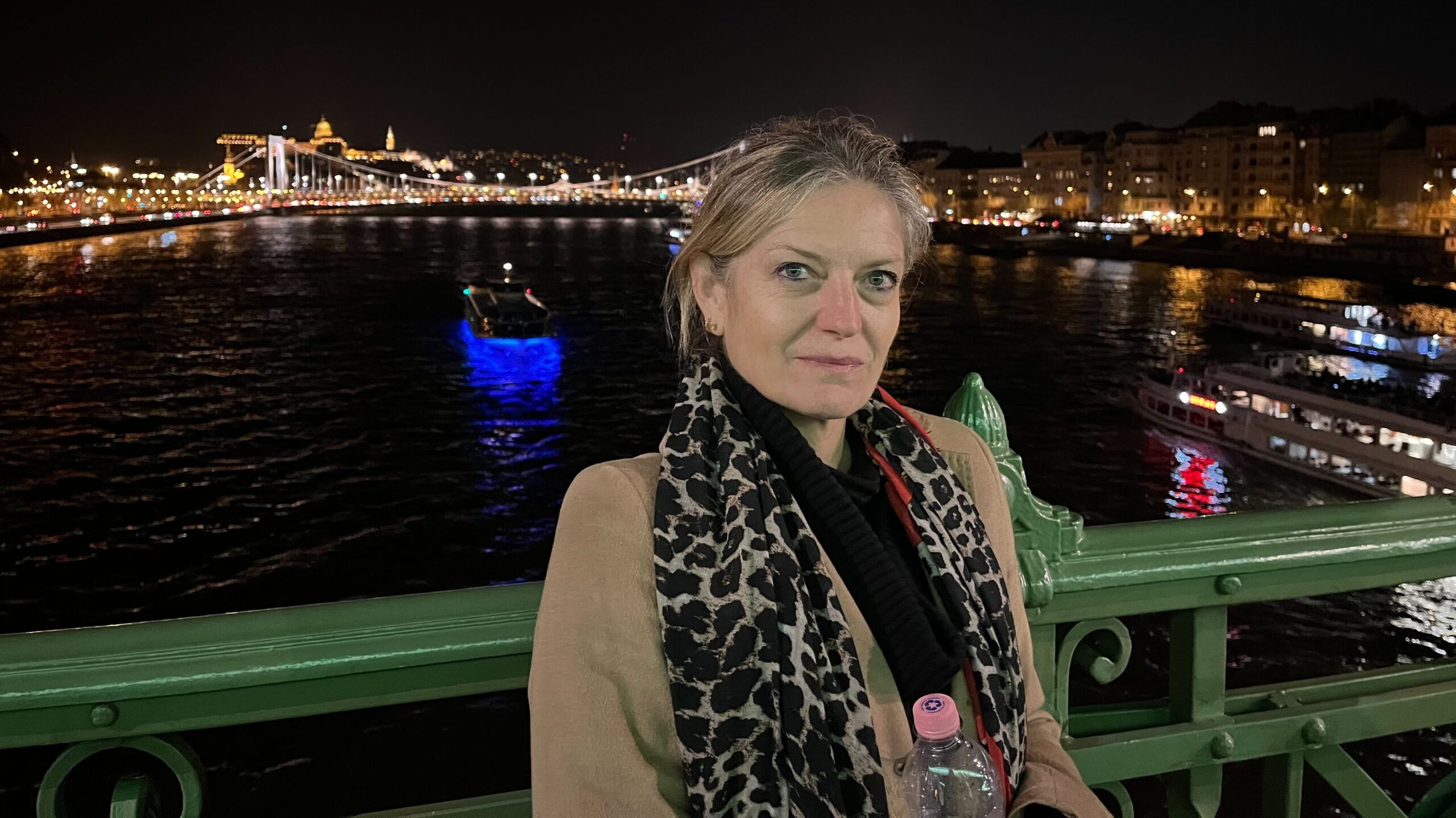
Interviewer: You ended up knocking on Railsr’s door for two months before they replied. What made you so certain?
Karine: Railsr was a use case and a company I wanted to be part of. I was adamant. And the people there listened. They gave me my chance.
Do you know Nigel Verdon, co-founder and CEO of Railsr? Nigel is a visionary. He saw banking as a service before anyone was calling it that. He was talking about embedded experiences when nobody else was using that language yet. For the first time, I was sitting with people who were genuinely trying to fill gaps that traditional banks, corporate, retail, consumer, literally could not fill. Everything was possible. It felt like we could actually disrupt the market, and there was real purpose behind it. The culture was extraordinary. Not excellence in the sense of constant criticism, but getting people around a vision and making it work.
I know where every single member of my sales team from that period is today. I still speak to them. We meet at events, go for lunch, go for dinner. We have a monthly get-together we call the Railsr Ladies. That tells you something about the kind of place it was.
Interviewer: From Railsr you moved to Edenred Payment Solutions, a very different scale. What was that shift like?
Karine: The company was still called PPS when I joined. We worked on the rebrand to EPS and I scaled the sales team. It was very corporate. A completely different animal.
The best way I can describe it is: changing an engine while the plane is airborne. You’re trying to reshape a company while keeping everything in business continuity. There were difficult strategic decisions along the way that required rebuilding significant parts of the commercial operation from scratch. Painful at times, but it taught me a lot about resilience.
At the same time, the market had become genuinely tougher. Multiple players, multiple competitors, and when you asked what the real differentiators were, it was difficult to answer. They all provide card issuing and processing. For me, the key differentiator always comes down to two things: the brand, and how closely you actually work with clients. Proximity makes the difference. It always will.
Interviewer:What drew you to Wallester specifically, and why now?
Karine: It loops back to Cannes, funnily enough. Julian Brand, CEO of Wallester UK, who used to work at EPS, introduced me to Sergei Astafjev, the CEO and co-founder of Wallester. Said you need to meet him, he spends time in Cannes, he’s the CEO of this company. So we met. The fit was immediate. We talked about tennis. He plays, I grew up playing, I was in a squad as a teenager. We connected on that.
Then I started looking at the company properly. I loved the brand. The work on it is absolutely bonkers. There’s really a brand. The platform looked steady and scaling well. One day I saw there were a lot of open roles, so I reached out directly. It took a while, but eventually they came back and said they wanted me to lead strategic partnerships. And here we are.
Interviewer: You’ve spent most of your career in sales. Strategic partnerships is a different discipline, longer cycles, fewer but bigger relationships. How does the mindset shift?
Karine: Strategic partnerships is not purely sales, but it is sales. It’s just different. It requires a lot more groundwork: really understanding the target accounts, the industries we want to be in, and mapping that against what we can actually enable for clients. It means working closely with marketing to build proper nurture flows. And the cycles are long.
The goal is also to be seen as a specialist. So that when someone wants to launch a card programme, the first thought is: I need to speak to Wallester.
Interviewer: You used a phrase I want to come back to: “payments with a purpose.” What do you mean by that?
Karine: It depends entirely on the use case. For some clients, embedding a card or a payment is just a means within an experience. The customer wouldn’t even think about the payment, they’d think about the journey. Take insurance: you’re not selling a payout, you’re selling a claim management experience. For accountants, it’s about the platform and the integrations. We can facilitate their work, enable direct connections to their ERP, manage payments and reconciliation from within their own environment.
And then for others, a card is simply a feature they’re adding to what they already do. A marketplace running a credit portfolio might add a wallet with a card purely to track how disbursed funds are being spent. It’s not their USP. It’s a bolt-on.
So as you can see, it can mean completely different things. You don’t sell the payment. You sell the experience. And we come back to experience every time.
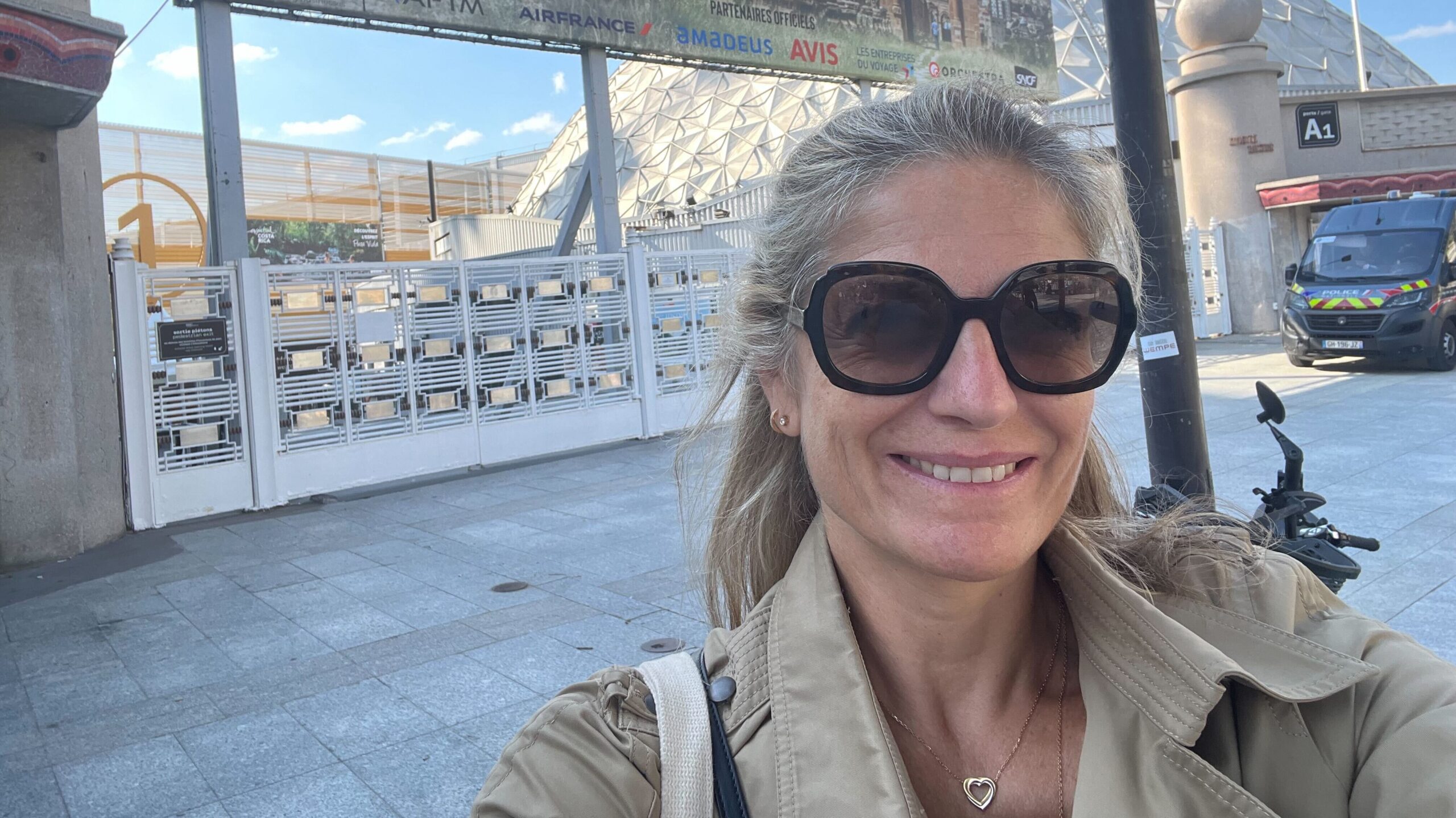
Interviewer: What does a good partnership actually look like in practice, and what makes one fall apart?
Karine: The parallel I always come back to is what I learned in private banking: wrap your arms around the client, understand exactly where they want to go, and work alongside them to get there. You have to understand their north star. That’s account management, that’s partnership. The label changes but the instinct is the same.
What makes them fall apart is the same thing that makes bad banking relationships fall apart: people stop listening. Someone wins the deal and the attention disappears. With long cycles and complex deployments, staying close matters at every stage. Not just at signing.
Interviewer: You’ve worked across Paris, London, and now with a company headquartered in Tallinn. Does market culture still matter in B2B fintech, or has the industry become more uniform?
Karine: Culture absolutely still matters. Conversations feel different depending on the market, in France, in the UK, in Scandinavia. And on the product side, if we want to properly go after certain markets with larger companies, local requirements matter. It’s not always a big thing but it always matters.
And I find it fascinating to watch how different markets respond to the same trends. You have banks reopening local branches in some markets because that’s still where trust lives. Everything comes back to experience, and experience is shaped by culture.
Interviewer: You’ve been in financial services for twenty years across two countries and two very different parts of the industry. What do you know now that you wish someone had told you at the start?
Karine: No back trading. You take a decision, you move forward. You don’t go back and ask yourself whether the move was right. Good or bad, you learn and you keep going. Every success is made of failures, and failure teaches you more than success ever does.
I learned that early in portfolio management. You make your call, you commit to it, you own the outcome. That principle has followed me everywhere since.
Interviewer: And finally, when you’re not thinking about payments and partnerships, what does life look like?
Karine: I run. I’ve started cycling recently and I love it. My weekends are full. I have two teenagers, my son plays rugby so we’re at his matches most Saturdays. Family comes first.
And since I was eighteen, I’ve had a passion for classic Vespas. I have one. I rode it to the office last week. Julian thought it was hilarious. It’s maybe a very Cannes thing to do in London, but I don’t mind at all.