


Ernesto Cangussu joined Wallester in June 2026 as Product Designer. Before that, he spent over three years at Dell Technologies leading the UX evolution of developer.dell.com, a hub used by engineers worldwide. Earlier in his career, based in Brazil, he worked across fintech, e-commerce, and enterprise SaaS at Jüssi and ioasys, and trained as an Automation and Control Engineer before moving into design.
Interviewer: You joined Wallester after more than three years at Dell. What made you leave a company that size for a fintech scale-up?
Ernesto: My time at Dell was a huge learning experience. I had the chance to scale UX design processes within a mature corporate structure, working with diverse teams on products with global reach.
At a certain point, I realised I wanted to be closer to decision-making and see the impact of my work more directly and quickly.
Wallester has given me exactly that. Today I’m closer to the company’s decision-making core, applying the experience I built up to help drive growth in this expanding fintech market.
Interviewer: Your background is actually in Automation and Control Engineering, not design. How did that transition happen, and what still carries over into how you work?
Ernesto: It happened during my degree. I joined a tech company to work with IoT, still within an automation and control mindset. But day to day, I started working more closely with the people shaping the product experience, not just the hardware side, and realised that interested me more than the technical problem itself. From there I intentionally moved into digital products.
What I still carry from engineering is my approach to problem-solving: thinking in systems, mapping variables, testing hypotheses, and finding solutions. That shows up directly in my work as a product designer, for example when I map out every variable in a flow before designing the final solution. The field changed, but the fundamental logic is the same: understand complex systems before solving for them.
Interviewer: At Dell, you led UX for developer.dell.com, a platform used by engineers worldwide. What’s the hardest part of designing for that kind of technical, high-stakes audience?
Ernesto: The hardest part was earning enough technical credibility for developers to validate my solutions as correct, not just usable. It’s a demanding audience, used to constant change, and I experienced that firsthand during the rise of generative AI, when the way developers searched for and consumed documentation shifted fast.
To propose viable solutions, I had to study programming concepts in depth, something most product designers don’t do even when working closely with developers. My engineering background helped a lot here, since I already had programming experience before moving into design.
Interviewer: You’ve designed for e-commerce, consumer, and enterprise SaaS products. What’s actually different about designing for fintech?
Ernesto: The key difference is that in fintech, every design decision carries real financial weight. It’s not enough for a flow to be simple and fast. It also needs to convey security at every step, especially at sensitive points like limit configuration, transfers, or authorisations.
Interviewer: What have your first weeks at Wallester looked like? What’s the biggest adjustment moving from Dell to a smaller, faster team?
Ernesto: It’s been great, honestly. The whole team has been welcoming, helping me get up to speed on processes and giving me room to share my input early on.
The biggest adjustment is proximity to the core business. At Dell, I worked on a strategic product supporting the developer ecosystem, but the company’s core business was hardware. At Wallester, I work on the product customers actually use every day. That changes the weight of every decision and how quickly I see its impact on the business.
Interviewer: Design systems show up throughout your career, from ioasys to Jüssi to Dell. What makes a design system genuinely useful, rather than documentation nobody opens?
Ernesto: A design system becomes genuinely useful when it works as an objective criterion for design decisions, not just a component repository. It documents the reasoning behind each pattern, which brings clarity to every future decision and cuts down on rework.
That drives direct operational gains. With clear patterns in place, new features ship faster with fewer review cycles, since most decisions are already resolved within the system. That speeds up time-to-market. The company can ship ahead of competitors because the team focuses on solving product problems instead of redefining visual elements with every release.
It also strengthens consistency and brand. When components align systematically, the product builds more trust with users, and the brand becomes recognisable through the experience as a whole, not just the logo. That sets the company apart in the market and reinforces long-term positioning.
Interviewer: You’ve also trained and mentored other designers, including running a bootcamp for 20-plus people. How does that shape the way you work with a team?
Ernesto: That experience taught me, above all, how to communicate design decisions clearly, adapting the explanation to whoever’s on the other side and staying as clear and direct as possible.
That’s shaped how I work with teams today. When I present a design decision to engineering or product, I focus on explaining the reasoning behind the choice, not just handing over the final output. I try to bring people into the process so it makes sense to everyone, and so we can build something that actually solves the problem together.
Interviewer: What’s your process when you’re designing something you don’t fully understand yet, a payments flow or a card feature, for example? How do you get from confused to confident on a new problem?
Ernesto: First, I map out the product architecture before thinking about the interface: business rules, technical constraints, and exactly where my knowledge gaps are, instead of trying to understand everything at once. Then I validate those gaps directly with whoever holds that knowledge, usually a PM or technical documentation, before designing anything. Only then do I move to interface hypotheses, and even then I test them before assuming they’re right.
Interviewer: Is there a specific project at Wallester you’re already excited to work on?
Ernesto: Yes, I’m currently working on Wallester’s Design System, and it’s the project I’m most excited about right now. It’s a chance to apply everything I’ve learned elsewhere and build a system that isn’t just a component repository, but one with real authority over day-to-day decisions across the team.
Getting to build this during a growth phase for the company, with room to shape how the system evolves, is exactly the kind of challenge I was looking for.
Interviewer: What’s a design opinion you hold that other designers might push back on?
Ernesto: I believe not every design decision needs extensive research before moving forward. Sometimes it’s more effective to ship a simple version, gather real usage data, and iterate from there, rather than spend weeks validating a hypothesis before any release. Some designers disagree because they see that as risky, but in my experience, real data from a live product is worth more than prolonged qualitative research.

Interviewer: Outside of work, what do you spend your time on?
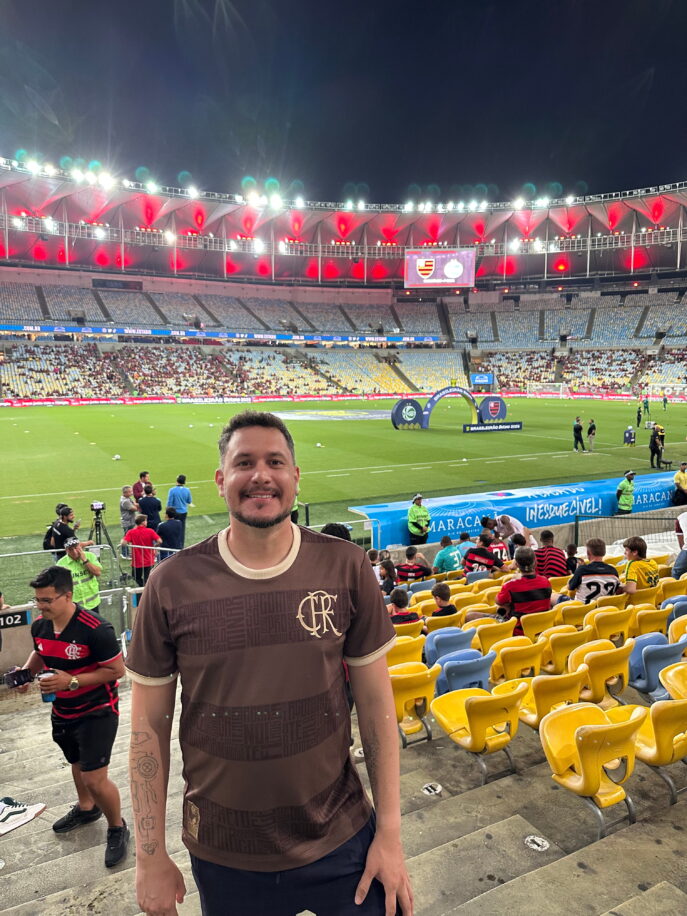
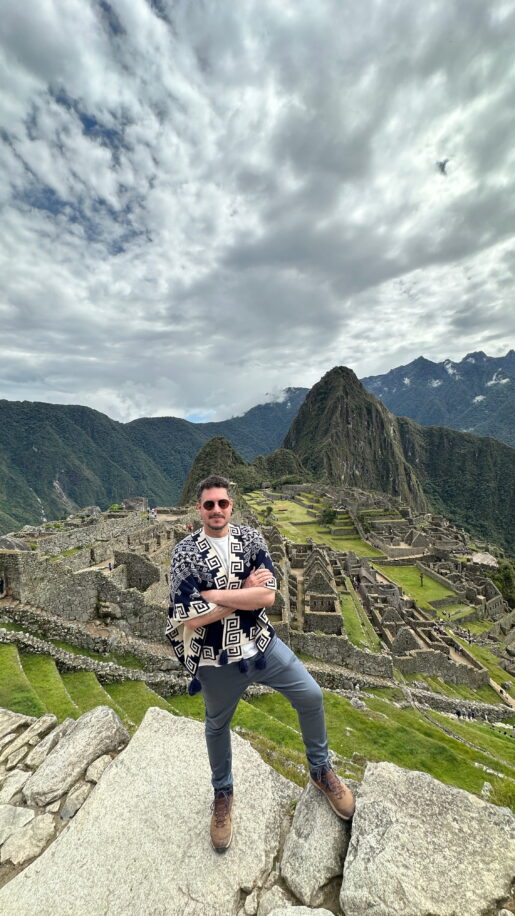
Ernesto: I’m a fan of sports and try to keep an active routine. I work out at the gym and play padel, which I discovered here in Tallinn. It’s a great way to unplug from the screen. I’m also very interested in technology, and I spend a lot of time reading up on the latest developments. And being Brazilian, football always comes up, even living in Estonia, I follow it closely, especially during the World Cup.

