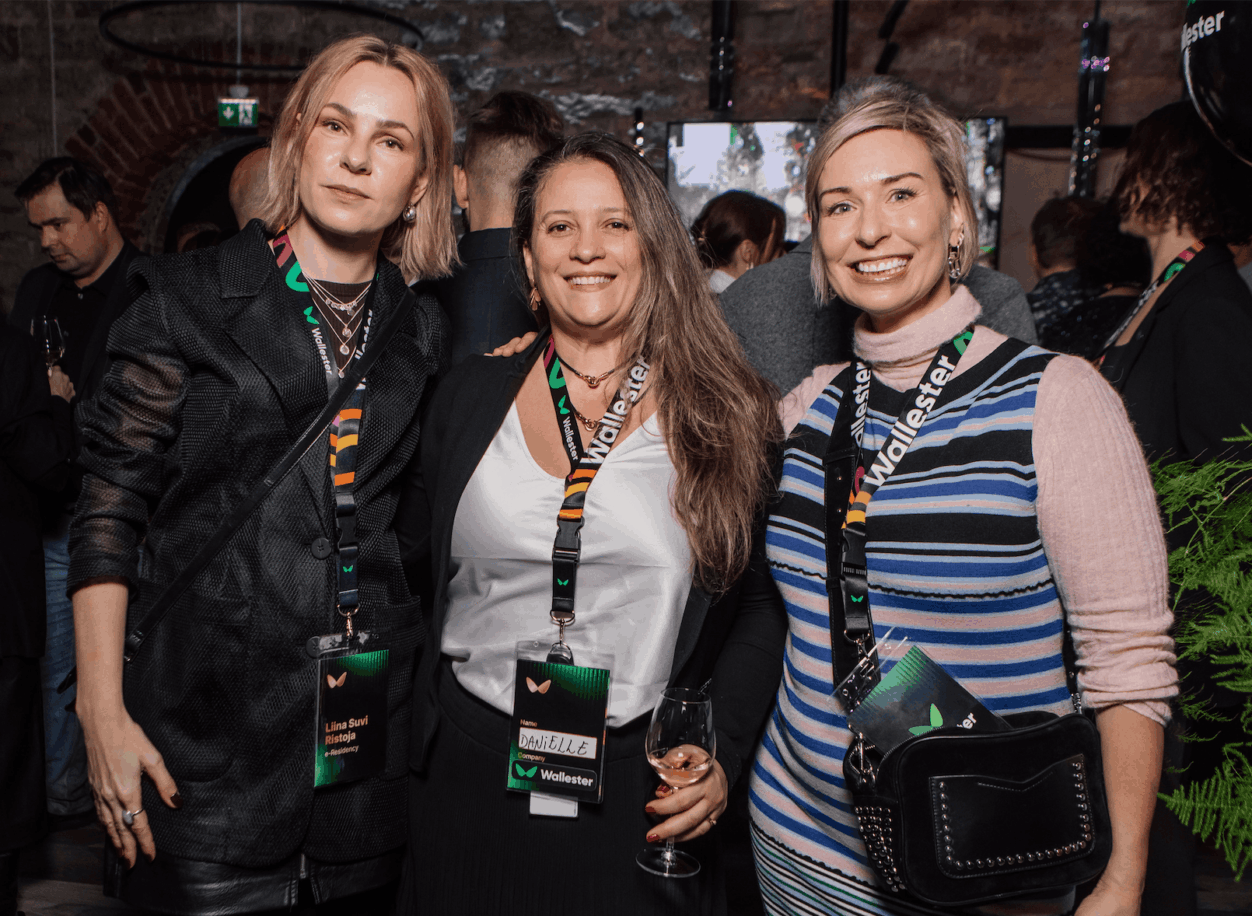
Danielle Coimbra started out in journalism in Brasília, where her early work ranged from government radio and online reporting to health and wellbeing magazines in both digital and print. She later moved into PR in Brazil, handling communications work across sectors including healthcare and university sport, before leaving for Europe. The years that followed were less linear: a period in India, then Ireland, then a move to Budapest, where she joined Wise and worked in financial crime investigation. She relocated to Tallinn in 2021, returned to communications through in-house roles in crypto and media-tech, and joined Wallester as Public Relations Manager in October 2025.
The profession is being reshaped in real time by AI search, which is changing both how brands are discovered and what visibility means in practice. We sat down with her to talk about journalism, fintech, earned placements, and what more than two decades across journalism, PR, communications, and fintech operations have taught her about how the work gets done properly.
Interviewer: You started as a journalist in Brasília and spent your first decade in journalism before moving into PR. What did being on the journalist side of the conversation teach you about how the PR side actually works?
Danielle: I think journalism taught me the most important thing about PR, which is that journalists care about stories and about how those stories matter to the audience. One journalist friend of mine here in Estonia always says, we write about you, not for you. I think that sentence explains a lot.
When you are on the PR side, it is very easy to fall into the trap of thinking that because something matters to your company, it should matter to everyone else. Journalism teaches you very quickly that this is not how it works. If what you are pitching is only about your product, your announcement, or your internal priorities, then it is not a story yet. It becomes a story only when it connects to something larger – a question the audience already has, a shift they are already feeling, or a problem they are trying to solve.
It also taught me to think under pressure, because that is still the reality of the newsroom. Journalists are busy, understaffed, and dealing with a huge volume of material. Now that pressure is even greater than it was years ago. So when I pitch, I always try to think from that side first. Is this clear? Is it useful? Is it obvious why this matters now? If the journalist has to do too much work to understand why the story is relevant, then the pitch has probably already failed. That is something journalism gave me very early, and I still use it every day.
Interviewer: Apart from media and PR roles, you also spent several years inside Wise – customer support, training, and financial crime investigation. Most people in communications do not take that route. What did that period give you that a more linear PR career would not have?
Danielle: Quite a lot, actually. One of the most important things it gave me was a very clear understanding of how much a digital footprint matters.
When I was working in enhanced due diligence, one of the things we had to do was investigate clients and businesses we were onboarding. A big part of that was adverse media and online research. Very simply, we would search for the company or the individual and try to understand who they were. If there was nothing there, that in itself became a signal. It did not necessarily mean something was wrong, but it meant we had to keep digging, ask for more documents, and spend more time understanding whether the business was legitimate.
I still carry that with me. If there is nothing out there about you, then trust becomes harder to establish quickly. And now, with AI and LLMs, that matters even more. If people cannot find you, AI cannot scrape anything about you either. So when we talk about communications, visibility, media presence, owned content, all of that is not just about brand-building in some abstract sense. It also affects how a company is perceived in terms of legitimacy and credibility.
The other thing Wise gave me was a much deeper understanding of what it means to really know a product from the inside. Spending time in customer support, training, and due diligence shows you the product, the workflows, the user problems, the internal logic of the business. If you are going to talk about a company publicly, especially in a regulated industry, that kind of understanding matters a lot.
Interviewer: Your path has taken you through Brazil, India, Ireland, Hungary, and Estonia. How did those moves shape the way you think about communications work today?
Danielle: A lot. Living abroad changes you, even when the work itself is not directly related to what you end up doing later.
In India, for example, I was living in a house with people from all over the world, all interns like me, and that was the first time I could really get to know other cultures in a deeper way. In Ireland, I was taking care of people with mental disabilities, which had nothing to do with PR at all, but it changed the way I lived my own life. I used to be much more impulsive, more intense, and that experience forced me to slow down and become more patient.
So when I say I worked across different places, it is not only about careers and job titles. It is also about learning how people think, how they communicate, what they expect, what they value, and how they respond to uncertainty. That has helped me professionally as well. You become better at adapting, better at listening, and more aware that your own way of seeing things is only one way among many.
And at the same time, even when I was based in one country, the work itself was often broader than that. At PRNEWS.IO, and now at Wallester, I have been working across multiple markets anyway. So even when your job title looks local, the reality of communications work often is not.
Interviewer: People are starting to find brands through AI answers rather than through search results and articles. From where you are, what does that change for how a B2B fintech like Wallester earns visibility?
Danielle: I think it changes a lot, but we are still very early in understanding exactly how much.
For me, the main shift is that it is no longer only about classic SEO logic – keywords, rankings, and backlinks. Those things still matter, of course, but now there is another layer on top of them. It is much more about semantics and context. How do you structure a piece of content? How clearly do you explain something? Do you give enough context for an LLM to understand what you mean and where your expertise sits? That part is becoming much more important.
This is also why I think PR is very relevant in the AI conversation, even if people do not always frame it that way. PR professionals understand structure. We understand headers, summaries, framing, useful context, the way a narrative is built. We know how to write something that helps a reader – and now also a machine – understand what is important.
So I do not see AI as making PR less important. I see it as changing the mechanics of visibility. It becomes less about pure ranking and more about whether your content is clear, structured, and meaningful enough to be surfaced and reused.
Interviewer: There is a lot of noise right now around AI and earned media. Some people are saying this is automatically good news for PR because LLMs read earned content. Do you buy that?
Danielle: Not really, at least not in that simplified way.
There is this narrative now that says, “This is the time for earned media because AI reads earned.” If you check this or that study, they say most results come from earned material. Because I also worked on the paid side at PRNEWS.IO, I know it is not that simple. The robots do not really care whether something is paid or not. If the content is there and accessible, it can be scraped.
So I would not make the argument that AI suddenly makes earned the only thing that matters. What I do think is true is that PR understands how to structure content and how to make it useful. PR has always been about building visibility and credibility across authoritative publications, whether that is top-tier media or highly niche industry sources. That matters even more now because AI systems pull context from trusted references across a broad ecosystem of content.
With AI and scraping, visibility is no longer just about pushing keywords. That is where PR becomes especially relevant in the AI conversation.
Interviewer: PESO – Paid, Earned, Shared, Owned – is a framework you have worked with for years. Is earned media still the most valuable of the four, or has the centre of gravity shifted?
Danielle: Earned still has a unique place because it brings trust. If something is earned, it means a journalist or a media outlet understood that it had value for their audience. That matters, and I do not think that has changed. For me, earned will always hold that position because it signals credibility in a way the other pillars do not in quite the same way.
But at the same time, I think people often oversimplify this discussion. There is a tendency to act as though paid has no value, or as though owned and shared are somehow secondary. I do not see it like that. I always come back to this logic: earned validates, owned belongs to you, shared distributes, and paid accelerates. They all do different things.
Sometimes a story is good enough for earned. Sometimes it is important for the business to have something out there even if it is not quite strong enough for the press at that moment, and then paid makes sense. Sometimes owned becomes especially important because it is the only space you fully control.
So yes, earned still matters enormously, but the smartest approach is to understand what each part of PESO is doing for you rather than trying to turn the whole model into a hierarchy.
Interviewer: You have been on both sides of the pitch. What does a pitch look like that a journalist actually opens in 2026, and what is the cardinal mistake on the sender’s side?
Danielle: A good pitch is one that understands the journalist’s reality. It is clear, useful, timely, and framed around something that matters outside the company itself. The subject line matters more than people think. Timing matters too. But above all, the angle matters. If it is obvious why this matters now and why it matters to the journalist’s audience, then you already have a chance.
The biggest mistake is still making the pitch too much about the company sending it. A product launch with no broader angle. A corporate update presented as though it should matter automatically. A message that basically asks the journalist to do the work of making it relevant. That usually does not work.
At the same time, there is still an unpredictable side to PR. Sometimes you have the right data, a strong story, and a relevant angle, and it still does not land because the newsroom is overloaded or the news cycle shifts somewhere else that week. It really is that brutal sometimes. Media attention is not entirely predictable, and understanding that is also part of the work.
A lot of PR today is also about staying very close to what is happening across the industry and recognising the right moment to contribute to a conversation that is already moving, what people in the industry often call newsjacking.
Interviewer: What does a successful PR operation look like for a company like Wallester? What are you actually optimising for?
Danielle: For me, it is not only about media coverage volume. Of course, media coverage matters. I am here to build visibility, and I am very happy with the results we have had so far. But if PR is only about bringing links, then it is too narrow. The real question is always: what does it mean for the business? What does it support? Where is it creating value? What are we actually moving?
The way I see PR now, it has to connect business goals with a strategic direction in communications. It should help identify where the company needs to be visible, which audiences matter most, which narratives are worth developing, and what kind of visibility actually supports the broader commercial goals.
That can mean earned media, of course, but it can also mean partnerships, events, executive visibility, speaking opportunities, and industry presence more generally. So I am not optimising only for quantity. I am optimising for relevance, positioning, and value for the business.
Interviewer: A lot of in-house PR work in fintech now sits next to thought leadership, executive visibility, and SEO content. Where does PR end and the rest of the comms function start, in your view?
Danielle: I do not think the borders are especially clean anymore, and I actually think PR should be connected to almost everything else in communications. It should connect with social media, events, internal communications, employer branding, executive visibility, and even with CRM or sales insights, because all of those things shape how a company is perceived. The narrative runs through all of them.
Thought leadership is a good example. It is a term people use a lot, but for me it is really about building a reputation around people who have something useful to say, based on experience and real knowledge. That can happen through earned media, speaking opportunities, LinkedIn content, bylines, or industry conversations. PR has to help shape all of that.
So I do not see PR ending at media relations. Media relations is part of it, but the role is broader now.
Interviewer: You joined Wallester in October. Why this company, and why now?
Danielle: I was looking for a bigger organisation where I could build more and where communications could connect more clearly to the business. I already knew Wallester to some extent because it had been a client of PRNEWS.IO, and I also knew a few people here, so it was not a company I was coming into completely cold. But what attracted me was really the combination of scale, growth, and potential. It was clear to me that the company had already grown a lot, but also that there was still a lot to shape. That combination was very interesting to me.
I also like to work with things I believe in. I always try, when possible, to connect myself to products or companies that I can really relate to. With Wallester, I could see the product value very clearly, especially in how it helps companies that want strong financial infrastructure without having to build everything from scratch themselves. That made the move feel meaningful.
Interviewer: You have been here long enough to see the inside of the company. What has surprised you, and what has confirmed what you thought going in?
Danielle: What surprised me positively was the scale of the company across Europe. The growth, the partnerships, the awards, the expansion – all of that is very strong when you see it from the inside. It is impressive, and it confirmed that this is a company with real momentum.
At the same time, one thing that has also become clear to me is how much room there still is in terms of positioning and visibility, also here in Estonia. There is a strong story here, and a lot of substance behind it. That means there is also a real opportunity to keep building how the company is perceived across the local ecosystem, not just through media coverage but through broader presence and reputation as well.
Interviewer: Looking forward, what does the PR posture you are trying to build at Wallester look like twelve months from here?
Danielle: Broader, more integrated, and less defined only by media relations. Of course I still want strong earned results, because that matters. But beyond that, I would like PR at Wallester to contribute more clearly to executive presence, industry conversations, speaking opportunities, partnerships, and broader ecosystem visibility. I would like it to be more connected internally as well – not isolated, but working closely with other teams and involved early in the broader strategic direction of the company, so communications can support not only visibility, but wider business goals as well.
So the direction, for me, is bigger than media coverage alone. It is about shaping reputation and presence in a more complete way. That is what I would like the next twelve months to look like.
Interviewer: And outside of all this, what does life look like when you are not thinking about PR?
Danielle: Travel, mostly. I really love travelling. And for me it is not only about taking a break. It is also about understanding how other people live, learning from other cultures, and stepping outside my own reality a little. I always try to take something from it, not only in terms of places, but in terms of perspective.
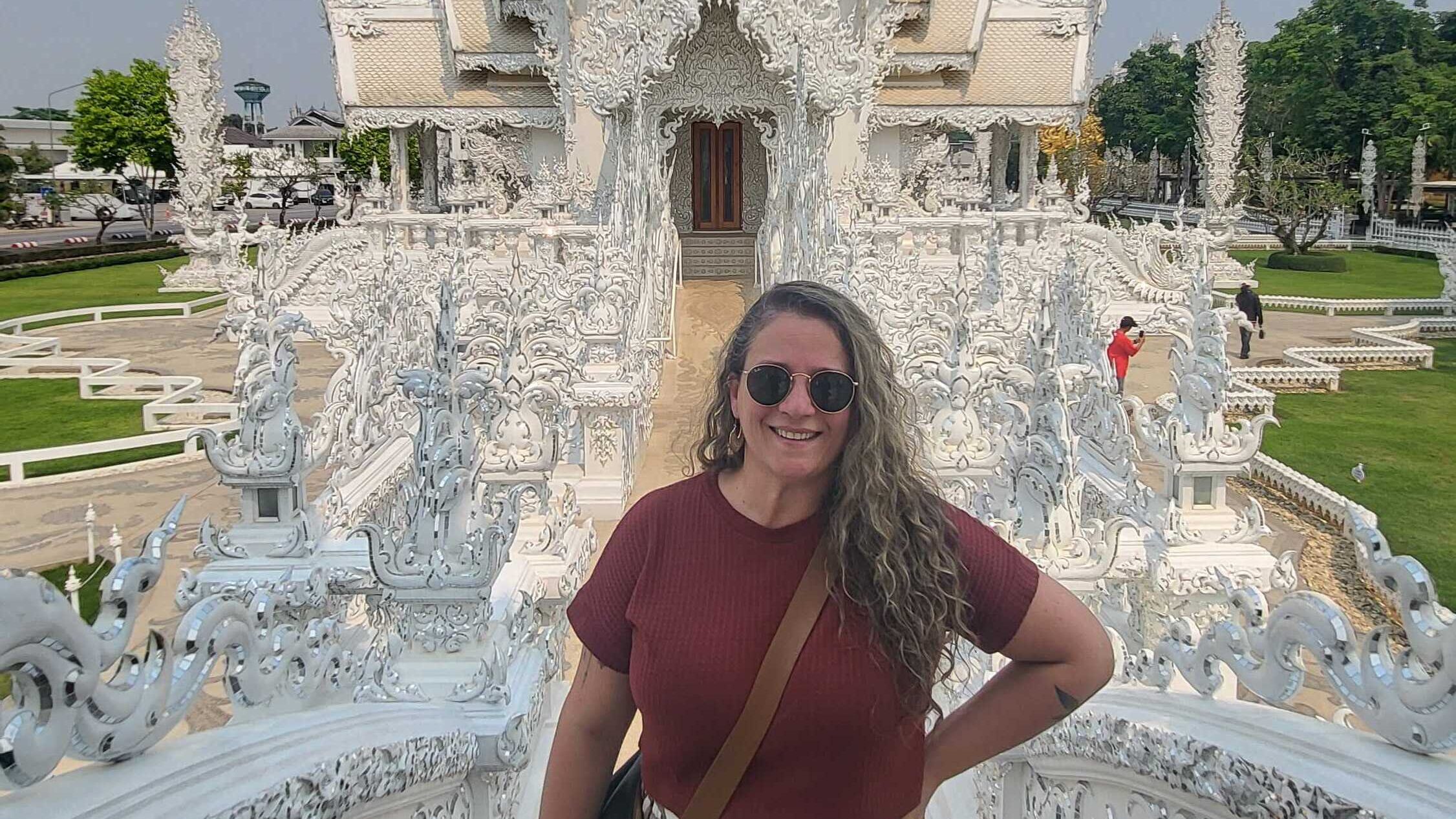
I recently came back from Thailand, and that trip stayed with me because of the way people there think about life. It made me reflect a lot on how much energy we spend suffering over things we cannot control. I had similar experiences before in India and Ireland, in very different ways. Those places changed me too.
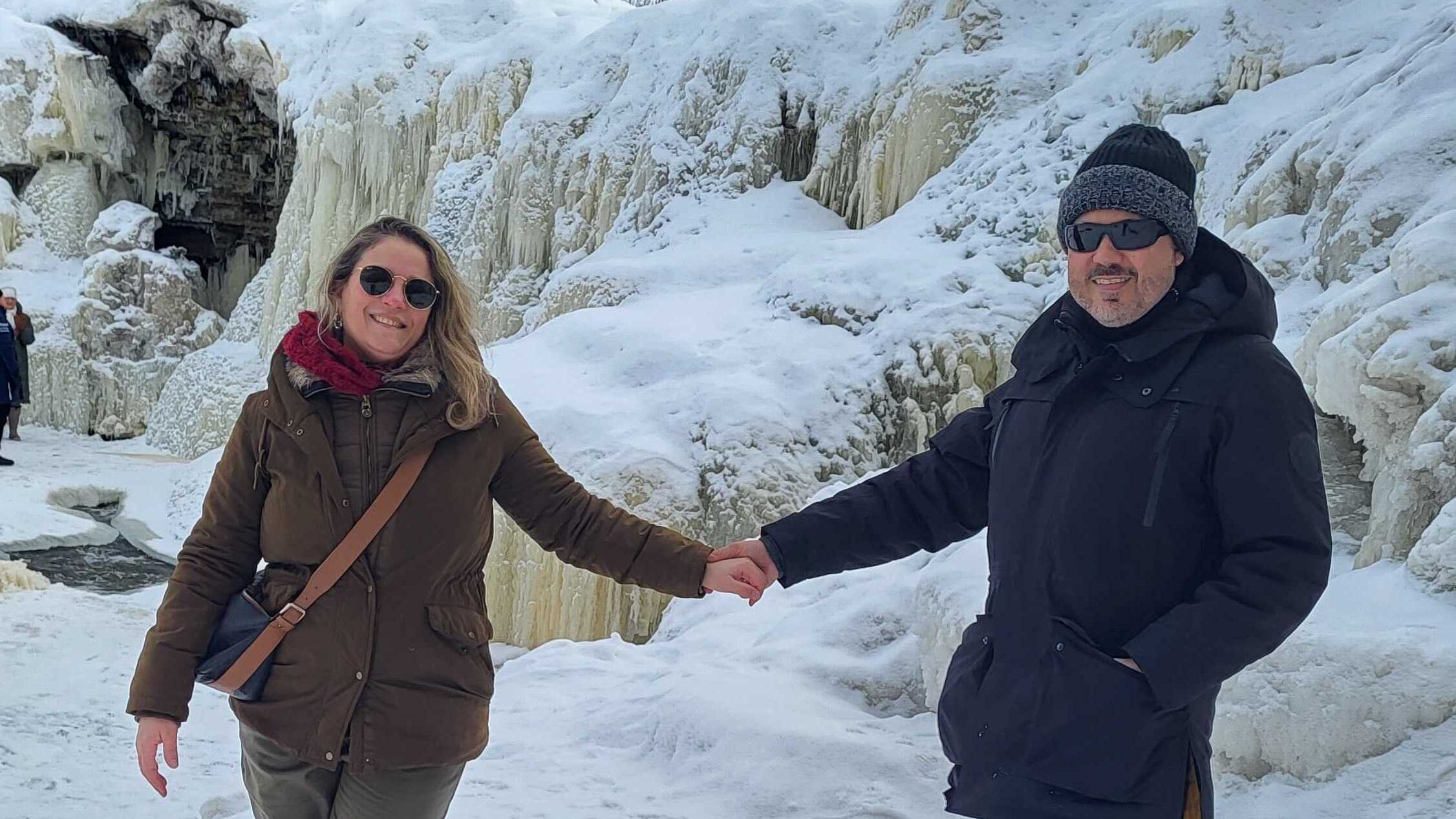
And then there is Estonia itself. My husband and I camp a lot here, and over the past two years we have spent much more time exploring the country. The weather is not easy – I do not think I will ever fully get used to it – but there is a quality of life here that balances a lot. So yes, outside work it is really about travelling, moving around, and trying to keep perspective.