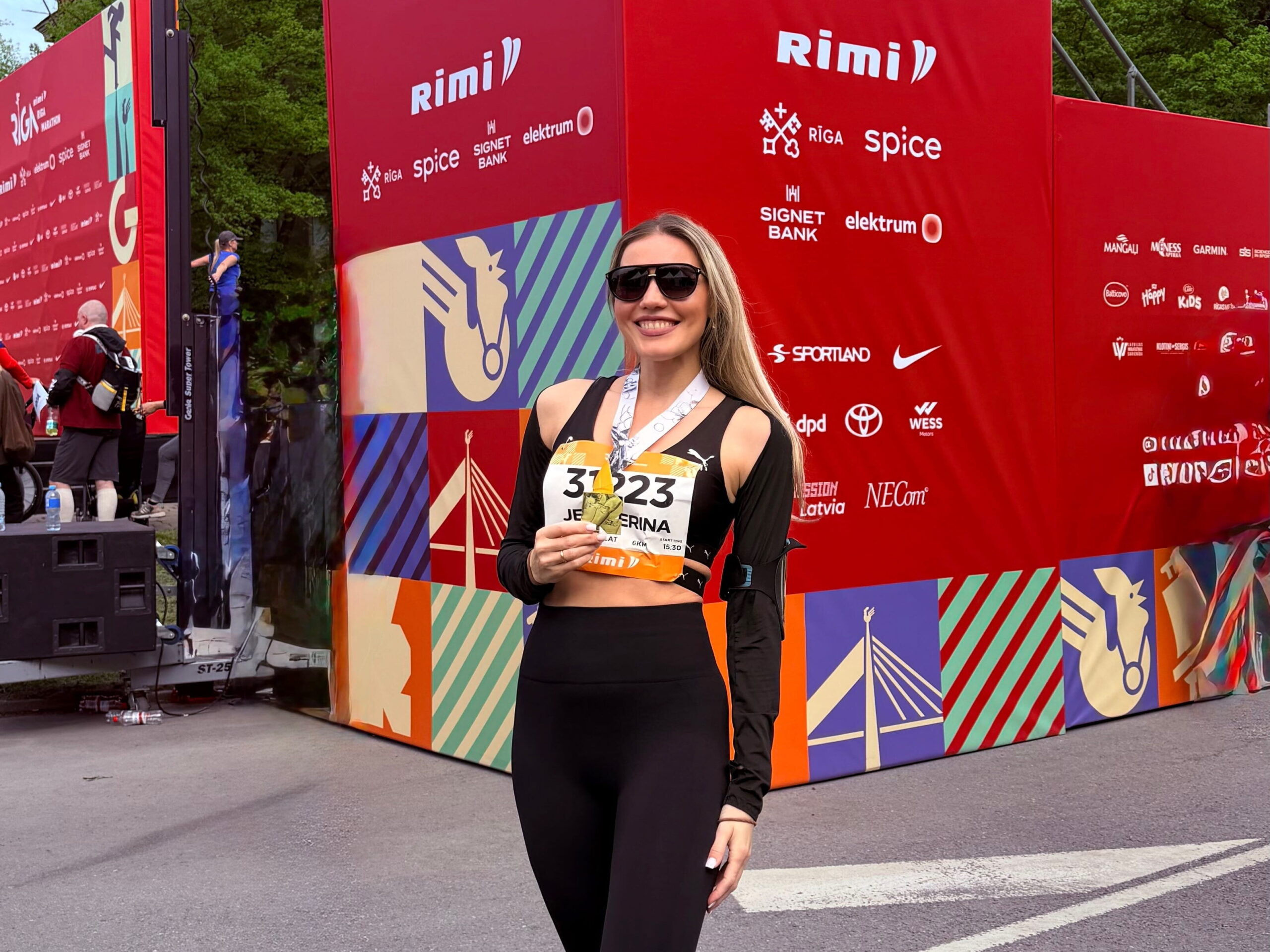
Jekaterina Romanova has spent most of her career in payment cards, e-commerce risk management, and compliance.
She started in payment card-related roles at Baltic Trust Bank and GEMoney Bank. Her work covered customer support, POS and ATM management, reporting, chargebacks, fraud prevention and risk monitoring. She then spent almost twelve years at Magnetiq Bank, where she moved from e-commerce payment card fraud prevention to leading the E-Commerce Risk and Supervision Department.
In December 2025, she joined Wallester as Head of Acquiring. In this interview, Jekaterina explains what acquiring means in practice, how merchant risk has changed, and what her first months at Wallester have shown her about building a strong and scalable acquiring function inside a modern fintech.
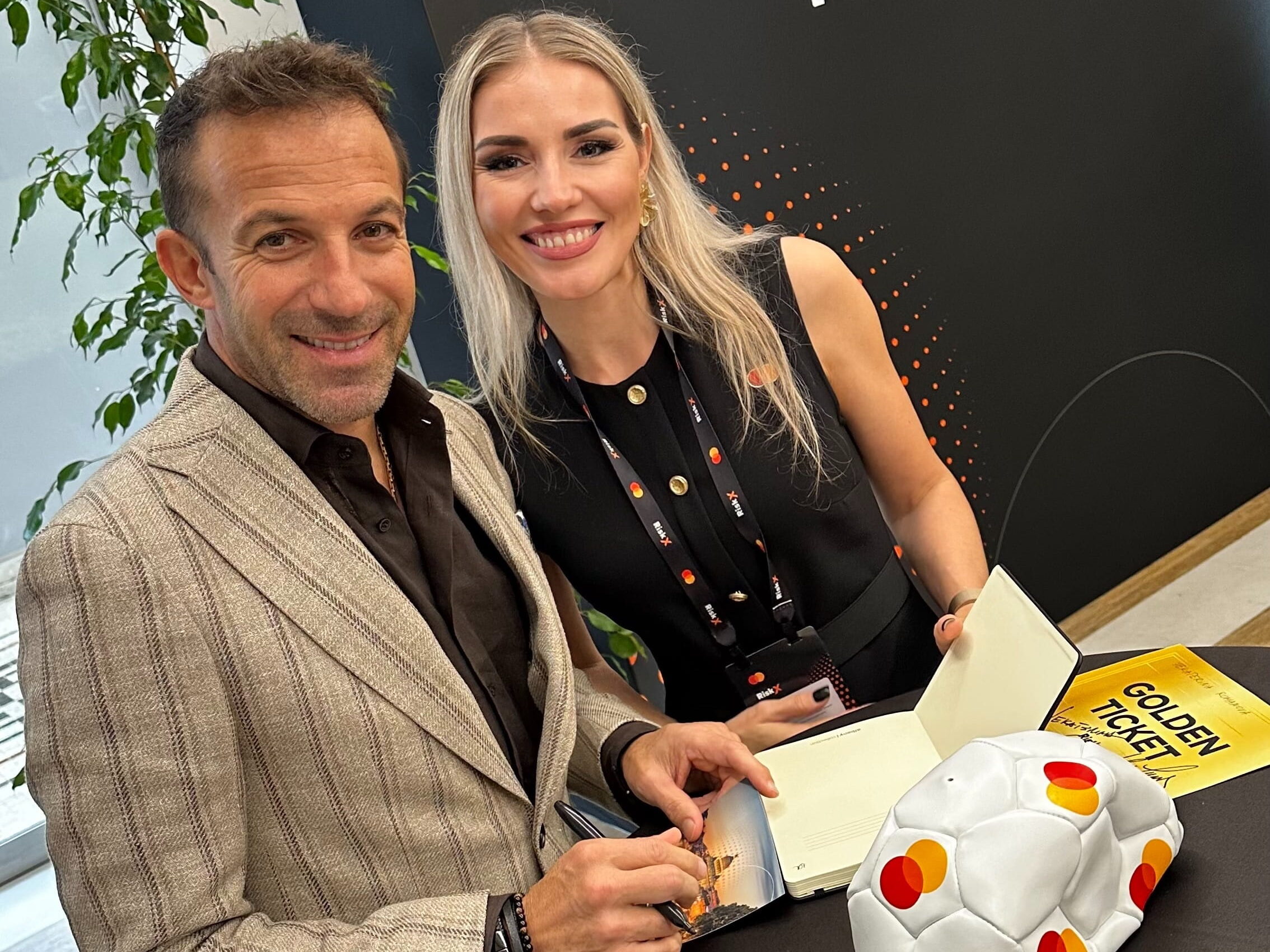
Interviewer:You have worked with payment cards and risk since the early stages of your career, starting at Baltic Trust Bank and GE Money Bank. What first brought you into this area of financial services?
Jekaterina: My journey into financial services began with my studies at the BA School of Business and Finance, where banking was a natural starting point for professional development.
My first exposure to payment cards came through the card department, and I was quickly drawn to the complexity and dynamism of this field. Payment cards sit at the intersection of banking, technology, customer experience, operations, and risk – which made the area both challenging and interesting to explore.
That early experience helped shape the direction of my career and laid the foundation for my long-term focus on payment cards, risk management, and e-commerce.
Interviewer:At GE Money Bank, your work covered risk monitoring, chargeback processing, reporting and POS/ATM management. What did those early, hands-on roles teach you about the mechanics of card payments?
Jekaterina: Those early roles gave me a very practical understanding of what actually stands behind a card payment. For many people, a card transaction looks very simple: you tap a card, enter a PIN, or pay online, and the payment is completed. But behind that moment there is a whole infrastructure – issuers, acquirers, card schemes, authorisation, clearing, settlement and risk controls. It taught me how transactions are processed, how different parties in the payment chain interact, and how even a small detail can become important when there is a dispute, technical issue or fraud case.
It also opened the door to the world of card fraud. At that time, we saw many different fraud patterns – counterfeit cards, ATM fraud, POS-related fraud, suspicious transaction behaviour and other types of card-related fraud. It was a very interesting and, in some ways, eye-opening experience. You start to understand how creative fraudsters can be, and how quickly fraud methods evolve.
I think this is still true today: fraud and technology are constantly moving together. Sometimes fraudsters are one step ahead, sometimes the industry catches up with new tools and controls. But it is always a dynamic process. That early experience gave me a strong foundation in card payments, not only from the operational side, but also from the risk and fraud prevention perspective.
Interviewer: You then spent almost twelve years at Magnetiq Bank, moving from payment card fraud prevention to leading the E-Commerce Risk and Supervision Department. What changed most in your work as you moved into a leadership role?
Jekaterina: Magnetiq Bank was a real shift for me because it took me deeper into acquiring and e-commerce. Before that, my experience was more connected with issuing – cardholders, card transactions, monitoring and fraud prevention. In acquiring, the focus is different: the client is the merchant, and the risk is connected not only to transactions, but also to the business model behind them.
That changed my perspective. I had to look not only at suspicious activity, but at the full merchant picture: the website, products or services, customer journey, delivery model, refunds, chargebacks, compliance requirements and card scheme rules.
When I moved into a leadership role, the scope became even broader. It was no longer only about individual cases or alerts. It became more about building the whole framework. You still need that practical understanding, but you also have to look at the whole system – the team, processes, risk framework, merchant portfolio and business impact.
It also brought a very human dimension to the role: supporting people, sharing knowledge, and creating a healthy working atmosphere became in my view just as important as the technical side of the work.
Interviewer:At Magnetiq Bank, you worked with merchant underwriting and monitoring, Visa and Mastercard compliance, e-commerce risk management and fraud prevention. Which part of that work was the hardest to get right?
Jekaterina: For me, the hardest part was always finding the right balance – between underwriting, fraud prevention, compliance requirements and a smooth merchant experience.
In merchant risk, your role is to protect the acquirer, the payment ecosystem and the card schemes. But at the same time, you also need to understand the merchant’s business and avoid making the process difficult for good, legitimate businesses. Risk management should not only be about saying “no” – it should also help good merchants grow without creating unnecessary risk.
That balance becomes especially important during underwriting. With some merchants, the assessment is quite straightforward: a clear product, a transparent website, understandable delivery and refund terms. But e-commerce is much broader than that. Business models can be complex, layered and sometimes not easy to assess at first glance. You need to understand not only what the merchant says it does, but how the business actually works.
That means looking at many things together: the website, ownership structure, product or service, customer journey, geography, expected volumes, transaction behaviour, refund policy, chargeback exposure, fraud indicators, merchant industry, applicable laws, compliance requirements and card scheme rules.
That is where experience really matters. Merchant risk is not always black and white. You need to notice inconsistencies, ask the right questions, connect the facts and make decisions that are careful, fair and commercially realistic.
Interviewer: Acquiring is still less visible than card issuing for many people. When someone asks what acquiring actually means, how do you usually explain it?
Jekaterina: I usually explain it through the two sides of a card payment.
Issuing is the side most people know better, because it is connected with the cardholder. The issuer provides the card, manages the cardholder relationship and authorises the use of funds.
Acquiring is the other side of the same transaction. It is the merchant side of payments. The acquirer enables a business – whether it is a physical shop, an online store or a service provider – to accept payments from its customers. It connects the merchant to the payment ecosystem and helps ensure that transactions can be authorised, processed and settled.
So, if issuing answers the question “How can the customer pay?”, acquiring answers the question “How can the merchant accept that payment?”
I would say acquiring is less visible because the customer usually sees only the card, the terminal or the checkout page. But behind that payment, the merchant needs infrastructure, settlement, compliance, risk monitoring, chargeback handling and support. That is where acquiring becomes very important.
Interviewer: Before an acquirer works with a merchant, it needs to understand the business behind the payments. What are the most important things to look at during that assessment?
Jekaterina: I think the most important things to assess usually come from the risks a merchant can bring into the payment ecosystem. Before an acquirer starts working with a merchant, it needs to understand not only the company on paper, but the real business behind the payments.
For me, it starts with business activity and transaction integrity. You need to understand what the merchant actually does and whether the declared activity matches what is really being sold. This means looking at the website, the product or service, the customer journey and the expected transaction flow. It is one of the key ways to prevent transaction laundering, hidden activity, unauthorised processing or transactions connected with prohibited goods and services.
Then, of course, there is the compliance side. AML, sanctions, regulatory requirements and card scheme rules all need to be considered. A product may look acceptable at first glance, but geography, ownership structure, counterparties, sectoral restrictions or Visa and Mastercard requirements can change the risk picture quite significantly.
Another important area is data security. If card data or payment details are processed, stored or transmitted, this has to be done securely and in line with PCI DSS and other applicable requirements. In payments, trust is not only about whether the transaction goes through, but also about how sensitive data is protected.
And I would also highlight fraud and chargeback exposure. The merchant’s business model, fulfilment and delivery timelines, refund policy, customer base and transaction behaviour can all influence the level of fraud, disputes, refunds and chargebacks that may appear later.
I do not think these things can be looked at separately. In real life, one detail often changes the whole picture. A good assessment is about understanding what is really happening behind the checkout page and making sure the acquirer supports legitimate merchants while protecting the payment ecosystem.
Interviewer: You have spent a lot of time around e-commerce merchants and online payment risk. What risks have become more important as commerce has moved further online?
Jekaterina: As commerce has moved online, I think risk has become faster and more layered. Technically, payments are much more secure today than they used to be – we have stronger authentication, tokenisation, encryption and better monitoring tools. But fraud has not disappeared – it has changed direction.
Fraudsters often no longer try to attack only the payment system itself. They attack the human side: customers, merchants, support teams, trust and behaviour. Social engineering has become a much bigger risk. People can be pushed into making payments themselves through fake shops, investment scams, impersonation, phishing or other forms of manipulation. From a technical point of view, the transaction may look normal, but the story behind it can be completely different.
AI makes this even more challenging, because scams can now be created faster, more convincingly and at a much larger scale. Fake messages, documents, identities or websites can look very professional. At the same time, the industry is also using better data and AI-based tools to detect suspicious patterns. So fraud prevention is becoming more and more about speed, data and understanding behaviour.
For acquirers, I would also highlight chargebacks, first-party misuse and hidden merchant activity. Online businesses can change quickly, and sometimes the real activity behind the checkout page is not exactly what was presented during onboarding. That is why ongoing monitoring is so important.
In e-commerce, risk management cannot stop once the merchant is approved. You need to keep watching how the business behaves in real life. The real picture often appears only after processing starts.
Interviewer: Fraud prevention is often discussed as a way to stop bad activity. How can it also support better merchant relationships and healthier growth?
Jekaterina: For me, fraud prevention should never be seen only as a function that says “no”. Of course, it protects the acquirer, the merchant and the wider payment ecosystem. But if it is used only as a restrictive tool, it can also hurt good merchants and damage the customer experience.
Good fraud prevention is about balance. It helps stop bad activity, but it also helps legitimate transactions go through safely. That matters because false declines, unnecessary friction and unresolved disputes can directly affect conversion, revenue and customer trust.
It can also strengthen the relationship with the merchant. An acquirer sees patterns that the merchant may not notice immediately: fraud attempts, chargebacks, refund trends, customer complaints or changes in transaction behaviour. If these insights are shared early, they can help the merchant improve communication, delivery, refund processes or checkout flows.
So, for me, fraud prevention is not only about blocking risk. Done well, it helps merchants grow without creating unnecessary risk.
Interviewer: Chargebacks can be one of the most frustrating parts of card payments for merchants. Where do businesses most often go wrong in how they manage them?
Jekaterina: I think many merchants make the mistake of treating chargebacks only as a dispute or as an administrative problem. In reality, chargebacks are often a signal that something in the customer journey is not right.
Sometimes the reason is very simple: the customer does not recognise the billing descriptor, the refund policy is unclear, delivery information is weak, or customer support reacts too slowly. If it is easier for the customer to contact the bank than the merchant, the risk of a chargeback increases immediately.
Another common issue is poor evidence management. With first-party misuse or so-called friendly fraud, merchants need to be able to prove what happened: order details, delivery confirmation, communication history, IP address, device information or usage logs. If this information is not collected properly from the beginning, it becomes very difficult to defend the case later.
Good chargeback management is not only about fighting disputes. It is about understanding why they happen, fixing the weak points in the business model and using dispute data as feedback to reduce future risk.
Interviewer: After many years in banking, card risk and merchant supervision, what made Wallester feel like the right next step?
Jekaterina: It really was many years in banking, card risk, compliance and merchant supervision, and that experience gave me a very strong foundation.
Wallester felt like the right next step because it offered something I found very exciting: the opportunity to help build a new acquiring direction from the beginning. It was not simply about joining an existing product or established process, but about being involved at the starting point – shaping the approach, building the framework and contributing to a new area of the business.
I also saw it as a natural continuation of my experience. After many years of working in e-commerce through the lens of risk, compliance and merchant oversight, I now had the opportunity to apply that knowledge in a broader way – not only to control risk, but also to help shape the product and support business development.
Wallester is a fast-growing company with strong ambition, and that energy was one of the things that attracted me. There is a real sense that things can be built, improved and developed further.
Interviewer: You joined Wallester in December 2025. After your first months in the company, what has stood out to you about the business, the team or the way Wallester approaches acquiring?
Jekaterina: One of the first things that stood out to me was the technology level. Coming from a more traditional banking background, I could immediately feel the difference in how a strong fintech company thinks, builds and develops products. There is a high level of IT expertise, technical focus and product ambition, and that creates a very different energy.
I also noticed very quickly that ideas do not stay theoretical for long – there is a strong focus on turning them into practical solutions. For acquiring, this is important, because building a new direction requires close cooperation between product, IT, compliance, risk, legal and business teams.
What I appreciate most is that acquiring is approached not only as a technical payment function, but as a full business direction – something that needs to be built with the right product logic, processes, controls, merchant experience and risk approach.
Interviewer: Outside the acquiring and payments world, what usually keeps you busy?
Jekaterina: Outside the acquiring and payments world, most of my time is, of course, about my family and my children. That is definitely the main part of my life outside work.
Sport is also very important to me – I always try to keep it in my routine. It helps me recharge, clear my mind and keep balance.
And, of course, travelling. I really enjoy travelling, discovering new places and changing the environment whenever I can.