This article explains how Visa exchange rates and foreign currency fees affect the final amount charged when you use a Visa card abroad. It looks at how currency conversion works, which fees come from Visa and which are added by card issuers, how payment choices at checkout change costs, and why the charged amount often differs from what you expect.
Using a Visa card abroad is rarely as simple as converting one currency into another. The final charge depends on exchange rates, issuer fees, processing timing, and payment choices made at the terminal or ATM. This guide breaks down where those costs come from and how to understand what you are actually paying when spending in foreign currencies.
How Visa exchange rates actually work
Your card gets tapped. The amount flashes on the screen. But the currency conversion happens later, sometimes days later.
Here’s what actually takes place. Visa does not convert your payment instantly. The transaction is authorised in the merchant’s currency, passes through Visa’s network, and is converted when it clears, using the exchange rate in effect on the processing date, not the purchase date.
Buy something on Friday and it may not process until Monday. The rate applied to your account reflects Monday’s market, not Friday’s. Weekend purchases, delayed merchant submissions, and offline card readers all introduce timing gaps that can move the rate against you. Visa sources its exchange rates from wholesale foreign exchange markets. These rates are updated daily for every currency pair and published for transparency. They are close to interbank levels, but they are only the starting point.
Visa applies the same exchange rate across all cards for a given currency pair and processing date. There is no personalised pricing and no special travel rate. So why does your charge look different from someone else’s? Because banks add their own fees after Visa completes the conversion. Visa converts the amount first. Your bank then applies foreign transaction fees, currency mark-ups, or both. In the UK, these issuer charges are around 2.75% to 3%. They sit outside Visa’s exchange rate and usually account for most of the difference between the converted amount and the final charge.
If a merchant or ATM offers to convert your payment into pounds sterling before processing, known as Dynamic Currency Conversion, Visa’s exchange rate is not used at all. The merchant’s rate replaces it, almost always with a wider margin.
The bottom line is simple. Visa’s role is narrow. It converts currencies using published wholesale rates on the processing date. Everything else happens outside Visa’s control but directly affects what you pay.
Q&A: What exchange rate does Visa use for foreign currency payments?
Visa uses daily wholesale market exchange rates applied on the transaction processing date, before any issuer-added fees or merchant-led conversions.
Does Visa charge fees on foreign currency transactions?
Short answer:no, Visa does not charge you a foreign transaction fee.
Long answer: most people still pay one.
Visa’s role in a foreign currency payment is limited to conversion. It applies the Visa exchange rate and passes the converted amount to the card issuer. Visa does not add a foreign currency fee, a non-sterling transaction fee, or a percentage mark-up to cardholder transactions. There is no “Visa foreign transaction fee” line item applied by Visa itself.
The confusion starts with how fees appear on statements.
After Visa converts the payment, the card issuer applies its own charges. These are usually described as a foreign transaction fee, non-sterling transaction fee, or currency conversion fee. Despite the wording, these costs come from the bank, not Visa. They are applied on top of the converted amount and are calculated after Visa’s exchange rate has already been used.
What matters is understanding where each cost enters the process.
- Visa applies the exchange rate during processing
- The bank adds foreign currency fees after conversion
- Merchants may add conversion costs if Dynamic Currency Conversion is used
Visa exchange rate fees, in the strict sense, do not exist. Visa does not mark up the exchange rate for consumer transactions. Any difference between the Visa exchange rate and the amount you see on your statement is almost always caused by issuer fees or merchant-side conversion, not by Visa altering the rate.
This distinction is important. Blaming Visa for high foreign currency charges often hides the real source of the cost. Once you separate conversion from fees, it becomes much easier to identify which charges are fixed by Visa and which depend entirely on your bank or the way you pay.
Further Reading: How to Pay for Holidays in Instalments?

Paying in local currency vs home currency: what Visa users should choose
You’re at a checkout abroad. The terminal asks a simple question: pay in the local currency or in pounds. This choice decides who controls the exchange rate and which costs apply to the transaction.
- Paying in the local currency sends the payment through Visa’s standard processing flow. The transaction stays in the merchant’s currency until it clears, then converts using the Visa exchange rate on the processing date. Any additional charges come later from the card issuer, not from the conversion itself.
- Choosing to pay in pounds activates Dynamic Currency Conversion. In this case, the merchant or ATM converts the amount before it reaches Visa. Visa still processes the payment, but its exchange rate is never used. The conversion is done at a rate set by the merchant or its payment provider, not by Visa or your bank.
This is why payments made in pounds abroad often cost more. The exchange rate applied under Dynamic Currency Conversion is typically less favourable than Visa’s rate, and the difference is built into the converted amount. It does not appear as a separate fee, which makes it harder to spot on a statement.
The key difference is control. When you pay in the local currency, Visa handles conversion and your bank applies any account-level fees later. When you pay in pounds, the merchant takes control of the conversion and locks in its own rate upfront.
| Payment choice | Who converts the currency | Which exchange rate applies |
| Local currency | Visa (during processing) | Visa exchange rate |
| Pounds sterling | Merchant or ATM | Merchant’s rate |
For most Visa users abroad, paying in the local currency keeps the conversion predictable and transparent. Paying in pounds removes Visa’s exchange rate from the process entirely and replaces it with a rate set by the merchant.
Q&A: Should I pay in local currency or pounds when using a Visa card abroad?
Paying in the local currency keeps the transaction on Visa’s exchange rate. Paying in pounds triggers Dynamic Currency Conversion, where the merchant sets the rate instead.
Real costs of using a Visa card abroad: purchases and ATM withdrawals
Using a Visa card abroad splits into two very different cost paths: card purchases and cash withdrawals. They behave differently, are priced differently, and catch people out in different ways.
For card purchases, the cost structure is relatively simple. The transaction stays in the merchant’s currency, clears through Visa, and converts using the Visa exchange rate on the processing date. After that, any account-level charges are added by the card issuer. There are no extra mechanics at the point of sale unless the merchant intervenes. This makes card payments the most predictable way to spend abroad, especially for hotels, restaurants, transport, and larger purchases.
Problems tend to arise when people assume the same logic applies to cash withdrawals.
When you withdraw cash abroad using a Visa card, the transaction still runs through Visa’s network and uses a Visa cash withdrawal exchange rate at processing. However, cash withdrawals introduce additional layers that do not exist for purchases. These layers sit outside Visa’s control and can change the total cost significantly.
The first difference is how banks treat cash. Many issuers classify foreign ATM use as a separate category from purchases. Even when the exchange rate itself follows Visa’s standard process, withdrawals often trigger fixed ATM charges, cash handling fees, or account-specific conditions that do not apply to card payments.
The second difference is the ATM operator. Foreign ATMs may apply their own fees for using the machine. These charges are set locally and are not part of Visa’s pricing. They may appear on-screen before you confirm the withdrawal or be included in the transaction summary afterwards.
In practice, the real cost of using a Visa card abroad usually looks like this:
- Card purchases rely on Visa’s exchange rate, then settle with issuer charges added later
- ATM withdrawals combine Visa conversion with issuer cash fees and possible ATM operator fees
- Smaller withdrawals often cost more per unit than larger ones due to fixed charges
This is why frequent travellers often rely on card payments where possible and use cash selectively. The real cost depends on how many extra charges are layered onto the transaction after conversion.
The key takeaway is separation. Visa handles conversion for both purchases and withdrawals. The difference in cost comes from how banks and ATM operators treat cash, not from Visa applying a different exchange rate logic.
Q&A: Are Visa ATM withdrawals abroad more expensive than card purchases?
Usually, yes. The exchange rate follows the same Visa process, but withdrawals often include extra issuer and ATM-level charges that do not apply to card purchases.
Further Reading: Travel and Subsistence Expenses: Understanding Per Diem Allowance
How to reduce foreign currency costs when using a Visa card
Foreign currency costs are added in predictable places. Reducing them comes down to controlling how often those points are triggered.
- The first decision is whether to rely on card payments or cash. Card purchases usually move through a shorter processing chain. Cash withdrawals involve additional actors, including the card issuer’s cash handling rules and the ATM operator’s own pricing. Each extra step increases the chance of additional charges being applied after conversion.
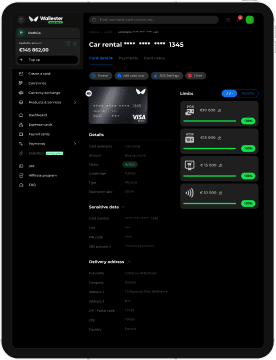
- The second decision is how the transaction is handled by the account itself. Some Visa cards are structured around domestic spending, with international use treated as an exception. Others are set up for regular cross-border payments, where international transactions follow the same rules as local ones. The difference shows up in how fees are applied and how clearly they appear on statements. This is where card setup matters more than exchange rates. Platforms like Wallester issue Visa cardsdesigned for frequent international use, where overseas payments and withdrawals are processed as standard activity rather than special cases. The practical benefit is fewer conditional charges tied to location or currency, not preferential conversion rates.
- The third factor is withdrawal behaviour. When cash is necessary, fewer withdrawals usually mean fewer fixed charges. Many costs linked to foreign ATM use are applied per transaction rather than per amount, which makes frequent small withdrawals more expensive over time.
- Finally, consistency helps. Using the same card, the same payment method, and the same routing patterns makes it easier to identify which actions introduce extra costs and which do not. Over time, this removes guesswork from foreign spending and turns cost control into a matter of habit rather than constant checking.
Reducing foreign currency costs with a Visa card is mostly about limiting how often transactions leave the standard processing path and trigger additional rules.