This article covers HMRC’s rules on subsistence expenses, the per diem allowance UK framework, benchmark scale rates, temporary workplace definitions, common compliance errors, and practical approaches to managing employee travel costs. If you’re setting expense policy or reviewing existing claims, this is a working reference for UK businesses.
UK employers face a recurring challenge: paying travelling employees fairly while keeping expense claims tax-compliant. The rules are not particularly complex once you understand them. Still, the details matter: what qualifies as a business journey, which rate applies, and whether your documentation will hold up if HMRC comes knocking. Getting any of these wrong creates tax liabilities neither the business nor the employee wants. This article unpacks the key rules for subsistence, travel, and temporary workplaces, and examines how modern payment tools can reduce friction in the process.
What is the per diem allowance in the UK under HMRC rules?
The UK does not operate a universal per diem system in the way the United States does. There is no single daily rate that covers all travel automatically. Instead, HMRC uses a benchmark scale rates framework, where the amount an employer can pay tax-free depends primarily on how long the employee is away from their normal place of work.
For 2026/27, the standard UK benchmark meal allowance rates are: £5 for a journey of five or more hours, £10 for a journey of ten or more hours, and £25 for a journey of fifteen or more hours, or a full 24-hour period. Payments made within these rates are tax-free and do not need to be reported to HMRC if the qualifying conditions are met.
Where a scale rate of £5 or £10 is paid, and the qualifying journey lasts beyond 8 pm, a supplementary rate of £10 can be paid to cover additional expenses necessarily incurred as a result of working late.
Alongside the standard benchmark rates, employers can apply to HMRC for a custom scale rate, a rate agreed directly with the revenue that better reflects what employees actually spend. To create custom rates, you’ll have to show HMRC that your travel expenses are higher than the standard allowances and provide proof. For most businesses, the benchmark rates are sufficient and simpler to administer.
A third option is straightforward actual reimbursement: paying employees back for what they genuinely spent, supported by receipts. This carries no inherent tax risk as long as the journey qualifies, but it creates more admin for finance teams and more uncertainty for employees about what they can spend.
Q&A: Are per diem payments taxable in the UK?
Not if they fall withinHMRC’s benchmark scale ratesand the qualifying conditions are met. If an employer pays above the benchmark rate without agreeing a custom rate with HMRC, the excess is considered taxable income and would be subject to tax and National Insurance.
Further Reading: Complete Guide to Travel and Entertainment Expense Management: Policies, Controls, and Best Practices
When does HMRC allow subsistence claims for business travel?
The starting point is that HMRC subsistence rules apply only to qualifying business journeys; not all work-related travel automatically qualifies. Three conditions must all be met simultaneously.
To use HMRC-approved subsistence rates, the travel must be for work or to a temporary workplace outside the ordinary commuting journey, the employee must be absent from their usual workplace for a continuous period of at least five or ten hours, and the meal must have been bought and eaten after the journey began, with the employee retaining appropriate evidence such as a receipt.
The ordinary commuting exclusion is significant. Travel between an employee’s home and their regular, permanent place of work is never allowable, regardless of how early they leave or how late they return. This catches several businesses that reimburse employees for meals on days when they simply commute in early for a long meeting.
Overnight stays are handled through the over-15-hour rate. The over-15-hour rate for subsistence will almost always apply where an employee is required to stay away overnight, provided the cost of any meals is not also included in an accommodation payment. Note that HMRC has not set a benchmark rate for overnight accommodation costs. Employers wishing to reimburse accommodation on a scale rate basis need to agree a custom rate with HMRC directly.
Q&A: Can an employee claim a meal while working from the office on an unusually long day?
No. Subsistence claims require a qualifying journey away from the normal place of work. Working a 12-hour day at the usual office does not meet the travel conditions, even if the employee skips lunch or buys dinner before leaving.
What counts as a temporary workplace under HMRC rules?
The temporary workplace distinction is central to travel and subsistence HMRC compliance, because an employee can only claim travel costs and related subsistence when travelling to a temporary workplace rather than a permanent one.
A workplace is a temporary workplace if an employee goes there only to perform a task of limited duration or for a temporary purpose. The critical qualifier is the 24-month rule. A workplace cannot be a temporary workplace where an employee attends it in the course of a period of continuous work that lasts, or is likely to last, more than 24 months, in which case it becomes a permanent workplace.
Two conditions must both be met for the rule to apply: the employee must have spent or be likely to spend more than 40% of their working time at that workplace, and they must attend it or be likely to attend it over a period lasting more than 24 months.
Timing matters here. The clock starts not when 24 months pass, but from the moment it becomes known that the arrangement will exceed 24 months. A contractor placed at a client site for an 18-month project can claim travel and subsistence throughout. If that project is extended to 30 months midway through, the workplace becomes permanent from the point the extension is agreed, not from month 24.
Hybrid working creates its own complications. Where an employee works from home, travel to visit a client, attend a meeting, or go into the employer’s office can be seen as workplace-to-workplace travel rather than home-to-workplace travel, meaning it could count as an allowable journey for tax purposes. However, if an employee treats an employer’s office as their regular base even occasionally, HMRC may consider that office a permanent workplace, meaning the commute there is not claimable.
Further Reading: Corporate Travel Cards: Comparing Options and Implementation Strategies
Are HMRC benchmark scale rates better than actual expense reimbursement?
Neither approach is universally superior. The right choice depends on your workforce, how frequently they travel, and how much admin capacity your finance team has.
| Method | Pros | Limitations | Best fit |
| Benchmark scale rates | No receipts per item needed; predictable for employees; simpler payroll treatment | Rates may not reflect actual costs in expensive cities; cap at £25/day | Businesses with frequent travel and clear policies |
| Custom scale rates | Higher tax-free limits reflect real costs | Requires HMRC application and supporting evidence; ongoing review needed | Large organisations with high travel volumes |
| Actual reimbursement | Employees paid for what they spend; no cap | Receipt collection required; more admin for finance; variable claims | Infrequent travel or high-value trips |
If a higher payment or expense reimbursement is made without agreeing a custom scale rate with HMRC, any excess over the published rate should be subject to tax and National Insurance contributions. Employers using benchmark rates also still need a checking process in place. They must be able to demonstrate that the qualifying travel and subsistence rules are satisfied, even if they do not need a receipt for every individual purchase.
Employees using benchmark scale rates do not need to submit receipts for each meal claim, but employers must still operate a checking system that confirms the qualifying expenditure was incurred.
Q&A: Can an employer just use benchmark rates for everyone automatically?
Not quite. The rates can be applied across the board, but the employer must still have a checking process to confirm that employees meet the qualifying conditions, that they were genuinely away on business for the required duration. Paying benchmark rates without any verification creates a compliance risk.
Common HMRC subsistence mistakes businesses make
Most compliance problems in this area come from a handful of recurring errors rather than complex tax planning gone wrong.
Reimbursing commuting meals. Paying for an employee’s breakfast or coffee on their regular journey into the office is not subsistence; it is an employee benefit. Without a dispensation or a tax code adjustment, this is taxable income. The distinction between commuting and qualifying travel trips up a surprising number of employers.
Vague or absent expense policies. Without a written policy that sets out qualifying journeys, approved rates, and documentation requirements, finance teams end up approving claims inconsistently. Some employees claim correctly, others do not, and the business carries the liability either way.
Blanket daily allowances for all travel. Paying a flat £25 to any employee who travels, regardless of journey duration or whether the qualifying conditions are met, does not align with HMRC’s rules. The rates are tied to specific conditions; paying them without checking that those conditions are met is non-compliant.
Remote and hybrid work confusion. With many employees now splitting time between home and office, businesses sometimes treat home as a permanent workplace and then incorrectly classify office visits as qualifying journeys. Or they do the reverse, treating the office as the base and failing to recognise that home-to-client travel may well be allowable. Each employee’s arrangement needs to be assessed individually.
Failing to treat excess reimbursements correctly. Where an employer chooses to reimburse more than the benchmark rate without a custom agreement in place, the excess should be put through payroll as taxable pay and subjected to National Insurance contributions. Many businesses handle the payment but forget the tax treatment.
Using the wrong rate for the journey duration. The three-tier rate structure, £5, £10, £25, requires knowing how long the employee was actually away. Using the highest rate as a default, or failing to record departure and return times, undermines the rationale for the benchmark system entirely.
How can modern expense tools support compliant employee spending?
Compliance problems in expense management are often a process problem as much as a knowledge problem. Even finance teams that understand the rules struggle when claims arrive on crumpled paper three months after a trip, or when a dozen employees are claiming in different ways with no central visibility.
Corporate expense card platforms address this at source. Rather than reimbursing employees after the fact, businesses can issue payment cards with pre-set spending limits, category controls, and real-time transaction feeds. Finance teams see what is being spent as it happens, not weeks later when reconciliation begins.
The better platforms also handle receipt capture at the point of purchase. Employees photograph a receipt immediately, and it is matched to the transaction automatically, removing the end-of-month scramble to find documentation. Approval workflows mean unusual or out-of-policy spending gets flagged before it becomes a problem, not after.
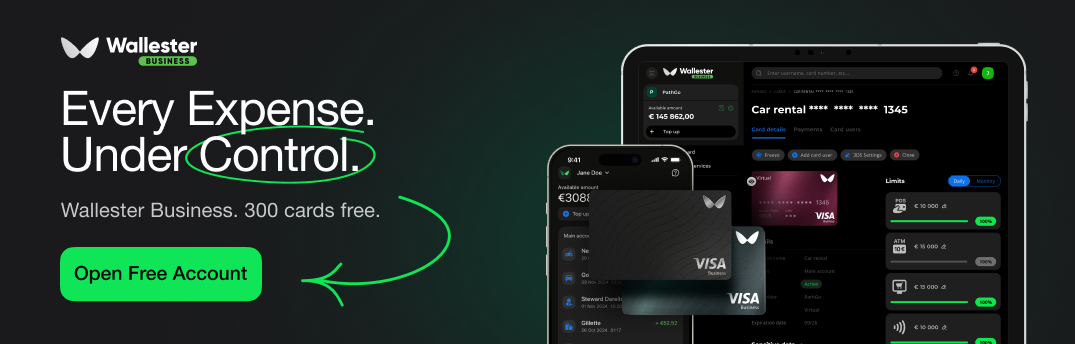
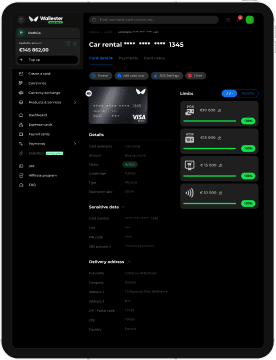
For businesses with multiple travelling employees, departmental budgets can be enforced at the card level, removing the reliance on employees self-policing against policy. This is particularly useful for UK companies managing staff travel across multiple teams or regions.Businesses looking for tighter control over staff travel spending may want to look at Wallester Business. For teams issuing payment cards to travelling employees, Wallester offers a cleaner way to track expenses in real time, with virtual and physical corporate cards, multi-user management, employee spending controls, and expense categorisation built in. The platform suits both UK-based and international teams, making it a practical fit for businesses with employees travelling across multiple markets.