This article examines how virtual cards function as a tool for department budget management. It covers the mechanics of card spend limits, real-time tracking, and how budget allocation software integrates with digital payment methods to prevent overspending and simplify reconciliation for finance teams.
Finance teams often struggle to manage hidden costs and administrative delays. Traditional corporate cards lack the specific oversight needed for modern, multi-team operations. By moving to a system of virtual cards, finance managers gain immediate visibility over every pound spent. This guide looks at the practical ways digital payment controls stop budget leaks, handle department-level spending, and simplify procurement and marketing campaign tracking.
How do virtual cards help with department budget management?
Virtual cards allow finance teams to issue dedicated payment methods for each cost centre, immediately linking every transaction to a specific department. This structure means managers no longer need to manually sort through a single massive statement at the end of the month to figure out who spent what.
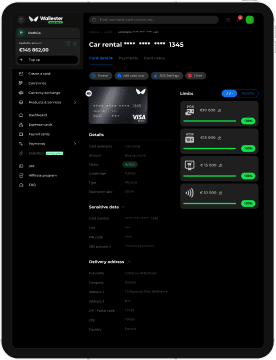
Instead of sharing one physical card, each team head receives a digital version with a pre-set balance. If the marketing team has a £5,000 monthly limit for ad spend, the card simply stops working once that cap is reached. This setup promotes budget ownership within the team itself. Finance leads can monitor these buckets in real time, rather than waiting for bank feeds to update days later.
| Feature | Traditional corporate cards | Virtual cards for departments |
| Spend limits | Often fixed at a high level | Customisable per team or person |
| Visibility | Monthly statements | Real-time dashboard |
| Fraud risk | High (if lost or stolen) | Low (can be frozen instantly) |
| Issuance | Takes days or weeks | Instant via software |
Further Reading: Building a Corporate Virtual Card Programme for Modern Business
Why does budget allocation software work better with virtual cards?
Software designed for budget allocation acts as the brain, while virtual cards serve as the hands. When these tools work together, finance operations become far more predictable. You can set up a hierarchy where the main company budget is divided into smaller segments for departments, projects, or even individual suppliers.
Digital cards connect directly to these software platforms via APIs. This connection enables automated expense approval workflows. For instance, if an employee needs to buy a new software subscription, they request it through the platform. Once approved, the software automatically adjusts the card spend limits or generates a one-off card for that specific purchase. This cuts out manual data entry into accounting tools since every transaction is already categorised and tagged to the right budget line.
Q&A: Can virtual cards be used for international payments?
Yes. Most platforms support multi-currency transactions, allowing teams to pay overseas vendors while maintaining local budget visibility.
Can finance teams control spending before transactions happen?
Yes, virtual cards allow for pre-emptive controls that block unwanted transactions before the merchant even processes the payment. Unlike traditional cards where you only see the damage after the fact, virtual card controls let you set strict parameters for every penny.
Finance leads can apply merchant category blocks. For example, a card issued for travel can be restricted so it only works with airlines, hotels, and train operators. Any attempt to use it at an electronics shop or a restaurant would be automatically declined. You can also set expiry dates for temporary projects or use single-use cards that vanish after one payment. This level of precision is particularly effective for subscription spend management, where unused subscriptions often drain budgets unnoticed.
Q&A: Can a virtual card be locked to one supplier?
Yes. Many providers allow merchant-specific controls linked to a single vendor or platform, preventing the card from being used elsewhere.
How do virtual cards support campaign and project budgets?
Marketing teams often handle many ad accounts and external agencies. Using a single corporate card for Google Ads, Meta, and various SEO tools is a recipe for confusion. Virtual cards solve this by allowing a unique card for every campaign.
If a specific product launch has a fixed budget of £10,000, a virtual card is issued with exactly that limit. The marketing lead can see exactly how much has been burnt through on media buying without checking multiple ad platforms. If a project ends early, the card is cancelled instantly, guaranteeing no trailing fees or accidental renewals occur. This approach also helps with freelancer payments, as a specific card can be assigned to a project and capped at the agreed contract value.
Further Reading: Configuring Virtual Card Rules for Employee Safety
What problems appear when companies use shared corporate cards?
Shared cards create an accountability vacuum that often leads to budget overruns. When multiple people have access to the same physical card or the same set of numbers, the trail of responsibility goes cold.
Common issues include:
- Unidentified transactions that require hours of investigative work by the finance team.
- Subscription sprawl where different teams sign up for the same SaaS tool on the same card.
- Security risks, as one compromised card number forces the company to cancel and replace the card for everyone.
Shared cards also make reconciliation exceptionally difficult. Since the card isn’t tied to a specific department budget management system, the finance team must manually ask staff for receipts, leading to significant delays in closing the books at month-end.
How do virtual cards improve real-time spend tracking?
The main advantage of virtual cards is the end of unchecked spending. In a traditional setup, the finance department is often the last to know when a budget has been exceeded. Virtual cards flip this by providing instant notifications for every transaction.
When an employee makes a purchase, the finance dashboard updates immediately. This real-time spend tracking allows managers to spot trends as they happen. If a department is spending faster than expected, the finance lead can intervene mid-month rather than discovering a hole in the budget four weeks later. This is especially useful for remote employee expenses and distributed teams where physical oversight isn’t possible.
Q&A: Do virtual cards work with mobile wallets?
Most virtual cards can be added to Apple Pay or Google Pay, enabling secure in-person spending for employees on the move.
What industries benefit most from budget-level card controls?
While any business can use these tools, certain sectors find them indispensable due to the complexity of their spending. Companies with high transaction volumes or many disparate teams see the fastest return on investment.
| Industry | Primary use case |
| Marketing agencies | Managing ad spend across numerous client accounts. |
| SaaS companies | Tracking cloud infrastructure and software subscriptions. |
| E-commerce | Purchasing stock from various international suppliers. |
| Travel & logistics | Managing per-diem limits for drivers and remote staff. |
How can Wallester support budget-level spend control?
Companies that need tighter oversight across teams often look for platforms that combine card issuance with detailed spending controls. Wallester provides a unified environment where finance managers can issue unlimited virtual cards in seconds.
The platform allows you to set specific card spend limits and merchant-level restrictions, making sure that funds stay within the intended department budget. By providing live transaction data and an API for connecting with your accounting software, the platform handles expense recording automatically. Businesses can assign cards to specific projects, track team expense tracking data at a glance, and adjust budgets on the fly without ever visiting a bank branch.If your team is ready to move away from the chaos of shared corporate cards and manual spreadsheets, exploring a dedicated card issuance platform is a practical next step.